American troops are no longer stationed in Iraq after the military finished removing its remaining personnel from the country Wednesday.
The final group had been based around Erbil in Iraq’s northern Kurdish region. Their departure came on Sept. 30, the date Washington and Baghdad had previously chosen for completing the pullout. The arrangement was made in 2024 while Joe Biden was president and remained in place after Donald Trump returned to office.
The move closes another long period of American military operations inside Iraq. U.S. forces first entered the country in large numbers during the 2003 invasion. Eight years later, the American military presence established during that war came to an end.
A new reason for sending American forces into Iraq emerged in 2014. ISIS had rapidly gained territory in both Iraq and Syria, creating a new threat that led to another U.S. military deployment. American personnel then spent years working alongside Iraqi and other forces against the group.
ISIS eventually lost the areas it had controlled, changing the purpose and size of the American presence. U.S. forces stayed in Iraq as concerns continued that ISIS could rebuild. The number of American troops remained in the thousands for years before being reduced as Iraqi forces assumed more of the security work.
The U.S. presence became smaller over time. American forces pulled away from positions elsewhere in the country, leaving the northern region as the final location for troops before Wednesday’s exit.
Pentagon spokesman Sean Parnell portrayed the departure as the result of progress made during the campaign against ISIS. Instead of an international wartime operation inside Iraq, Baghdad will now have the main role in dealing with the country’s security problems. Washington still plans to assist Iraqi forces in narrower areas, including intelligence and training.
Trump praised the pullout Wednesday and said both Iraq and the United States benefited from reaching the end of the mission. He also returned to his criticism of America’s original involvement in Iraq, saying poor decisions had kept the United States caught up in the country for years.
Iraqi officials marked the departure with a ceremony. Prime Minister Ali al-Zaidi said Iraq was entering a different period in which its own institutions and military would carry more of the burden for maintaining security. His government has also pledged to continue operations against the ISIS fighters who remain.
One issue is what happens with armed factions that do not operate fully under government authority. Some of the most powerful groups have ties to Iran and have resisted attempts to surrender their weapons. A government effort to settle that issue had been connected to the American departure date, but the timetable for disarmament has now been extended until June 2027.
There is also uneasiness in the Kurdish region. Officials there have been especially concerned about losing American air defenses after repeated attacks from the air. During the recent fighting involving Iran and the United States, Kurdish authorities counted more than a thousand incidents involving missiles or drones.
ISIS remains another concern. The organization has been stripped of the large areas it once ruled, but smaller groups of its fighters continue operating in Iraq and Syria. That leaves Iraqi forces responsible for dealing with those militants inside their country after the American departure.
U.S. operations connected to ISIS are continuing beyond Iraq’s borders. American forces remain active in Syria, while the multinational military command previously operating from Iraq has relocated to Jordan. Future U.S. assistance to Baghdad is expected to focus on specific forms of security cooperation rather than keeping American forces stationed on Iraqi soil.
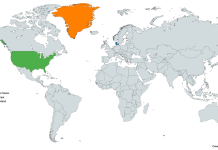
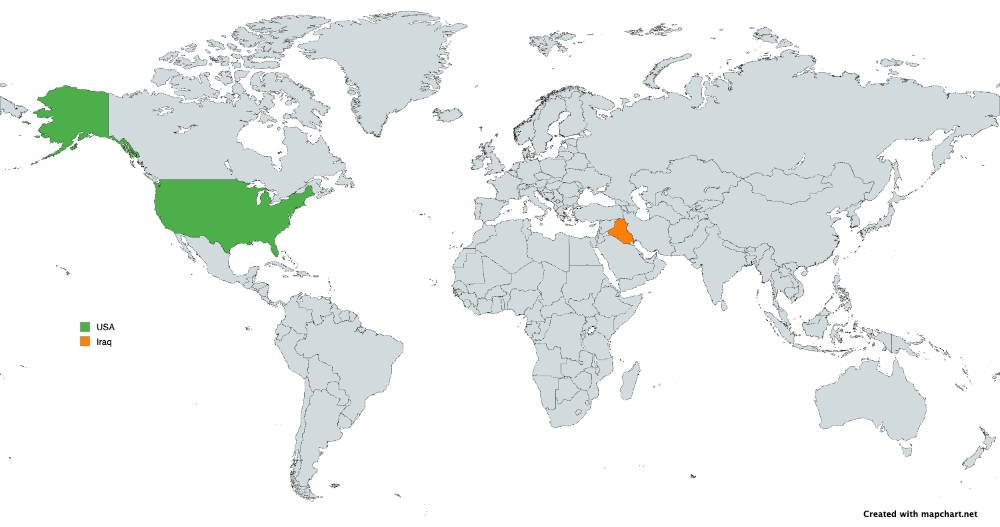
USA = Green
Iraq = Orange
Image is licensed under the Creative Commons Attribution-Share Alike 4.0 International license and was created using MapChart (https://mapchart.net).