On November 11, Americans will gather at cemeteries, attend community ceremonies and recognize people who have served in the military. Some will remember relatives who fought in wars decades ago. Others will recognize veterans whose military careers were spent far from combat. All are part of a holiday that has changed considerably since Americans first began observing it more than a century ago.
Veterans Day wasn’t always intended for such a broad group of people. Its earliest observances concerned a single war, and the holiday originally carried a different name. It took another world war, fighting in Korea and years of efforts by veterans themselves before the occasion became what Americans recognize today.
There was even a time when the federal government celebrated it in October. That didn’t last, largely because November 11 had a meaning that went beyond simply giving Americans another day off.
The date comes from the final months of World War I, a conflict that began in 1914 and drew the United States into the fighting three years later. American troops served alongside European allies, joining a war that had already taken millions of lives.
By the fall of 1918, Germany’s military position had deteriorated, and negotiations to stop the fighting were underway. The resulting agreement called for combat on the Western Front to end at 11 a.m. on November 11. The war’s formal peace settlement came later, but for the soldiers who had spent months or years in combat, the immediate result was an end to the fighting.
The news brought relief to Americans who had been waiting for the war to finish. Families could begin looking toward the return of troops, although thousands had already lost loved ones. The anniversary would eventually become a way to recognize both the people who came home and those who did not.
In 1919, President Woodrow Wilson called attention to the first anniversary of the ceasefire. Americans began observing what became known as Armistice Day, with the name referring directly to the agreement reached in Europe.
The early observances were not governed by a single national program. Towns and cities arranged their own activities, and the date gradually became familiar to Americans who had lived through the war. Congress expressed support for the occasion in 1926, and federal holiday status followed in 1938.
At that point, World War I was still the event around which the day was organized. The holiday reflected the country’s experience with that conflict and the desire to remember the peace that had followed it.
But another war was already approaching.
World War II began in Europe in 1939. Two years later, the attack on Pearl Harbor brought the United States into the conflict, and military service became a reality for millions of Americans. The war lasted until 1945, leaving the country with veterans whose experiences were quite different from those of the men who had fought in Europe during the previous generation.
Those veterans returned to a country that still observed Armistice Day. The holiday remained connected to 1918, even though many of the people now being recognized for military service had never experienced that earlier war.
In Birmingham, Alabama, a World War II veteran named Raymond Weeks began working toward a different kind of observance. In 1947, he helped organize a celebration that brought veterans from different periods together. The event used the name National Veterans Day, years before the federal government would adopt it.
Weeks continued promoting the idea. He wanted the occasion to recognize military service more broadly, rather than remain centered on the experience of one generation.
The Korean War began in 1950, adding another group of Americans to the country’s veteran population. By then, the United States had fought in three major conflicts within a relatively short period, and the original name of the holiday no longer described everyone it could recognize.
The federal government made the change in 1954, during the presidency of Dwight D. Eisenhower. Congress approved the new name, Veterans Day, and Eisenhower signed the legislation that June. The November observance would now recognize Americans who had served in the armed forces, regardless of which conflict had taken place during their military careers.
The change also meant that wartime service was not a requirement for recognition. Americans who had served during periods without major fighting were included, along with veterans who had experienced combat.
The holiday continued on November 11 until Congress began changing the federal calendar in the late 1960s. Lawmakers wanted certain holidays observed on Mondays, allowing federal employees to have longer weekends. Veterans Day was included in the plan.
Starting in 1971, the federal observance took place in October. The new schedule gave workers a Monday holiday, but it also separated Veterans Day from the anniversary that had originally brought it into existence.
The change was met with objections. Veterans organizations continued supporting November 11, and some states declined to follow the October schedule. Americans were left with a holiday that could be observed on different dates depending on the state.
Washington eventually reconsidered. President Gerald Ford signed legislation in 1975 that would bring Veterans Day back to November 11 beginning in 1978. The October schedule ended, and the anniversary of the World War I ceasefire again became the date of the federal holiday.
That date has remained unchanged, even as the generations of Americans being recognized have continued to change.
Veterans Day is sometimes mistaken for Memorial Day, though the two holidays serve different purposes. Memorial Day is specifically for remembering military personnel who died while serving. Veterans Day recognizes military veterans more broadly, including those who are living and those who never served in combat.
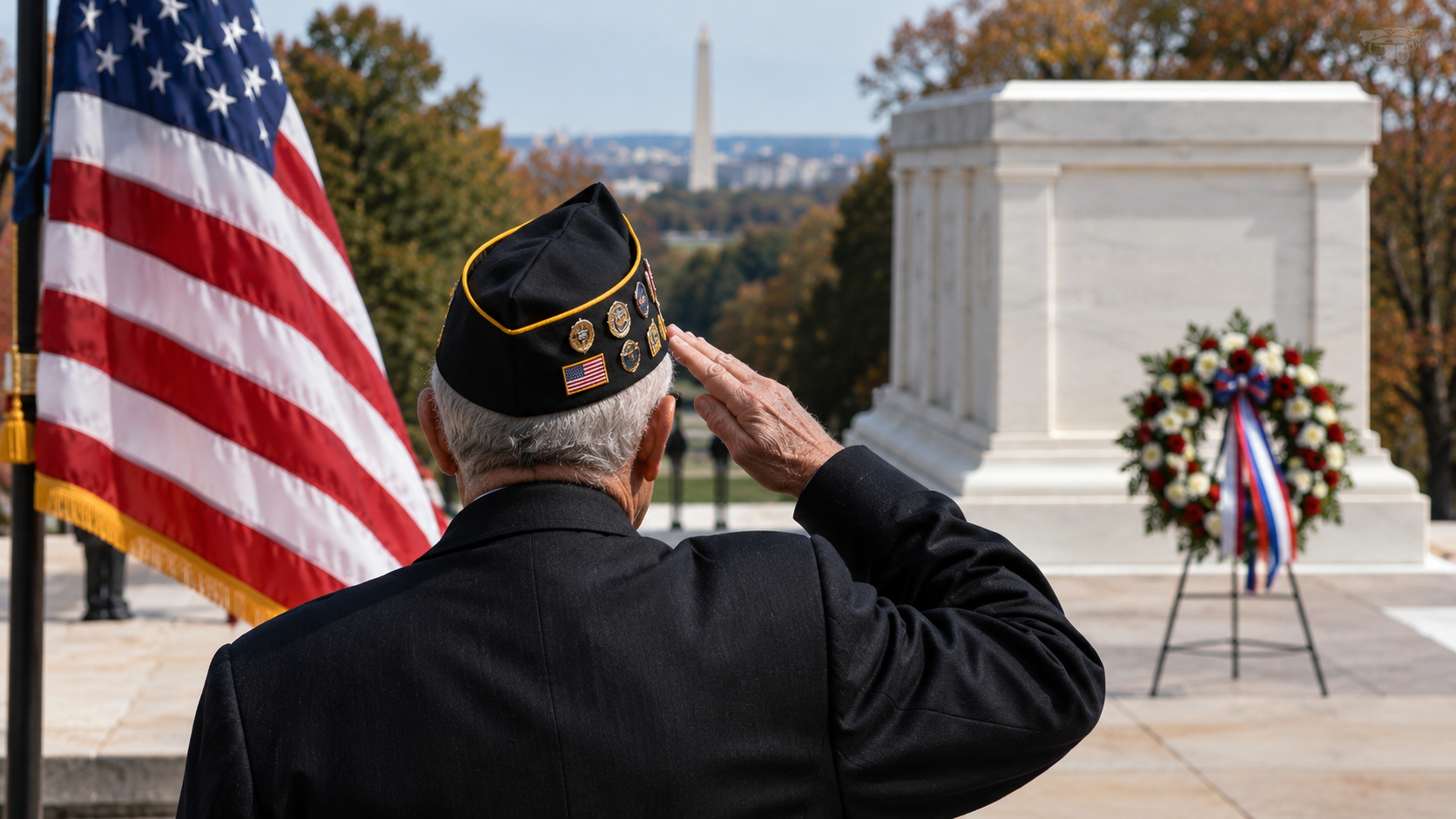
At Arlington National Cemetery in Virginia, the annual national ceremony includes a wreath placed at the Tomb of the Unknown Soldier. Military honors are part of the observance, which traditionally begins at 11 a.m., the same hour associated with the end of fighting in 1918.
Communities across the country have their own traditions. Some organize parades or invite veterans to public gatherings. Schools may hold assemblies, and local veterans groups often arrange ceremonies that bring former service members together.
Raymond Weeks, who had helped organize the Birmingham event in 1947, eventually received national recognition for his efforts. President Ronald Reagan awarded him the Presidential Citizens Medal in 1982. Weeks died in 1985, having lived to see the holiday he had promoted become familiar to generations of Americans.
This image is the property of The New Dispatch LLC and is not licenseable for external use without explicit written permission.