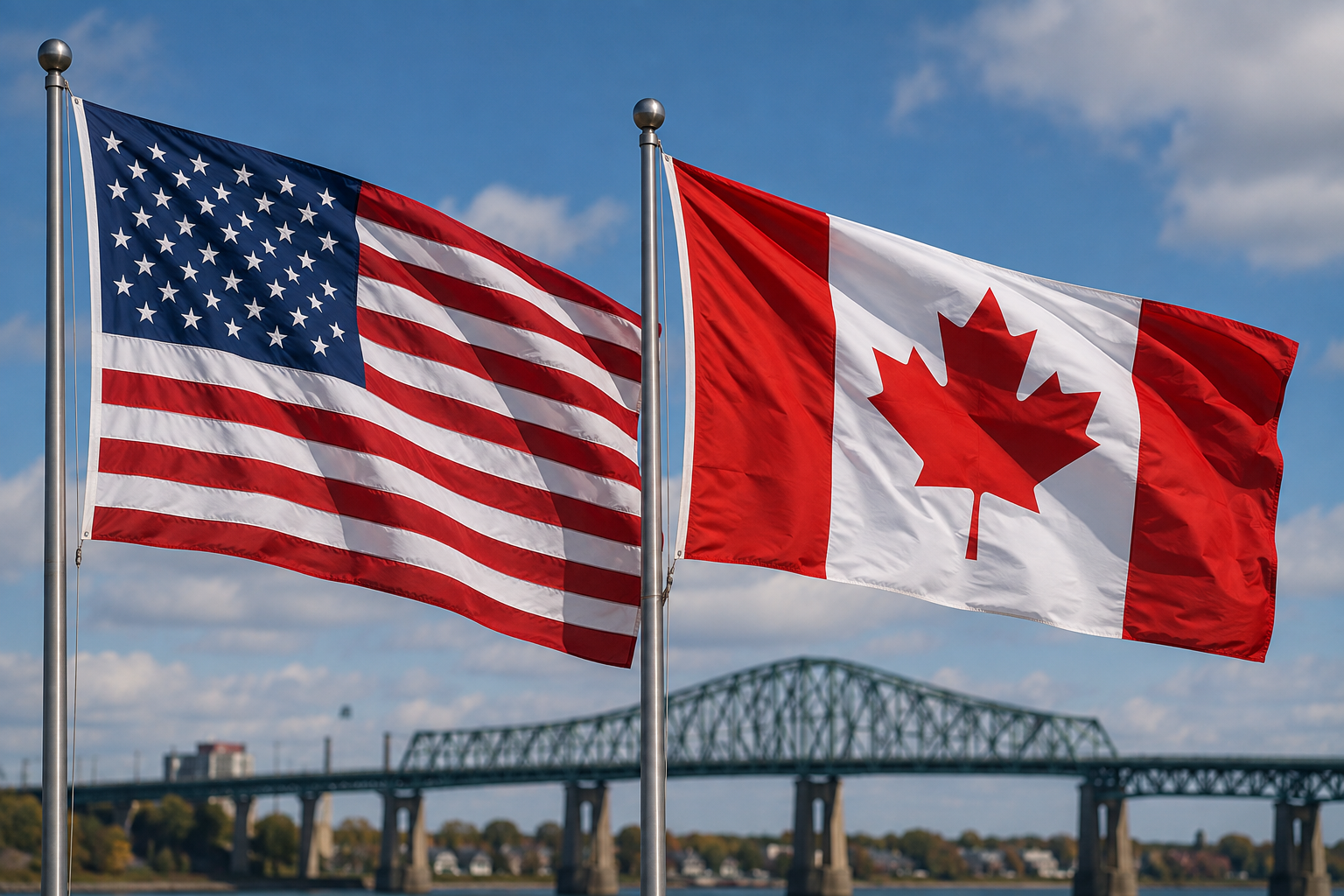
President Donald Trump has put planned 50% tariffs on a range of Canadian imports on hold for three days while the United States and Canada continue working on a trade agreement.
The tariffs were supposed to begin Wednesday and would have covered roughly $20 billion in goods coming into the United States from Canada. Products facing the new import taxes included hockey sticks, clothing, liquor and some construction materials. Trump announced the delay shortly before the tariffs were set to start, saying the two countries had reached the basis of a deal but still needed to complete the paperwork.
Canadian Prime Minister Mark Carney said the pause would remain in place through Friday. He said negotiators had made substantial progress but still had more work ahead of them.
The temporary agreement came after days of intense discussions between officials from both countries. Carney and Trump spoke twice during the final stretch of negotiations, including a conversation late Tuesday(8/17/26). Trade representatives continued meeting in Washington on Wednesday even after the tariff delay was announced.
There are still several issues being worked through. Canada has been seeking reductions in existing U.S. tariffs affecting industries including automobiles, steel and aluminum. American officials have pushed Canada to remove retaliatory measures on U.S. products and make changes involving dairy and American liquor sales.
Autos have been one of the tougher parts of the negotiations. The United States currently places a 25% tariff on Canadian automobile imports. Negotiators discussed reducing that rate to 15%, according to reports included in the information surrounding the talks, but disagreements remained over which vehicles would qualify.
Trump said Wednesday that the automobile rate would be reduced, though he did not give a specific number. He also said some Canadian tariffs on American goods would be eliminated.
The planned 50% duties involved Section 338 of the Tariff Act of 1930, which allows tariffs of up to 50% against foreign trading partners accused of discriminating against U.S. commerce. The duties would have marked the first use of that section.
U.S. Trade Representative Jamieson Greer previously said the tariff threat was connected to Canada’s response to earlier U.S. trade measures. Canada had imposed retaliatory tariffs during the wider trade dispute.
Business groups had been pushing both governments to avoid another round of tariffs. The U.S. Chamber of Commerce warned that higher duties could increase costs for American families, interfere with supply chains and affect millions of jobs tied to trade between the United States, Canada and Mexico.
The U.S. Trade Representative’s office said the developing agreement would cover access for American products, digital trade and economic security. Carney said Canada was seeking more certainty for its businesses, workers, farmers and families.
Trump also brought up the possible return of the Keystone XL pipeline as part of a final agreement. Neither government had released complete documents outlining the deal by Wednesday, and negotiations were continuing.
This image is the property of The New Dispatch LLC and is not licenseable for external use without explicit written permission.