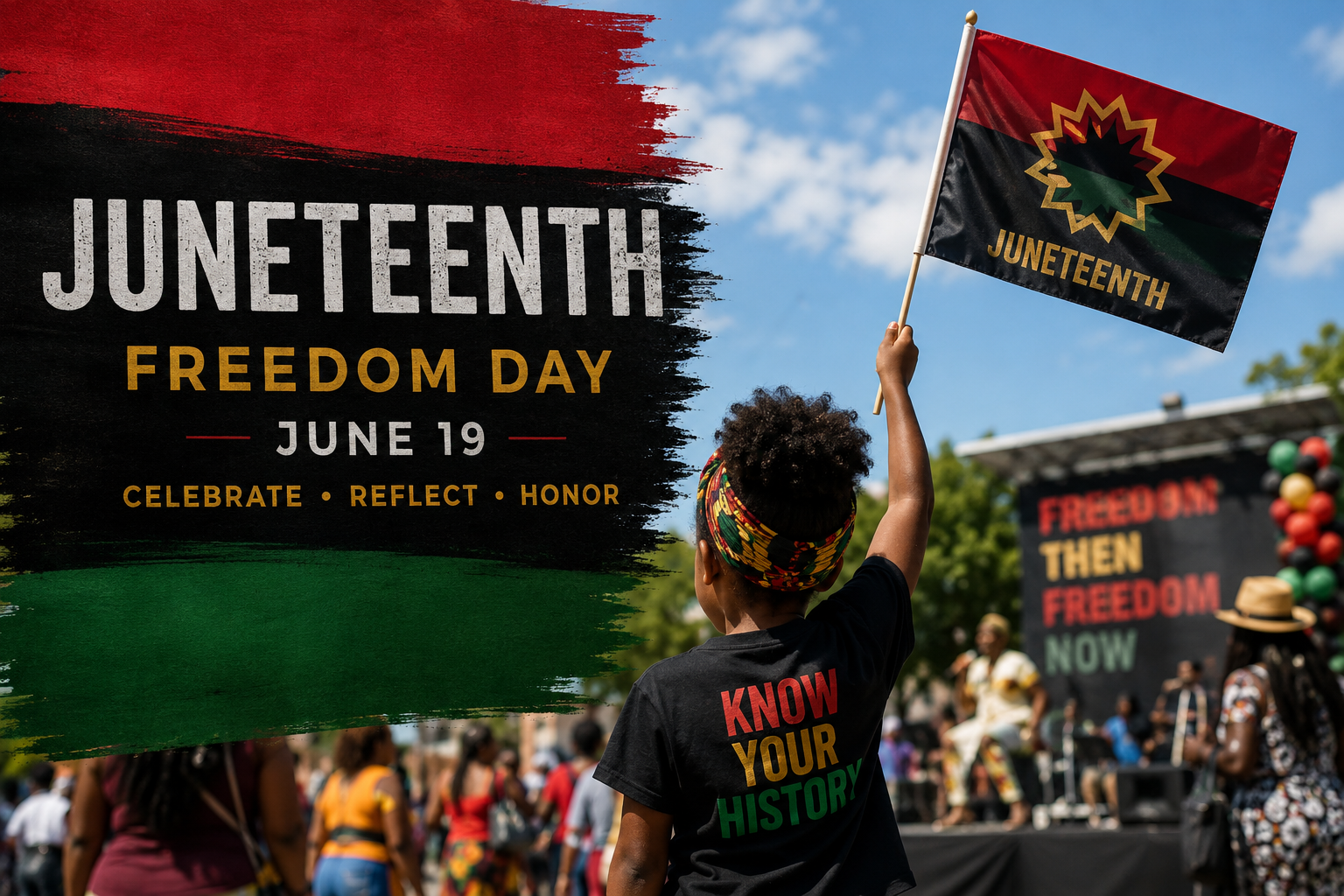
Parades, concerts, family reunions and neighborhood festivals are expected to mark Juneteenth on Friday, June 19, as communities across the United States celebrate a holiday rooted in one of the final chapters of the Civil War.
Although Juneteenth became a federal holiday only a few years ago, the observance itself dates back more than 160 years. Long before it received national recognition, Black families gathered each June to remember the day freedom was finally enforced in Texas.
That story began during the Civil War, but it didn’t end when the fighting stopped.
President Abraham Lincoln’s Emancipation Proclamation took effect on Jan. 1, 1863, declaring enslaved people in areas controlled by the Confederacy to be free. The proclamation depended on Union military victories, however, meaning many enslaved people remained in bondage until federal troops reached their communities.
Texas was among the last places where emancipation was enforced.
When Union forces arrived in Galveston on June 19, 1865, Maj. Gen. Gordon Granger issued General Order No. 3, announcing that enslaved people in Texas were free. Historians estimate that more than 250,000 people were enslaved in the state at the time.
For some families, the order changed everything overnight. Others faced additional days, weeks or even months before they could fully claim their freedom. The experience varied widely, but June 19 became a date worth remembering.
Within a year, annual gatherings were taking place in Texas. Church services, picnics, music, speeches and shared meals became part of the tradition. As Black Texans settled elsewhere, they carried those customs with them, introducing Juneteenth to communities across the country.
Today, there is no single way to observe the holiday. Some people attend historical presentations or museum exhibits. Others volunteer in their communities, participate in festivals, or simply spend time with family and friends reflecting on the significance of the day.
Congress voted in 2021 to make Juneteenth the nation’s newest federal holiday, and President Joe Biden approved the legislation on June 17 of that year. Federal offices now close each June 19 in observance of the holiday, while many businesses, schools and local governments also recognize the occasion.
Juneteenth marks the enforcement of emancipation in Texas, not the legal end of slavery throughout the United States. That came later in 1865, when the 13th Amendment to the Constitution abolished slavery nationwide.
More than a century and a half after the events in Galveston, Juneteenth continues to serve as both a celebration of freedom and an opportunity to reflect on the nation’s history. Whether people attend a parade, visit a museum or gather around a backyard table, the holiday offers a chance to remember why June 19 remains significant.
This image is the property of The New Dispatch LLC and is not licenseable for external use without explicit written permission.