Memorial Day began after the Civil War, when the United States was still recovering from years of fighting and loss. Communities across the country were trying to remember soldiers who had died during the war. Many families had lost relatives, and towns started organizing local gatherings at cemeteries. People brought flowers, small flags, and sometimes handwritten messages to place on graves. These events happened in different parts of the country, which is why several towns still claim they were the first to create the holiday.
At first, the day was known as Decoration Day. The name came from the custom of decorating graves in the spring. In 1868, General John A. Logan, who was part of a Union veterans organization, announced that May 30 would become a national day to honor fallen soldiers. The date was picked because flowers would usually be available across much of the country around that time of year. Early ceremonies included speeches, music, prayers, and visits to military cemeteries. One of the larger events took place at Arlington National Cemetery in Virginia. People gathered there to place flowers on graves and listen to public memorial services.
The holiday mainly focused on Union soldiers in the years right after the Civil War. Southern states often held separate remembrance days for Confederate soldiers. In some places, those traditions continued well into the 1900s. The country was still divided after the war, and that division showed up even in memorial events. Some communities treated the ceremonies as quiet days of mourning. Others made them larger public gatherings with marching bands and military groups.
As time went on, Decoration Day became connected to more than the Civil War. After World War I, Americans started using the holiday to honor soldiers who died in all military conflicts. By then, the country had experienced several wars, and the number of families affected by military deaths had grown. Schools, churches, veterans organizations, and local governments began holding ceremonies every year. Small-town parades became common in many places. Kids rode bicycles decorated with red, white, and blue streamers. Veterans marched in uniform while local bands played patriotic songs. Some towns still do things almost the exact same way now.
The name Memorial Day slowly replaced Decoration Day during the 20th century. Both names were used for a while, depending on the region and the newspaper. In 1967, the federal government officially adopted Memorial Day as the holiday’s name. A year later, Congress passed a law moving several holidays to Mondays. Memorial Day was moved from May 30 to the last Monday in May starting in 1971. That change created a three-day weekend for many Americans.
Over time, Memorial Day also became tied to the beginning of summer. Families started planning trips, cookouts, and outdoor events during the long weekend. Stores began advertising holiday sales, and beaches and parks became crowded. Some veterans groups worried that people were forgetting the purpose of the day. Others believed families could still enjoy the weekend while taking time to remember military service members who had died.
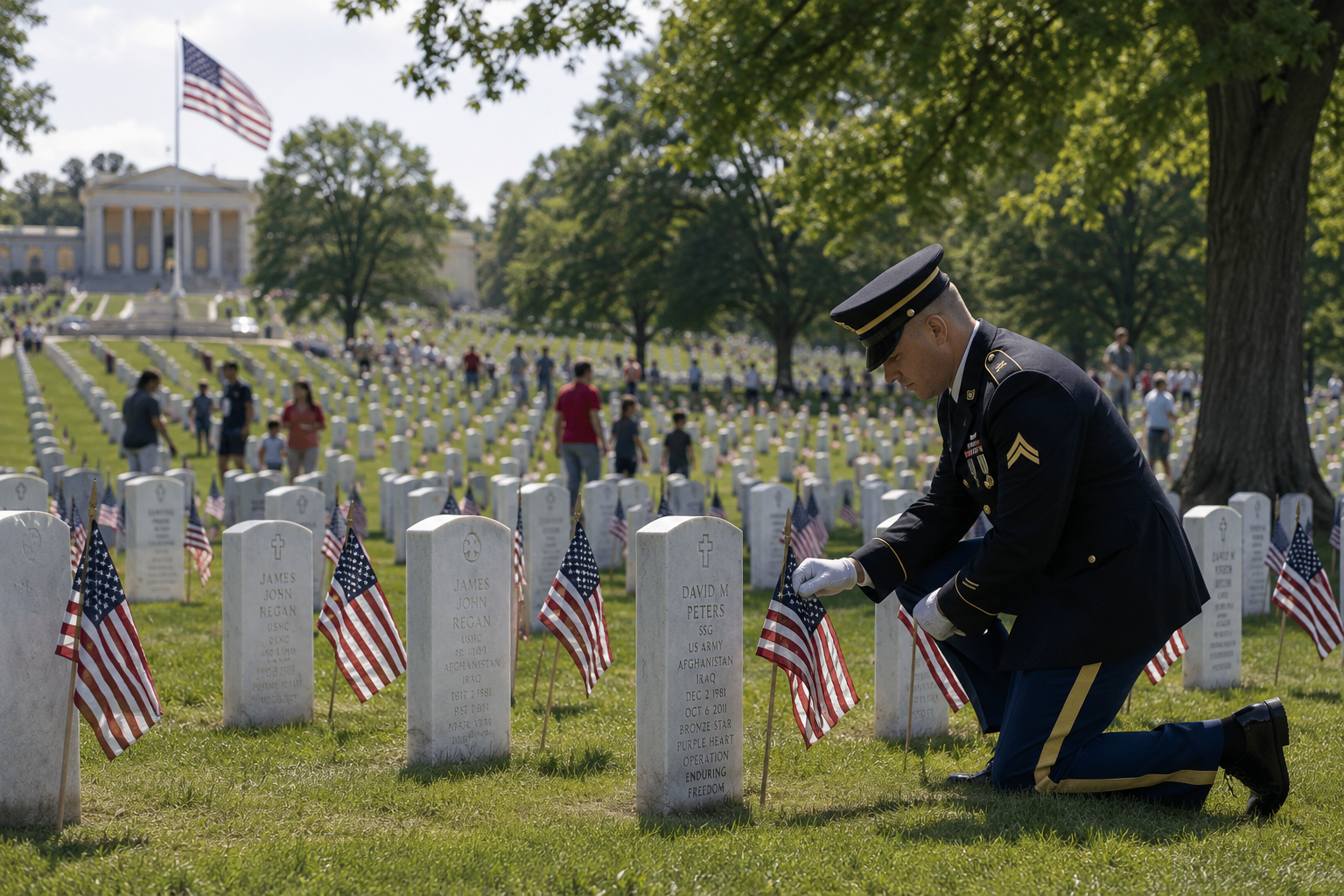
Today, Memorial Day ceremonies are held across the United States. Flags are placed at cemeteries, parades move through towns and cities, and military groups hold public events. Arlington National Cemetery still remains one of the most recognized locations for Memorial Day observances. Volunteers and service members place flags beside rows of graves before the holiday weekend begins. There is also a National Moment of Remembrance each Memorial Day afternoon at 3 p.m. local time. People are encouraged to pause briefly and reflect on those who died while serving in the military.
The holiday has changed a lot since the late 1800s. Some people spend the day at memorial services, while others gather with family or travel for the weekend. The original idea behind Memorial Day, though, has stayed connected to remembering military members who lost their lives in war.
This image is the property of The New Dispatch LLC and is not licenseable for external use without explicit written permission.