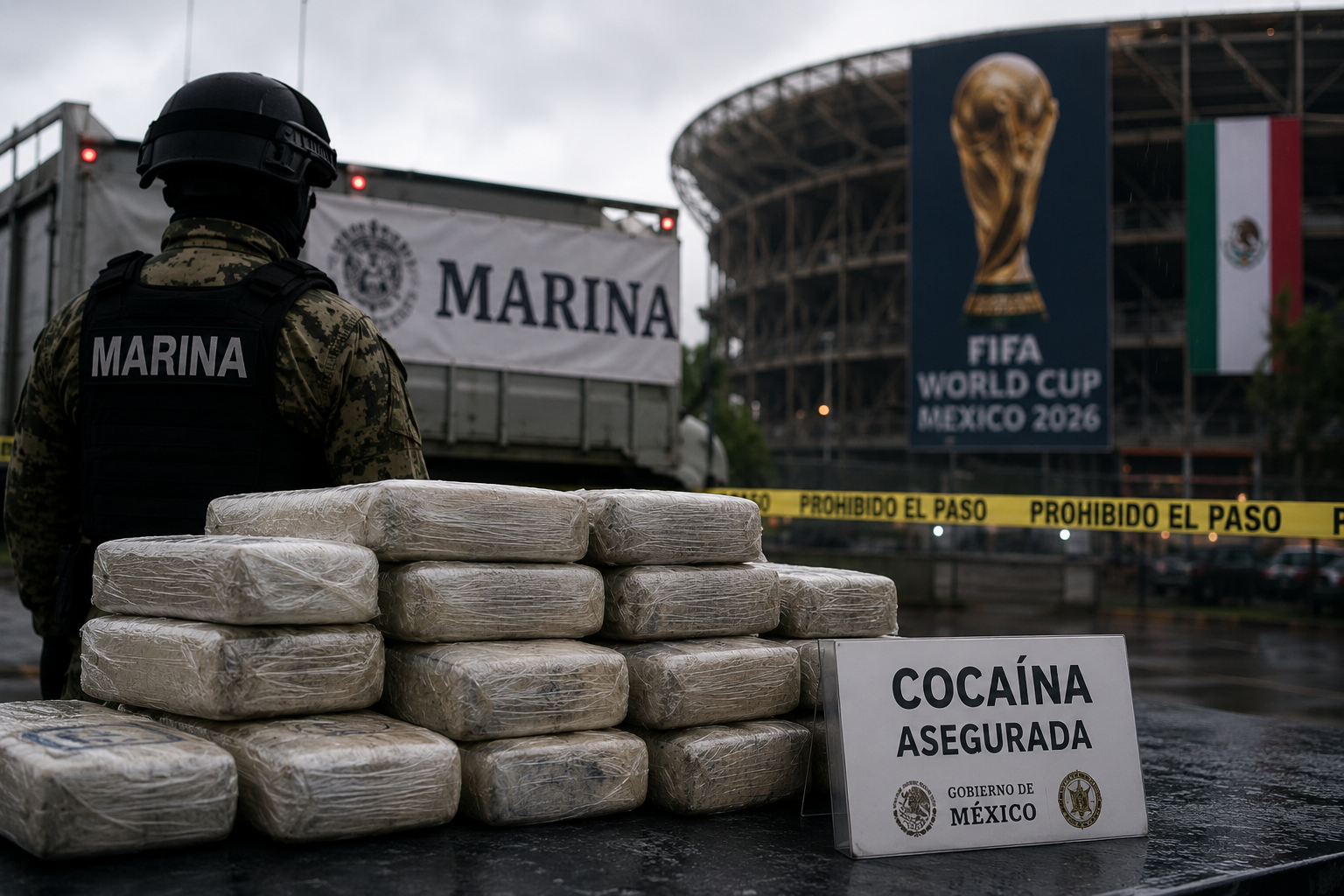
Mexican authorities seized more than three metric tons of cocaine during two operations on June 22, and security analysts believe the timing may be connected to preparations for the World Cup. While officials have not tied the cases to the tournament, several experts told Reuters they think criminal groups could be moving larger drug supplies closer to Mexico City before the event begins.
The cocaine was found in two different states on the same day. One seizure took place in Guerrero, a western state where drug trafficking activity is more common. The other happened in Tlaxcala, a central state near Mexico City that is not usually identified as a major route for cocaine shipments. That location caught the attention of researchers who study organized crime.
According to Reuters, six security specialists pointed to the World Cup as the most likely reason for the unusual seizure in Tlaxcala. They said traffickers may be storing larger amounts of cocaine in areas close to the capital because they expect demand to increase once millions of visitors arrive. Mexico is expected to receive around 5.5 million visitors during the tournament.
Security researcher Andrés Sumano said criminal organizations often prepare for busy periods by building up supplies ahead of time. He compared the approach to how businesses increase inventory before large public events. From his perspective, keeping drugs in storage near Mexico City could explain why such a large quantity was discovered in a state that rarely appears in major cocaine seizures.
Reuters also interviewed three drug dealers in Mexico City, all of whom said they had noticed customers asking for more cocaine as the World Cup approaches. One dealer, who was not identified, described international sporting events as opportunities to increase sales because more people are in the city. The dealer said suppliers try to respond when demand rises.
Authorities have not endorsed that explanation. Reuters reported that the Mexico City government and the presidency did not respond to requests for comment. When officials announced the seizures, they did not suggest there was any connection between the confiscated cocaine and the World Cup.
Tlaxcala government spokesperson Antonio Martínez also rejected the idea that the seizure shows the state has become a center for organized crime. He said there is no evidence that links the case to international events or proves that Tlaxcala is serving as a distribution hub.
Another researcher, Vicente Sánchez of Mexico’s National System of Researchers, said the World Cup remains the explanation that best fits the available information. He said the amount of cocaine found in Tlaxcala was unusual, especially because of the state’s location near Mexico City. At the same time, he described the connection as a hypothesis rather than a confirmed finding, and no official investigation has publicly tied the June seizures to the tournament.
This image is the property of The New Dispatch LLC and is not licenseable for external use without explicit written permission.