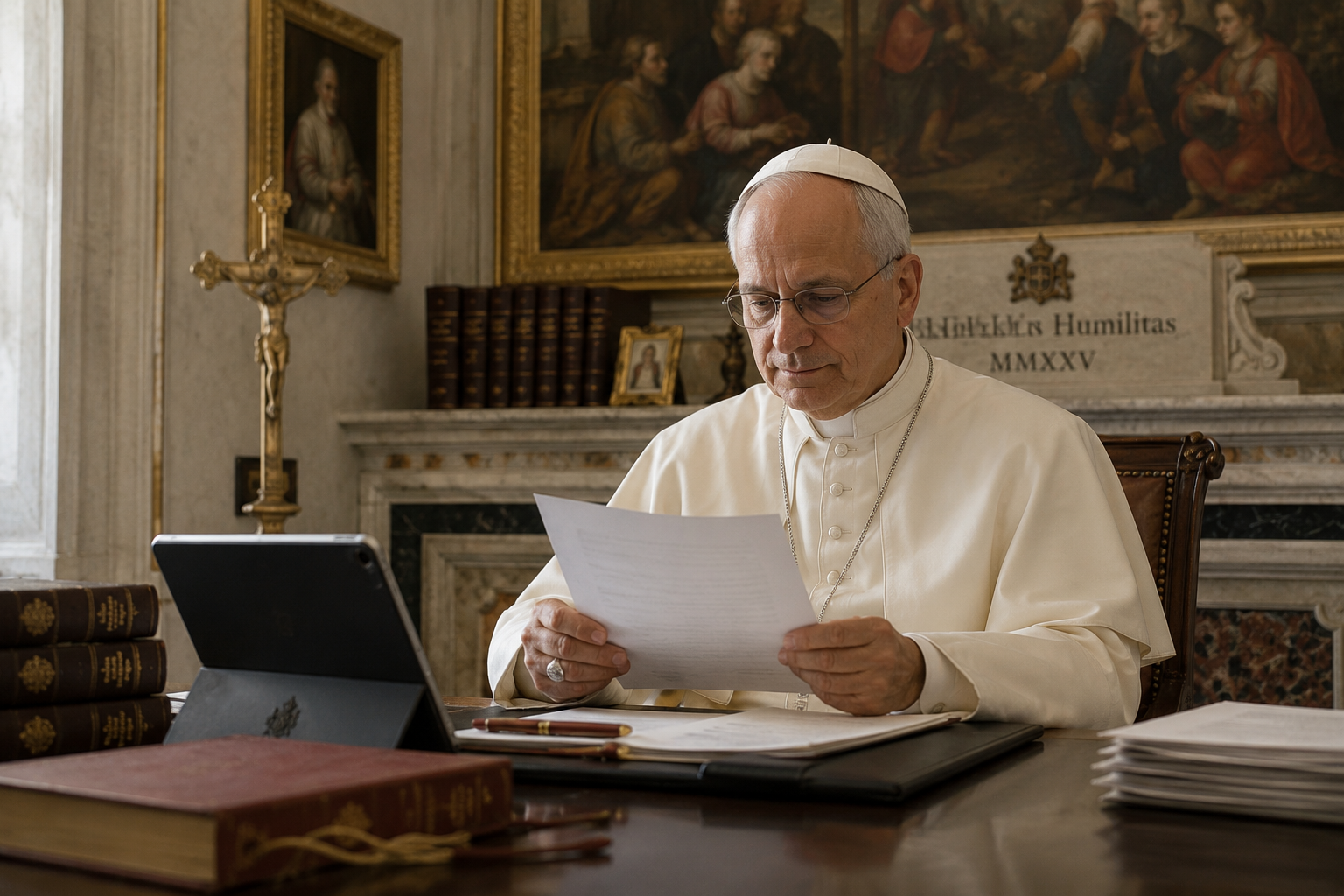
Pope Leo XIV apologized on Monday, May 25, for the Catholic Church’s past role in supporting slavery, becoming the first pope to directly admit that earlier popes helped legitimize the enslavement of non-Christians during the colonial era.
The apology came in Leo’s first encyclical, “Magnifica Humanitas,” released at the Vatican earlier in the day. Much of the document focused on artificial intelligence and the ways technology is changing society, labor, and human relationships. Still, one section turned back to the church’s own history.
Leo wrote that the Vatican and wider Christian world were too slow to reject slavery outright. He described that delay as “a wound in Christian memory” and asked forgiveness on behalf of the church.
Previous popes had apologized for the actions of Christians involved in the trans-Atlantic slave trade. Leo’s statement was different because he directly referred to decisions made by the papacy itself centuries ago. Historians have long pointed to several decrees issued by popes during the 1400s that allowed European kingdoms to conquer territories and enslave non-Christians in Africa and the Americas.
One decree issued by Pope Nicholas V in 1452 gave Portugal permission to claim land and place conquered people into permanent slavery. Other popes later renewed or confirmed those permissions as European colonial expansion continued.
Those decrees became tied to the “Doctrine of Discovery,” a legal and religious idea later used to justify colonial rule and land seizures. The Vatican rejected the doctrine in 2023, though the original papal bulls were never formally canceled.
Leo acknowledged that history directly in the encyclical. He said the church had intervened at times to “legitimize forms of subjugation,” including slavery involving non-Christians. He also wrote that society and the church both failed for centuries to fully recognize slavery as morally wrong.
The pope connected those past failures to modern concerns involving artificial intelligence and digital industries. He warned about newer forms of exploitation linked to technology, including poor labor conditions tied to mining materials needed for AI systems and electronics.
Some Catholic scholars and Black church leaders said the apology had been overdue. Anthea Butler, a senior fellow at Oxford University’s Koch History Center, said the Vatican needed to confront its own role in slavery if it wanted authority to speak about modern exploitation.
“For descendants of enslaved persons, this is once again a much needed apology from the pope,” Butler said.
Leo also mentioned that Pope Leo XIII did not formally condemn slavery until 1888, long after several countries had already abolished it. Before then, slavery had existed in parts of Christian society and even within some church institutions.
Attention has also been placed on Leo’s own family background. Research published by Henry Louis Gates Jr. found that some of the pope’s ancestors were enslaved while others owned slaves. Several relatives were identified in records as Black, Creole, or free people of color.
Earlier this year, Leo visited Angola and prayed at a Catholic shrine connected to the African slave trade during Portuguese colonial rule. During that visit, he spoke about the suffering endured there over generations, though he stopped short of specifically discussing slavery at the time.
This image is the property of The New Dispatch LLC and is not licenseable for external use without explicit written permission.