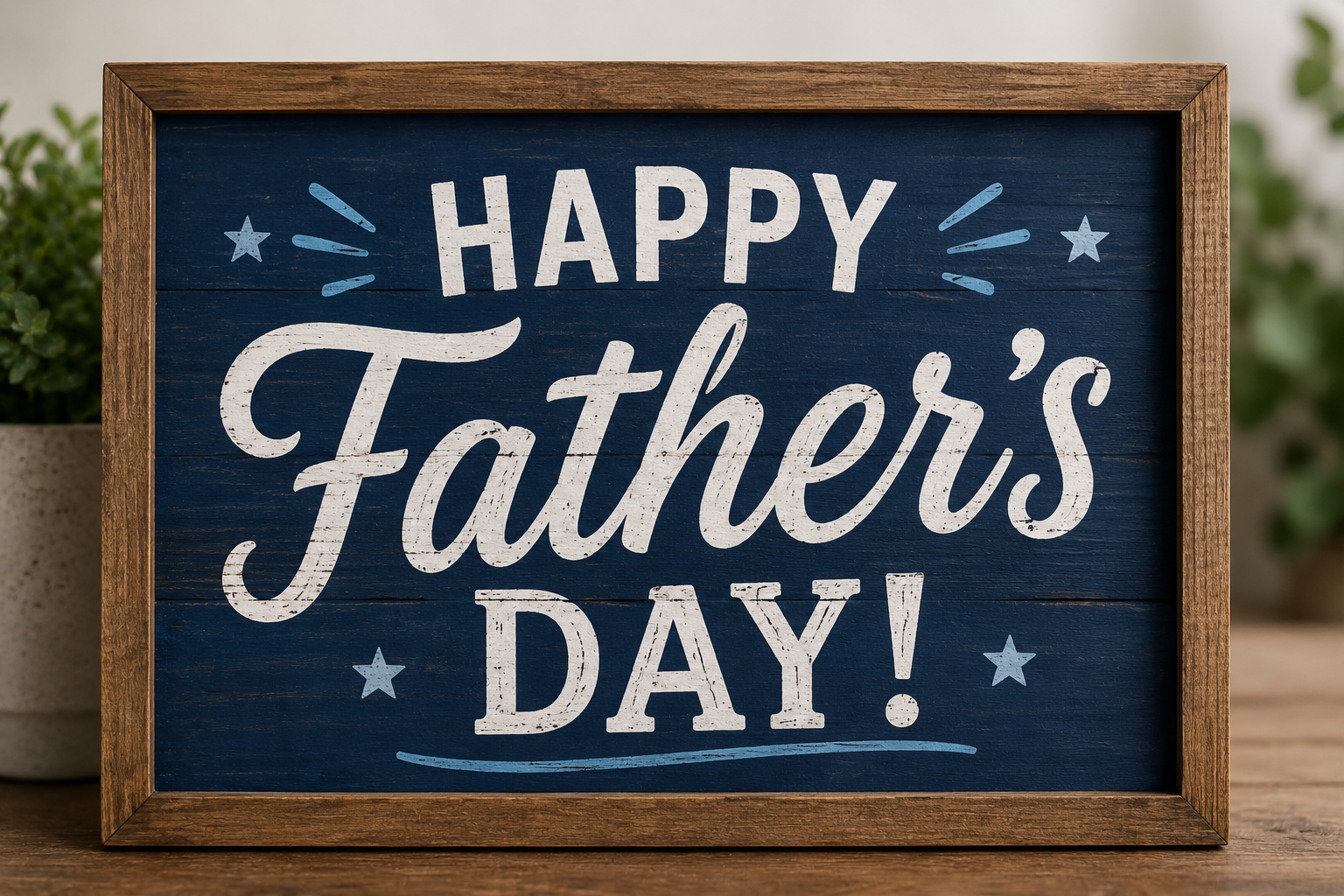
If someone asked when Father’s Day became an official holiday, most people would probably guess it happened soon after Mother’s Day. It didn’t.
The idea spent decades finding its place.
In the early 1900s, a woman from Spokane, Washington, named Sonora Smart Dodd began wondering why mothers had a day of recognition while fathers did not. Her question wasn’t inspired by advertising or politics. It came from her own family.
Dodd admired her father, William Jackson Smart, who took responsibility for raising his children after his wife died. She believed the work he had done deserved public recognition, so she approached local churches and community leaders with an idea that sounded simple enough: set aside one Sunday each year to thank fathers.
The first celebration that became part of an ongoing tradition took place in Spokane on June 19, 1910. There had been an earlier memorial for fathers in West Virginia two years before, but it was connected to a mining disaster and was never repeated as an annual observance.
Even after the Spokane celebration, Father’s Day remained something of a local custom. Some communities embraced it. Others ignored it. A few critics even joked that greeting card companies would eventually turn it into another excuse to sell products.
As the years passed, however, public opinion slowly shifted. More churches observed the day. Civic organizations promoted it. Presidents expressed support, although Congress still had not permanently recognized the celebration.
The federal government finally acted decades later. In 1966, President Lyndon B. Johnson formally designated the third Sunday in June as the day for the annual observance. Six years afterward, legislation signed by President Richard Nixon placed Father’s Day on the national calendar as a permanent observance.
Today’s celebrations look different from one family to the next. Some people exchange gifts. Others cook a favorite meal or gather for a backyard barbecue. Many simply make time for a visit or a phone call. The occasion has also expanded beyond biological fathers to include grandfathers, stepfathers, adoptive fathers, mentors, and others who have filled a fatherly role.
Perhaps that’s why Father’s Day has endured. It was never really about neckties or coffee mugs. From the beginning, the purpose was much simpler: taking one day each year to recognize the steady, often quiet influence of the people who helped raise us.
This image is the property of The New Dispatch LLC and is not licenseable for external use without explicit written permission.