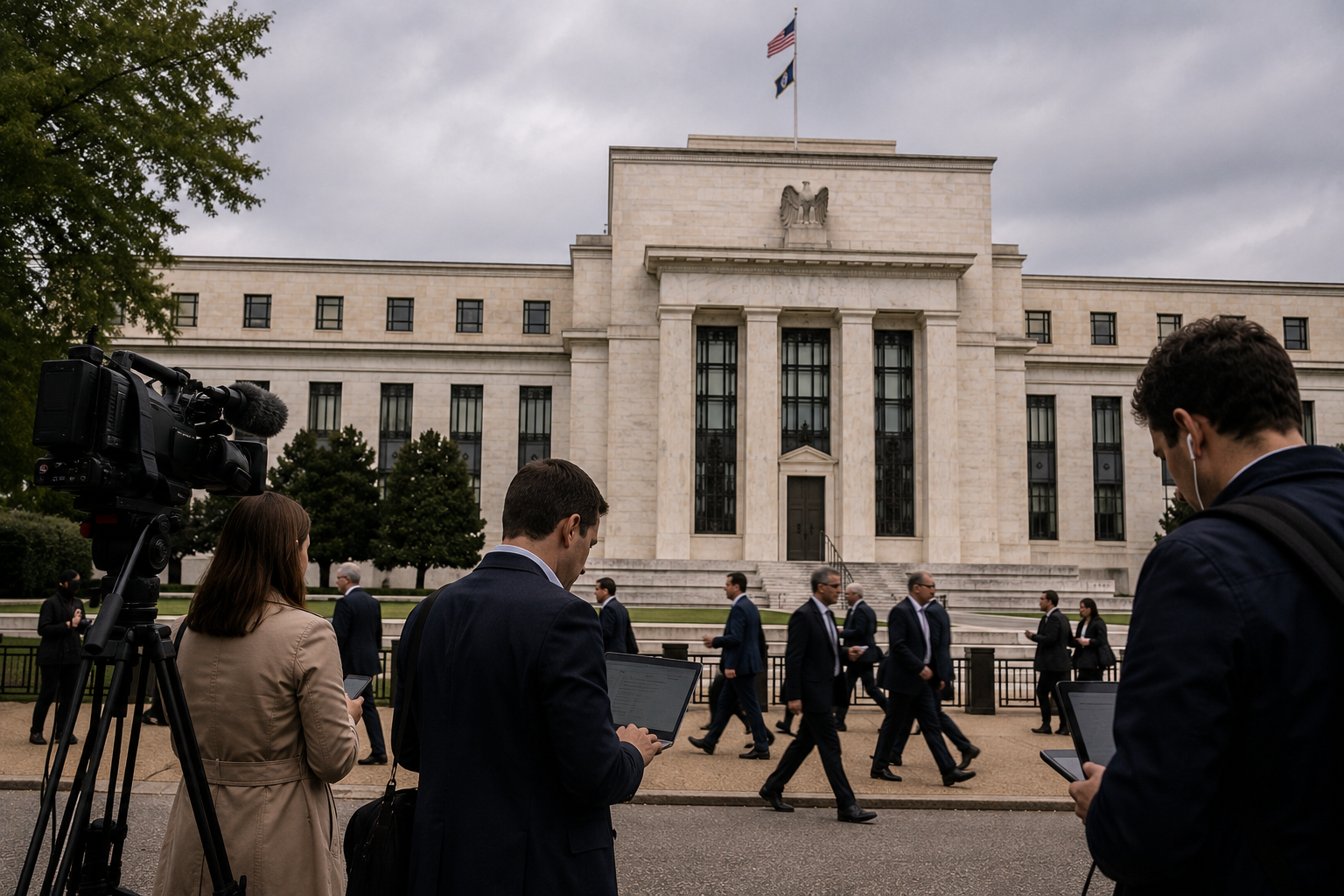
The Federal Reserve left its benchmark interest rate unchanged Wednesday, keeping the federal funds rate in a range of 3.5% to 3.75% as inflation continues to run above the central bank’s 2% target. The decision was widely expected by economists, but new projections released after the meeting suggested that nearly half of Federal Open Market Committee members could support raising rates later this year.
The vote to hold rates steady was unanimous. Even so, the Fed changed its message in a way that caught investors’ attention. Officials removed language from previous policy statements that had suggested they were leaning toward lowering rates. The June statement was also much shorter than usual.
Federal Reserve Chairman Kevin Warsh, who led his first meeting as chair after replacing Jerome Powell, said the shorter statement was meant to focus on the facts instead of using older language or offering detailed guidance about future decisions.
The Fed’s latest Summary of Economic Projections showed that nine policymakers believe interest rates could move higher within the next year. Six of those members projected two or more quarter-point increases. Eight members favored leaving rates unchanged, while one expected a cut. Warsh did not submit his own forecast.
In its statement, the Fed said inflation remains above its goal, partly because supply shocks have pushed up prices in areas including energy. Consumer prices rose 4.2% over the past year in May, the highest annual rate since April 2023. Energy prices accounted for more than 60% of that increase.
The Fed also sharply raised its inflation outlook. In March, officials expected the Personal Consumption Expenditures index to end 2026 at 2.7%. The new forecast puts that figure at 3.6% by the end of the year. Core inflation, which excludes energy and gas prices, is expected to reach 3.3%.
Warsh said the Fed cannot directly control the price of items like oil, eggs, or milk. He said the central bank’s job is to prevent those price increases from spreading more broadly through the economy. “We’re going to deliver on it,” he said while discussing the Fed’s goal of returning inflation to 2%.
He also announced five task forces that will review areas including the Fed’s communications, inflation data, and policy framework. Warsh said future policy statements would be simpler and that forward guidance is less useful under current conditions.
Financial markets reacted quickly after the announcement. The S&P 500 fell 0.9% during afternoon trading, while the Dow Jones Industrial Average dropped 0.7%. The Nasdaq Composite lost 1% as investors responded to the possibility of higher borrowing costs.
Economists said the meeting marked a shift in the Fed’s approach. Felix Aidala of Indeed Hiring Lab pointed to the number of policymakers projecting rate increases and the changes to the policy statement. Kay Haigh of Goldman Sachs Asset Management said the outlook reflected both persistent inflation and a strong labor market.
President Donald Trump, who had repeatedly urged Powell to lower interest rates before Warsh became chair, spoke to reporters during the Group of Seven Summit in France. He said lower rates would help the economy but added that he supports Warsh’s leadership. “We have a very good guy over there right now, so I’m guided by what he wants,” Trump said.
This image is the property of The New Dispatch LLC and is not licenseable for external use without explicit written permission.