The United States has announced a new round of tariffs on imports from 60 trading partners, replacing President Donald Trump’s temporary 10% tariff that expired at midnight Eastern Time. The new duties, ranging from 10% to 12.5%, officially took effect at 12:01 a.m. Friday. According to the U.S. Trade Representative’s Office, the changes are based on monthslong investigations into the trade practices of other economies and are being carried out under Section 301 of the Trade Act of 1974.
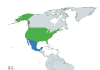
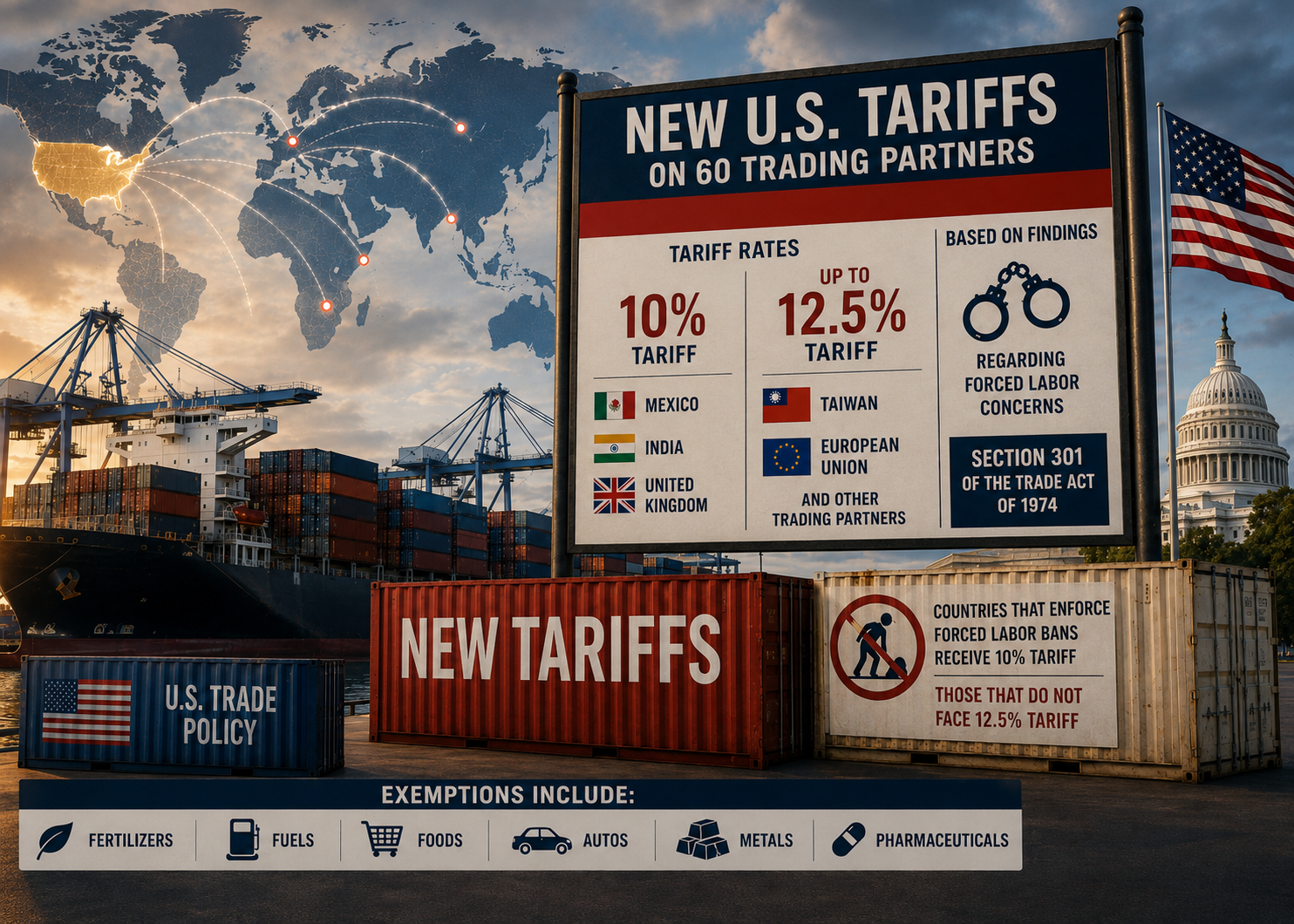
Countries facing a 10% tariff include Canada, Mexico, India and the United Kingdom. Taiwan and the European Union will face tariffs of up to 12.5%. The U.K.’s rate closely matches an agreement reached last year between Trump and then-Prime Minister Keir Starmer that lowered tariffs on British imports to 10%. The newly announced rate for the European Union appears to reduce an earlier 15% cap agreed to by Trump and European Commission President Ursula von der Leyen.
The administration said the tariffs are based on findings that the 60 economies failed to effectively enforce bans on goods produced with forced labor. U.S. Trade Representative Jamieson Greer said the United States has enforced a forced labor import ban for nearly a century and that it is time for trading partners to do the same. His investigation into the countries began in mid-March after the administration started looking at other legal options for tariffs.
The move comes months after the Supreme Court struck down many of Trump’s earlier tariffs that had been imposed under the International Emergency Economic Powers Act. The court ruled that the administration had exceeded its authority under that law. Trump said the previous method was easier but added that the administration has “many forms of tariffs” available.
Several U.S. allies pushed back against the administration’s reasoning. European Union foreign policy chief Kaja Kallas rejected claims that the bloc does not address forced labor. She pointed to the E.U.’s labor protections, including paid vacations and working conditions, and said the accusation was “not really grounded.” Australian Trade Minister Don Farrell and New Zealand Prime Minister Christopher Luxon also called the tariffs unjustified, saying their countries already take forced labor seriously. China’s Foreign Ministry criticized the decision as well, saying trade wars do not benefit anyone.
The tariffs also drew criticism from former Canadian Deputy Prime Minister Chrystia Freeland during an interview on PBS NewsHour. Freeland said the policy could damage relationships between the United States and its allies. She argued that tariffs make countries poorer, raise costs for consumers, and contribute to inflation. She also said Canada had previously reached a trade agreement with the Trump administration because both sides recognized the value of their economic relationship.
Not every product will be affected by the new duties. The administration announced exemptions for fertilizers, some fuels, foods, autos, metals and pharmaceuticals. Trump also said earlier this week that generic drugs imported into the United States will continue to face a zero percent tariff for the next two years. The Office of the U.S. Trade Representative said countries that adopt and enforce forced labor import bans will receive the lower 10% tariff, while those that do not will face the 12.5% rate.
This image is the property of The New Dispatch LLC and is not licenseable for external use without explicit written permission.