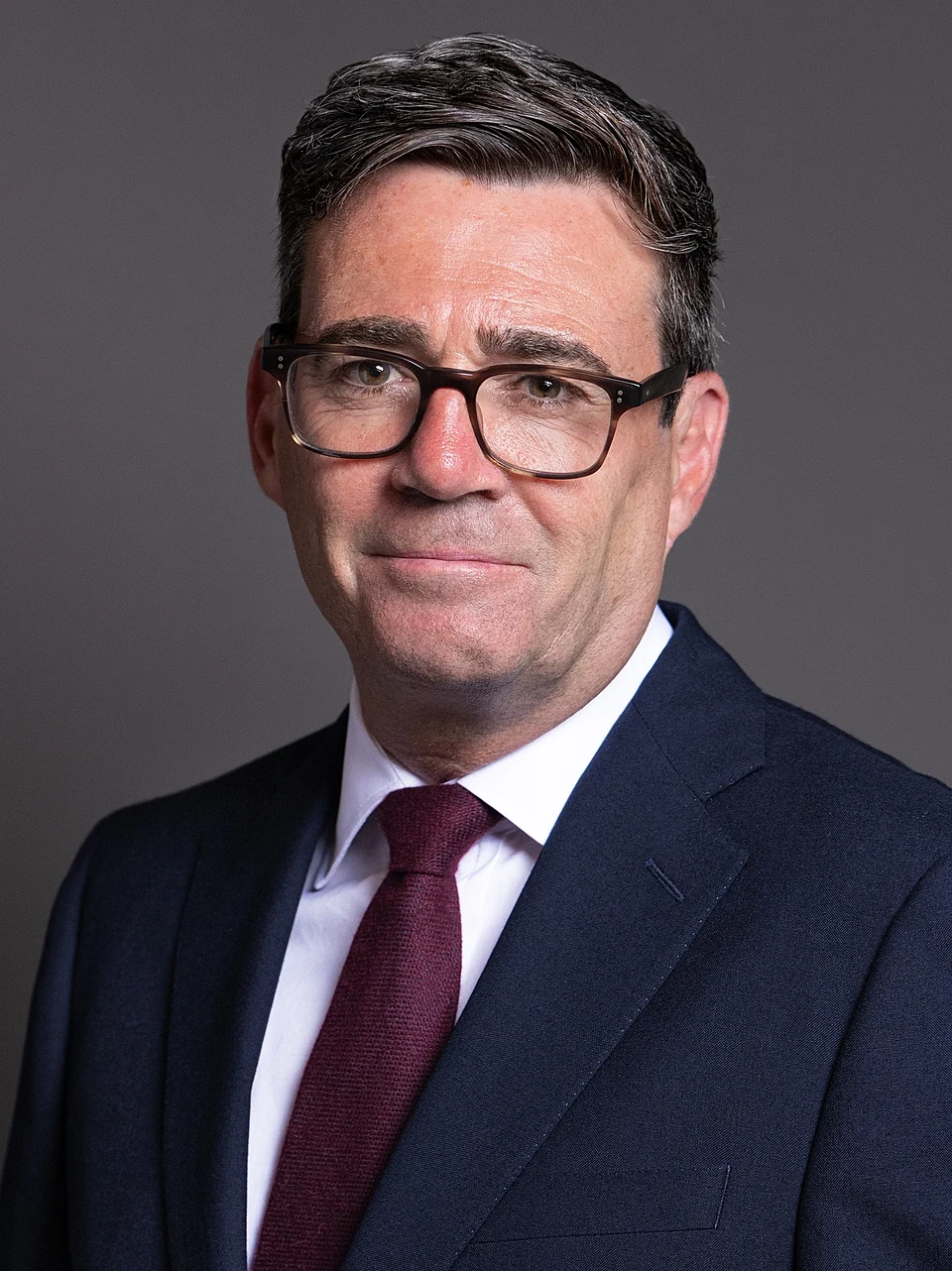
Andy Burnham became Britain’s new prime minister on Monday after being formally appointed by King Charles III, taking over from Keir Starmer at a time when the country continues to face political instability and economic challenges.
Burnham, 56, was appointed without opposition after Starmer agreed to step down last month following a string of election defeats, policy reversals and scandals. Britain’s parliamentary system allows governing parties to replace leaders without holding a general election, meaning Burnham entered office without a public vote. He is the seventh British prime minister since 2016 and the fifth in just four years.
The transition began Monday morning with Starmer delivering a farewell speech outside 10 Downing Street before traveling to Buckingham Palace to formally resign. Shortly afterward, Burnham arrived at the palace, where King Charles asked him to form a government during the traditional ceremony known as “kissing hands,” though modern prime ministers are not expected to actually do so.
Burnham then returned to Downing Street to deliver his first remarks as prime minister. Breaking from recent tradition, he spoke without using a lectern, standing freely outside No. 10 in what reflected the more informal image he has tried to project throughout his political career.
In his speech, Burnham promised what he described as a “circuit breaker for Britain” and said he would introduce a 10-year plan for the country later this year. He also pledged immediate action to help people struggling with the rising cost of living.
“My first instruction will be to end rough sleeping in our country,” Burnham said. “I know people at home are fed up with politics. I hear you and I want to be honest with you — we have not been good enough and we need to be better.”
Burnham takes office facing many of the same problems that challenged his predecessor. Britain continues to grapple with slow economic growth, pressure on the National Health Service, debates over immigration and questions surrounding its future relationship with Europe. He must also deal with growing political competition from Reform UK, the party led by Nigel Farage, which currently leads in opinion polls.
His arrival in Downing Street has already brought changes within government. Several senior ministers from Starmer’s Cabinet announced they would not continue in their positions, including Deputy Prime Minister and Foreign Secretary David Lammy and Treasury chief Rachel Reeves.
Burnham is best known nationally for his time as mayor of Greater Manchester, a role he held after leaving Parliament in 2017. During his years in local government, he promoted shifting more political power away from London and toward regional communities. He has referred to that approach as “Manchesterism” and has said he wants to create “a new politics” that gives ordinary people a greater role in decision-making.
On the international stage, Burnham said one of his first calls as prime minister would be to President Donald Trump, alongside Ukrainian President Volodymyr Zelenskyy. He has said British support for Ukraine will remain steadfast and has expressed a desire for Britain to eventually rejoin the European Union, though he has stated that it is not an immediate priority.
Starmer, meanwhile, left office after just two years as prime minister. Speaking before his departure, he said, “I go with a smile,” and described serving the country as “the privilege of my life.”
Image is licensed under the Creative Commons Attribution 3.0 Unported license and was created by the House of Commons.













.jpg)