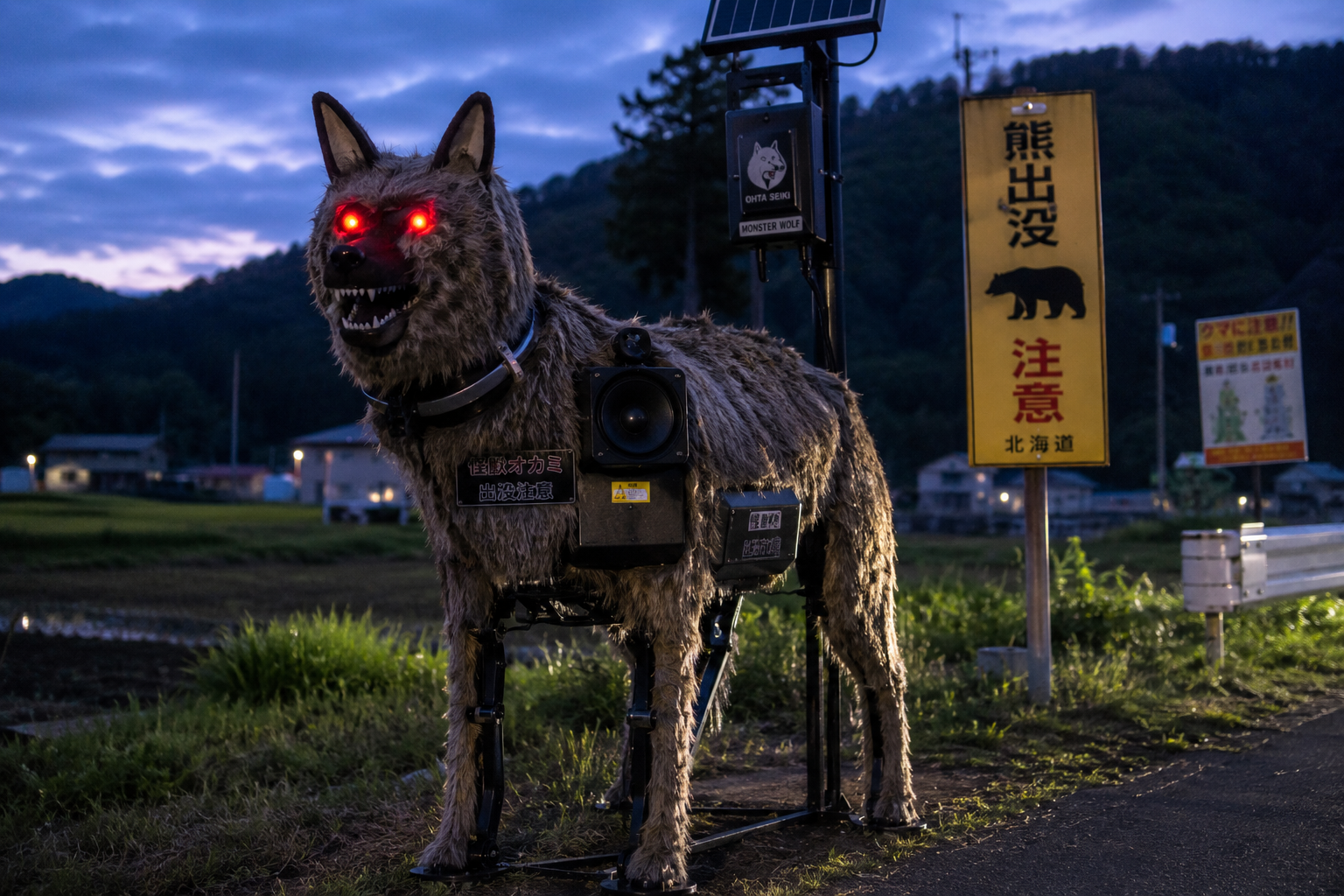
As bear attacks continue to rise across Japan, one small company in Hokkaido is suddenly overwhelmed with demand for its strange-looking robot wolves designed to scare wildlife away from people.
The machines, called “Monster Wolf,” are built by Ohta Seiki, a manufacturer based in Japan’s northernmost main island. The devices are meant to frighten bears and other animals before they get close to farms, schools, golf courses, or rural work sites.
The robot looks intentionally unsettling. It has fake fur wrapped around a metal frame, glowing red eyes, moving parts, and speakers that blast loud noises. Some sounds resemble growls and howls, while others are electronic alarms or human voices. Sensors activate the machine when movement is detected nearby.
What started as a niche product has become much harder to keep in stock this year. The company has already received about 50 orders in 2026, which is unusually high compared to past years. Since each unit is assembled by hand instead of mass-produced, customers are now waiting months for delivery.
Company president Yuji Ohta said demand increased as more communities became worried about bear encounters and damage caused by wildlife. Farmers still make up a large part of the customer base, though orders are also coming from golf course operators and people working outdoors in remote areas.
Japan has seen a sharp increase in bear-related incidents recently. During 2025 and early 2026, bears killed 13 people and injured more than 200 others across the country, according to official figures. Authorities also reported over 50,000 sightings nationwide, more than double earlier records.
The animals have appeared in places that surprised many residents. Sightings were reported near schools, supermarkets, airports, and hot spring resorts. In some northern areas, local media said spring sightings jumped to several times last year’s numbers once bears emerged from hibernation.
Researchers believe a few trends are contributing to the problem. Bear populations have grown, while many rural communities in Japan continue shrinking as younger residents move toward cities. Empty land and fewer people in remote areas have allowed bears to roam farther into spaces once dominated by humans. Food shortages in natural habitats may also be pushing the animals closer to towns.
The government has responded by increasing efforts to capture bears. More than 14,000 were reportedly culled in 2025 alone, almost triple the amount from the year before.
Monster Wolf was first introduced in 2016 to protect crops from animals such as deer and wild boars. At the time, some people reportedly dismissed the idea because of its unusual appearance. The furry robot with flashing lights looked more like a movie prop than a serious wildlife prevention tool.
Now the company is working on updated versions. One future model may include wheels so it can move along set paths or chase animals for short distances. Ohta Seiki is also exploring a smaller handheld version aimed at hikers, anglers, and children walking to school in rural towns.
Each unit costs around $4,000 depending on the setup. The machines use batteries and solar panels for power, and their speakers can reportedly be heard from as far as one kilometer away.
This image is the property of The New Dispatch LLC and is not licenseable for external use without explicit written permission.