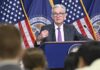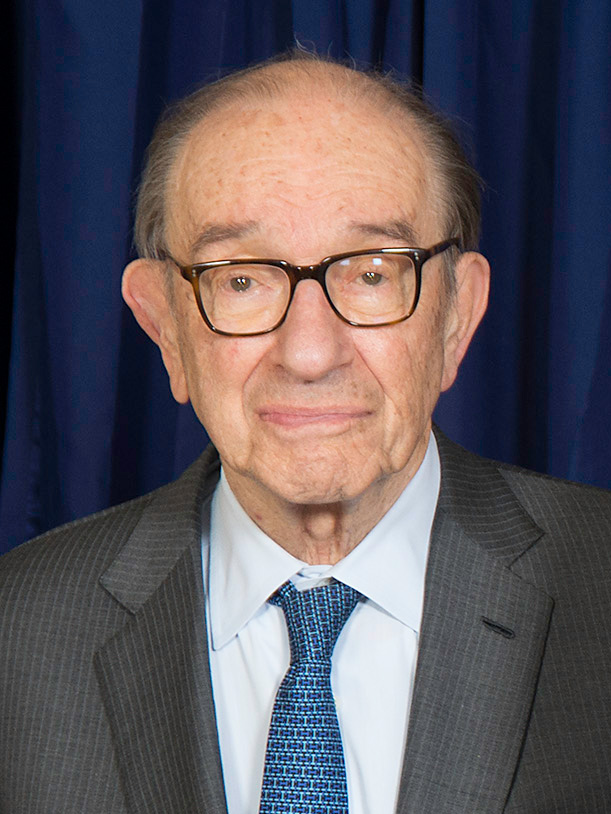
Alan Greenspan, who led the Federal Reserve for nearly two decades and became one of the country’s most recognizable economic policymakers, died Monday at his home. He was 100.
His wife, NBC News correspondent Andrea Mitchell, said he died from complications related to Parkinson’s disease. The couple had been married since 1997.
In a statement, Mitchell described Greenspan as a man who influenced the American economy for many years and said he was willing to acknowledge his own errors. She also remembered his love of sports, jazz and music.
Greenspan headed the Federal Reserve from 1987 to 2006, serving under four presidents. His time in office covered periods of strong economic growth and several major financial disruptions. He took over only a few months before the stock market crash of October 1987, when the Dow Jones Industrial Average suffered its largest one-day percentage decline.
The central bank moved quickly after the crash to keep money flowing through the financial system. The response helped calm investors and became one of the defining moments of Greenspan’s early years as chairman.
He later guided the Fed through events that included the Asian financial crisis, the collapse of the dot-com boom and the economic fallout after the terrorist attacks of Sept. 11, 2001.
Many economists credited Greenspan with helping oversee a long stretch of economic expansion during the 1990s. At the same time, critics argued that low interest rates and support for financial deregulation contributed to the housing bubble that burst during the financial crisis of 2007 and 2008.
Greenspan himself admitted after the crisis that he had underestimated the risks building inside the financial system.
Born in New York City’s Washington Heights neighborhood on March 6, 1926, Greenspan first pursued music. He attended the Juilliard School and played both the saxophone and clarinet before turning his attention to economics.
He earned undergraduate and graduate degrees from New York University and later completed a doctorate in economics. During the 1950s he became associated with writer Ayn Rand, whose support for free markets influenced many of his ideas.
Before arriving at the Federal Reserve, Greenspan worked as an economic consultant and held several government positions, including chairman of President Gerald Ford’s Council of Economic Advisers.
After retiring from the Fed in 2006, he opened a consulting company and wrote books about economics and politics.
The Federal Reserve said Greenspan’s work left a lasting effect on the institution and praised his role in shaping monetary policy over many years. The central bank also offered condolences to Mitchell and his family.
Image is in the public domain and was created by the Federalreserve.