Farmers across California’s San Joaquin Valley say rising diesel prices are making an already expensive growing season even tougher. With harvest underway for many tree fruit crops, growers are spending more money to run equipment, transport produce and keep operations moving during one of the busiest parts of the year.
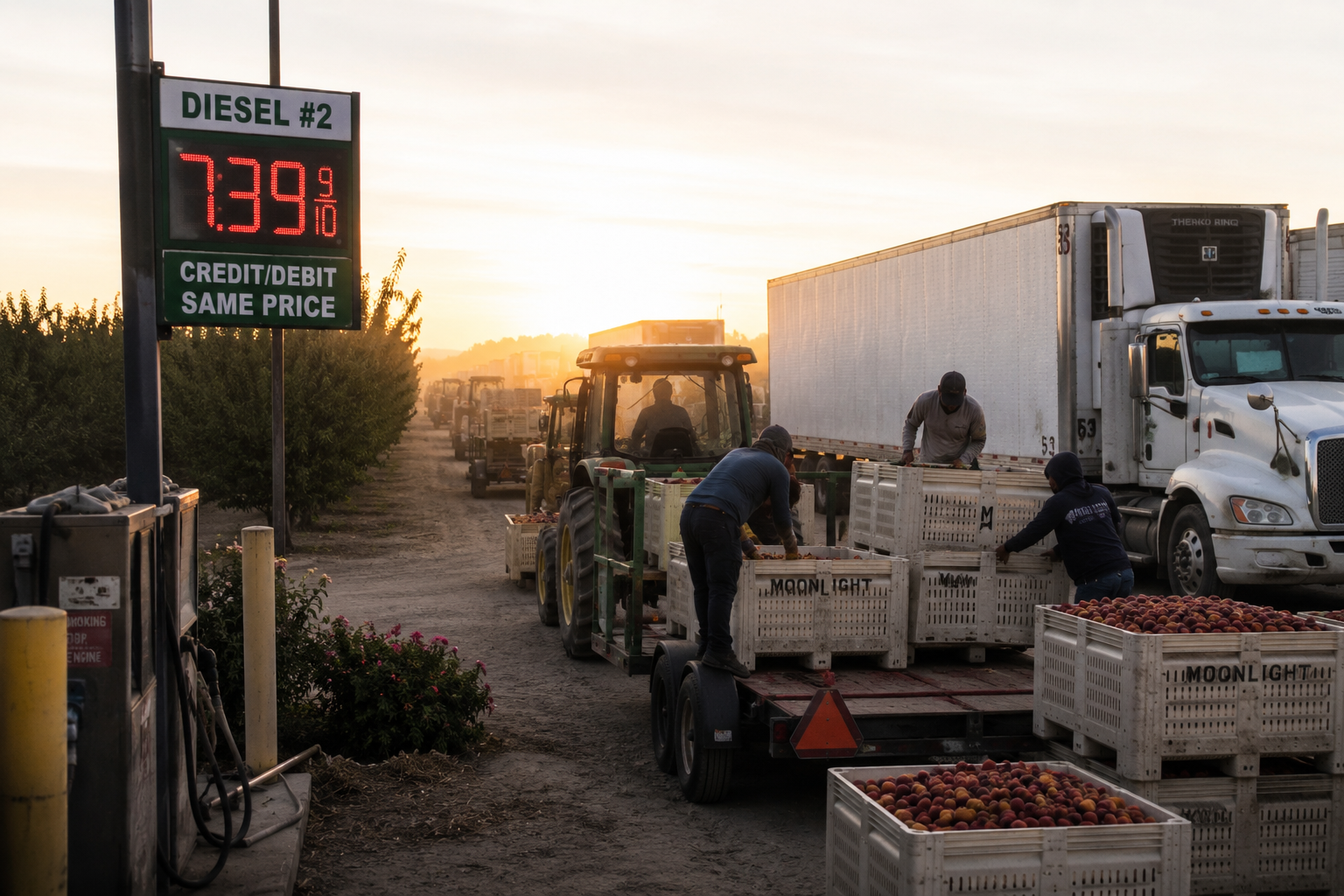
Diesel prices in California are now sitting between roughly $7.30 and $7.50 per gallon, depending on the area. Farmers say prices have climbed sharply since conflict involving Iran disrupted global energy markets earlier this year. Analysts expect fuel costs to remain high through the summer months, which worries growers preparing for long harvest days and heavy shipping schedules.
In the Valley, tractors, irrigation systems and refrigerated trucks all depend on diesel. That means fuel costs spread through almost every level of farming. Russ Tavlan, who runs Moonlight Companies in Reedley, said transportation has become especially expensive. His company ships fruit across the country, and he said long-distance refrigerated deliveries now cost far more than they did a year ago.
Tavlan said many sales agreements with customers had already been finalized before fuel prices surged. Because of that, growers often cannot adjust prices enough to recover those added expenses. He estimated overall production costs for his operation have increased around 6% compared to last season.
According to federal labor data, grocery prices in April were up 2.9% from the year before. Economists say fuel plays a large role in that increase because food products require transportation, packaging and processing before they ever reach stores.
Daniel Sumner, an agricultural economist at the University of California, Davis, said rising fuel costs affect both farms and consumers at the same time. When diesel becomes more expensive, growers pay more to operate machinery and move crops, while businesses involved in food distribution also face higher bills. Those costs eventually work their way into grocery prices. It’s kind of unavoidable.
Some farmers are dealing with the issue from two directions. Fresno County farmer Greg Markarian also operates a trucking business that hauls agricultural products. He recently added fuel surcharges for customers after watching diesel prices rise by about $2 per gallon in only a few months.
“You have to find a way to make up those added costs,” Markarian said. “I hate charging people more, because you don’t want to lose a customer, but what else can you do?”
Markarian grows almonds, citrus and cherries. While almond prices have improved slightly, he said he still carefully reviews every purchase made on the farm. Some expenses get delayed if possible. Others cannot.
Smaller farms are feeling pressure too, especially growers who travel long distances to farmers markets. Rebecca Torosian, owner of Tory Farms in Dinuba, spends hours each week driving fruit to markets in places like San Francisco and Santa Cruz. Fuel, labor and chemical costs have all gone up over time, forcing her to steadily raise prices.
Several years ago, Torosian sold fruit for a little over $2 per pound. Now many of her products sell closer to $5 per pound. She said holding prices steady eventually became unrealistic with operating costs continuing to rise.
Farmers in other states are also preparing for higher expenses later this year. Wisconsin farmer Doug Rebout said earlier fuel contracts protected him somewhat this season, but he expects future diesel purchases to cost much more if tensions overseas continue and shipping routes remain disrupted.
Rebout estimated his diesel spending could jump from around $120,000 last year to nearly $200,000 next season. He said even if global conditions improve soon, prices may still take months to settle back down.
This image is the property of The New Dispatch LLC and is not licenseable for external use without explicit written permission.