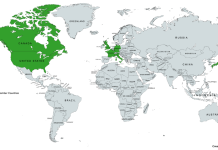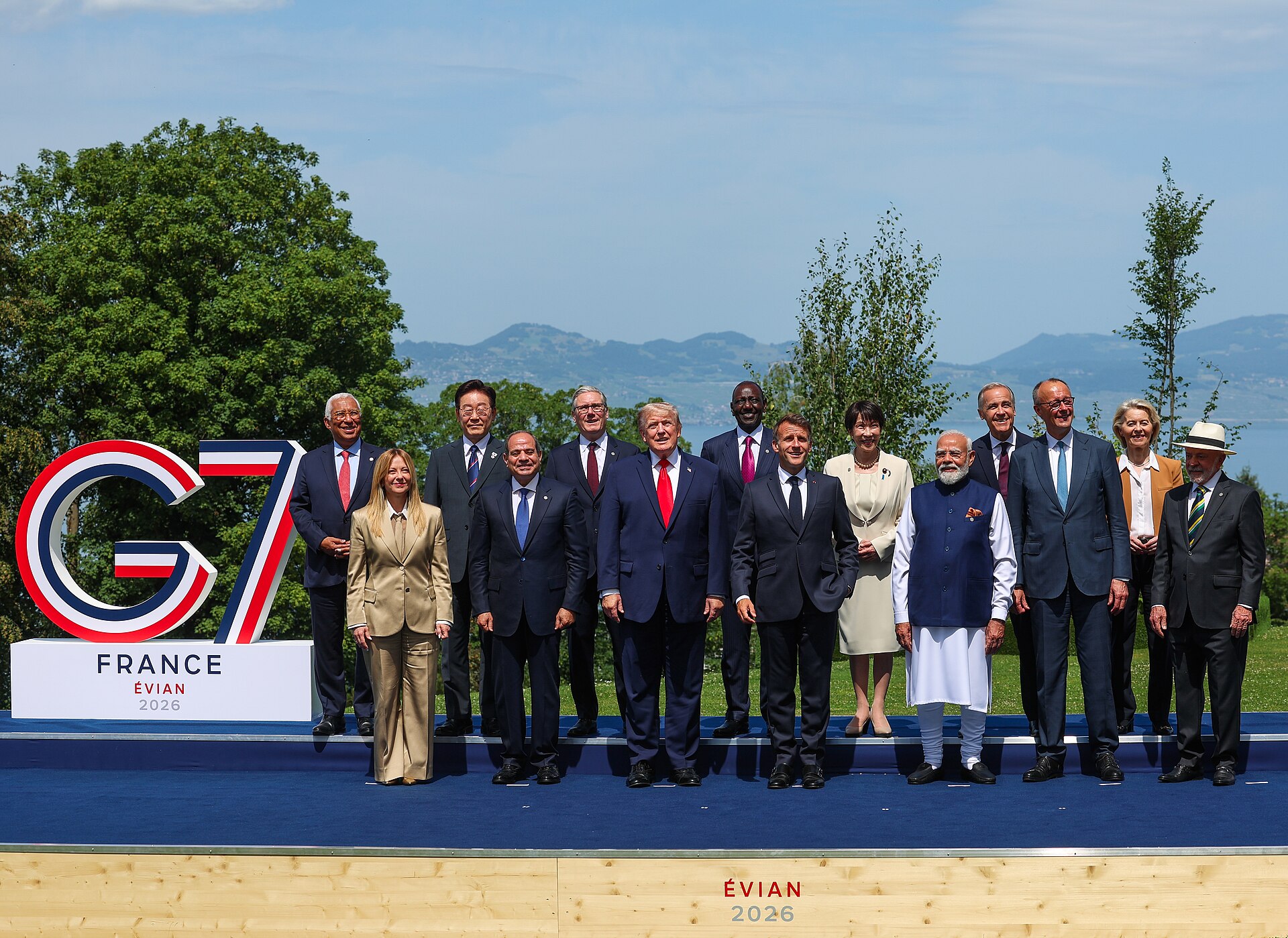
World leaders left the annual G7 summit in the French Alps this week after several days of talks on international conflicts, economic cooperation and artificial intelligence. The meeting brought together leaders from the Group of Seven countries as well as invited nations including Brazil, Egypt, India, Kenya and South Korea. It also attracted criticism from aid groups and protesters who argued that the concerns of ordinary people received little attention.
The final day of the summit featured a discussion on artificial intelligence that included executives from OpenAI, Anthropic and Google DeepMind. Their participation showed how closely governments and major technology companies are working on questions surrounding AI development and regulation. Earlier in the week, the United States had restricted foreign access to some of Anthropic’s most advanced models because of national security concerns.
Demonstrations took place in Geneva before and during the summit. Organizers estimated that about 20,000 people participated. Many protesters criticized the influence of wealthy countries and large corporations, saying global decisions are increasingly shaped by political and business elites while poorer communities struggle with rising living costs.
Pippa Saugy, one of the demonstrators, said she viewed the gathering as a meeting that benefits wealthy groups more than ordinary people. She also argued that the summit still reflects old power structures despite greater representation of women among world leaders.
Amitabh Behar, the executive director of Oxfam International, voiced similar concerns. Speaking from New Delhi, he said the world is dealing with rising food, fuel and fertilizer prices while millions of people are finding it harder to meet basic needs. He argued that the summit did not address deeper issues such as inequality, human rights and the growing gap between rich and poor.
Behar also pointed to recent reductions in international aid. According to Oxfam, aid contributions from OECD countries have fallen by 23 percent compared with the previous year, with the United States making some of the deepest cuts. He said the reductions are already affecting communities by weakening public services and increasing financial pressure on poorer countries.
At the same time, Oxfam noted that wealth among some energy billionaires has continued to grow during recent conflicts. Behar said the current economic system allows wealth to become increasingly concentrated among a small number of people while many others face higher living costs.
French President Emmanuel Macron entered the summit hoping to keep U.S. President Donald Trump engaged in discussions and to strengthen cooperation with emerging economies. By the end of the meeting, Trump had remained for the entire summit and guest countries had taken part in many sessions and supported some policy declarations.
The G7 released a statement reaffirming support for Ukraine and promising additional air defense systems and military assistance. Leaders also agreed to increase pressure on Russia’s economy through further sanctions, including measures targeting the country’s oil and gas industries.
Another declaration backed a new agreement between the United States and Iran aimed at preventing Iran from developing nuclear weapons. Leaders also discussed maritime security in the Strait of Hormuz, online safety for children and cooperation on critical minerals. Subjects such as climate change, broader economic reforms and global inequality were largely absent from the main agenda, drawing criticism from groups that had hoped for a wider discussion of those issues.
Image is licensed under licensed under the Government Open Data License – India (GODL) and was created by the Ministry of External Affairs, Government of India.