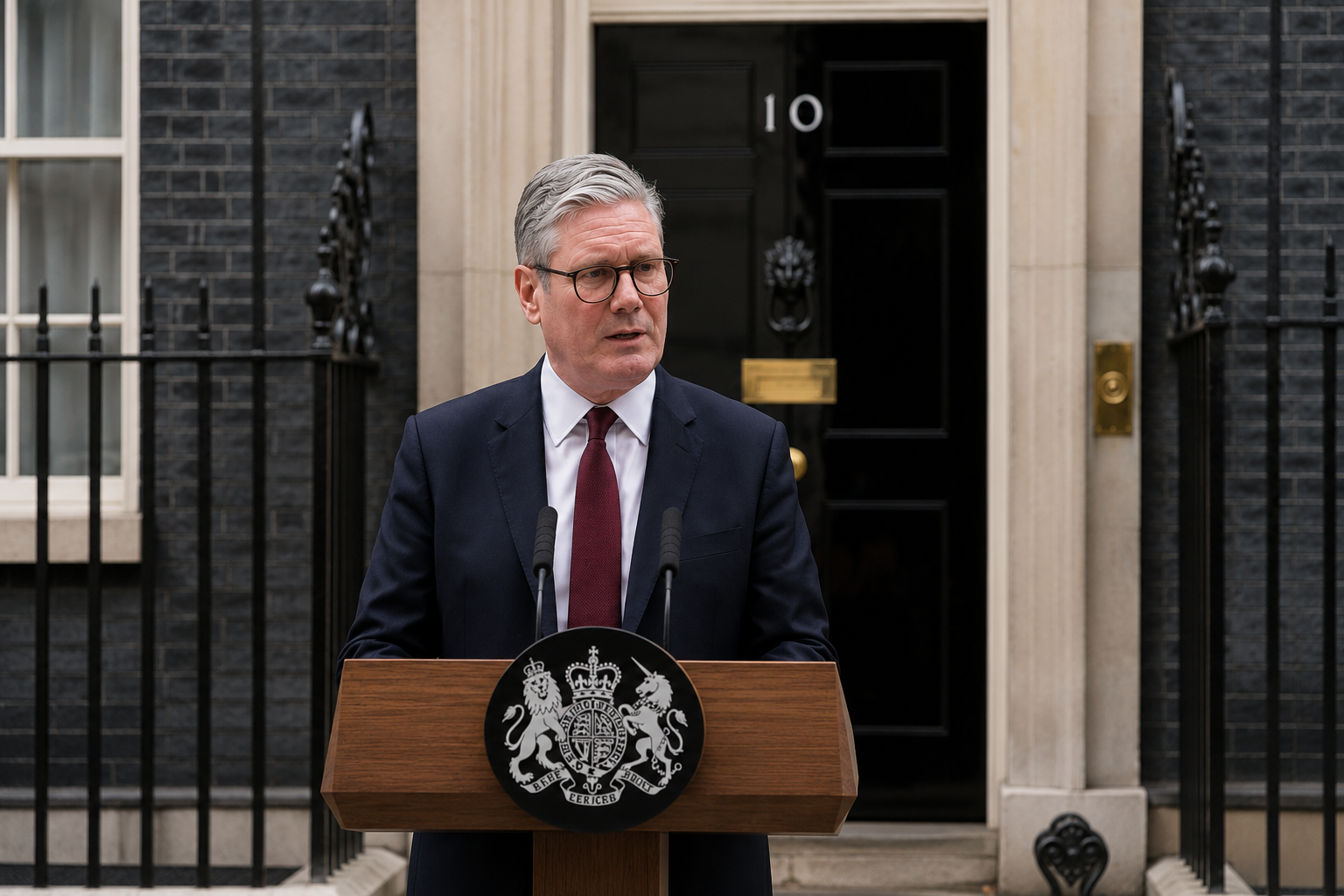
British Prime Minister Keir Starmer said Monday that he is resigning as leader of the Labour Party, a move that will bring his time in office to an end after less than two years.
Starmer said he will stay on temporarily while Labour chooses a new leader. The selection process is expected to begin in July and could be finished before Parliament’s summer break ends.
His departure follows months of pressure from inside his own party. Labour won a huge majority in the 2024 general election, but support for the government has fallen since then. Complaints about the economy, immigration and the pace of change have hurt the party’s standing with voters.
In a speech outside Downing Street, Starmer said becoming prime minister had been the proudest experience of his political life. He also acknowledged that many Labour lawmakers no longer believed he should lead the party into another election.
The announcement immediately shifted attention to Andy Burnham, the former mayor of Greater Manchester, who confirmed that he plans to seek the party leadership.
Burnham only returned to Parliament days ago after winning a by-election in Makerfield. The result drew interest because the area represents the kind of working-class seat that Labour has struggled to keep in recent years. Some party figures see his victory there as a sign that he may be able to rebuild support in places where voters have drifted away.
For years, Burnham has been viewed as a possible national leader. He spent 16 years as a Labour member of Parliament before becoming mayor of Greater Manchester in 2017. During the COVID-19 pandemic he gained attention for openly disagreeing with Boris Johnson’s Conservative government over financial support for his region.
Supporters describe him as someone who understands communities outside London and can connect with voters who feel ignored by national politics. Others say he has not always been clear about where he stands on issues such as immigration and Britain’s relationship with Europe.
Nigel Farage, leader of Reform UK, called for a general election shortly after Starmer’s resignation became public. Under Britain’s political system, though, a governing party can replace its leader without asking voters to return to the polls.
The next Labour leader will automatically become prime minister because the party still holds a majority in the House of Commons.
Britain has seen a rapid turnover of leaders since the country’s vote to leave the European Union in 2016. Starmer’s replacement will become the seventh person to serve as prime minister during that period.
Labour’s leadership contest is due to open on July 9, with nominations closing when Parliament begins its summer recess on July 16. Starmer said he wants the transition to be handled in an orderly way and plans to remain in office until the process is complete.
This image is the property of The New Dispatch LLC and is not licenseable for external use without explicit written permission.