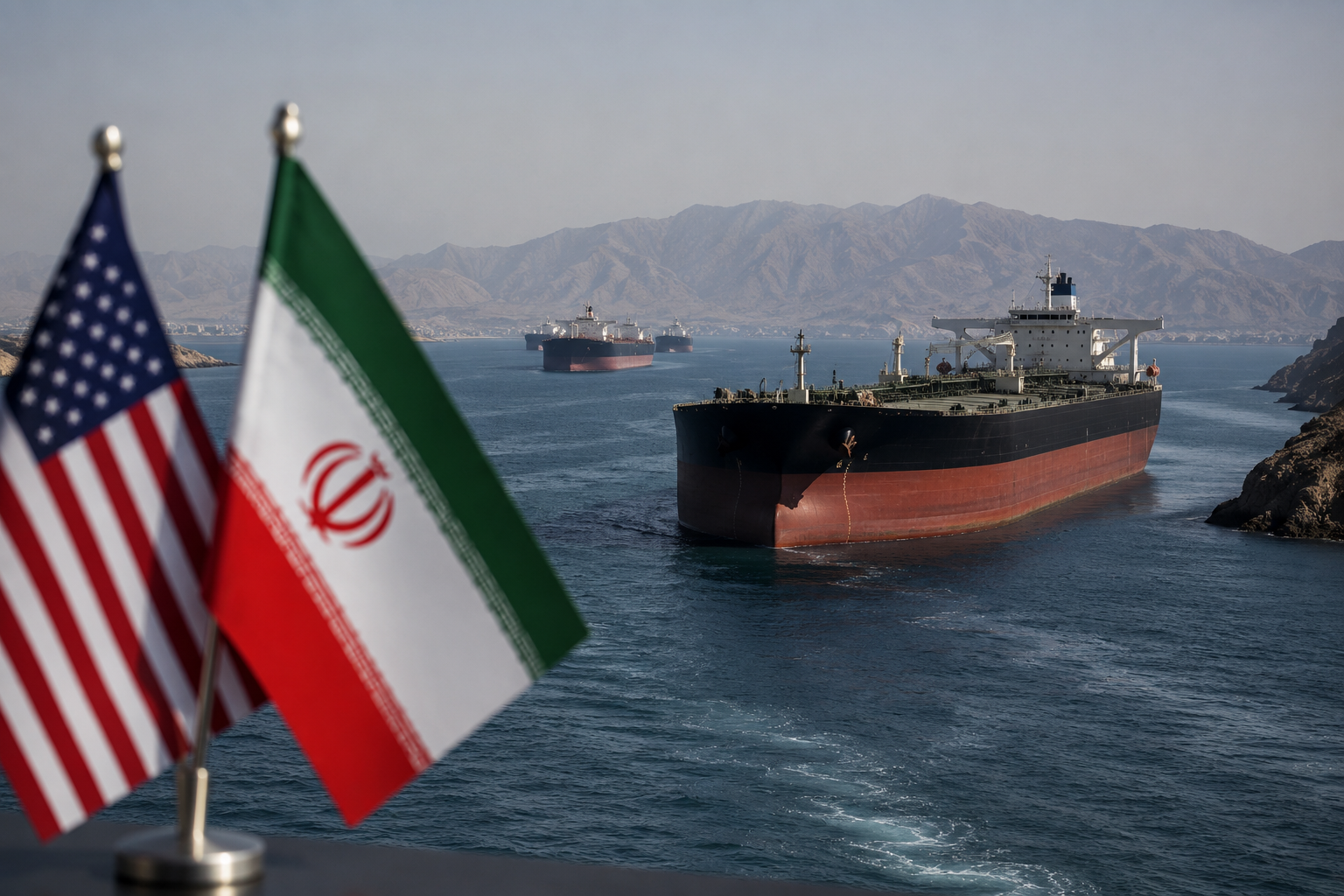
The United States and Iran have reached an initial agreement that could bring an end to more than three months of fighting and reopen the Strait of Hormuz, one of the world’s busiest shipping routes. President Donald Trump announced the deal Sunday, saying it has already been signed electronically. A formal signing ceremony is expected to take place Friday in Switzerland after months of negotiations led by Pakistan and Qatar.
Speaking during the G7 summit in France on Monday, Trump said the agreement was complete and that more details would likely be released after Friday’s ceremony. Iranian officials also confirmed that a memorandum of understanding had been reached after what they described as months of difficult negotiations. Vice President JD Vance said the document is only about a page and a half long and mainly creates a framework for future talks rather than settling every issue right now.
News of the agreement quickly affected financial markets. The S&P 500 climbed about 1.9%, while oil prices fell nearly 5% as investors expected shipping through the Strait of Hormuz to restart. The waterway normally carries around 20% of the world’s oil, but traffic has been heavily disrupted since fighting began in late February. Trump also announced that the U.S. would remove its naval blockade of Iranian ports and said ships would be able to move through the strait once mine removal begins after Friday’s signing.
Not everything has been worked out. The agreement extends the current ceasefire for 60 more days, giving both countries time to negotiate a permanent settlement. Some of the biggest issues are still unresolved, including Iran’s nuclear program, international sanctions, and billions of dollars in frozen Iranian assets. Those topics are expected to be the focus of technical talks beginning this week.
Trump has said Iran could be allowed to continue low-level nuclear enrichment, which is different from his earlier calls to completely dismantle the country’s nuclear program. Vance said Iran would be expected to commit to regional peace, stop funding militant organizations, and provide a verifiable guarantee that it will not develop a nuclear weapon. Exactly how those commitments would be enforced hasn’t been explained yet.
The agreement also includes plans to reduce fighting in Lebanon, although that part already faces challenges. Iran made an end to the conflict between Israel and Hezbollah one of its conditions during negotiations. Israeli officials have said they will keep troops in parts of southern Lebanon and continue military operations if necessary. Fighting continued after the announcement, with Hezbollah launching attacks and Israel responding with airstrikes. Trump criticized one Israeli strike near Beirut, saying it came at a time when both sides were close to reaching a deal.
Leaders from several countries welcomed the announcement. Pakistan’s Prime Minister Shehbaz Sharif, who helped mediate the talks, confirmed that the formal signing is planned for Friday in Switzerland. Officials from Qatar, the United Kingdom, France, Germany, Italy, and the United Nations also expressed support and called for negotiations to continue over the next two months.
Even with the announcement, shipping through the Strait of Hormuz had not fully resumed by Monday evening. Tracking data showed that most oil tankers were still waiting outside the strait, with only a handful of ships passing through after the agreement was announced. Many companies appear to be waiting for the deal to be officially signed before returning to normal operations.
This image is the property of The New Dispatch LLC and is not licenseable for external use without explicit written permission.