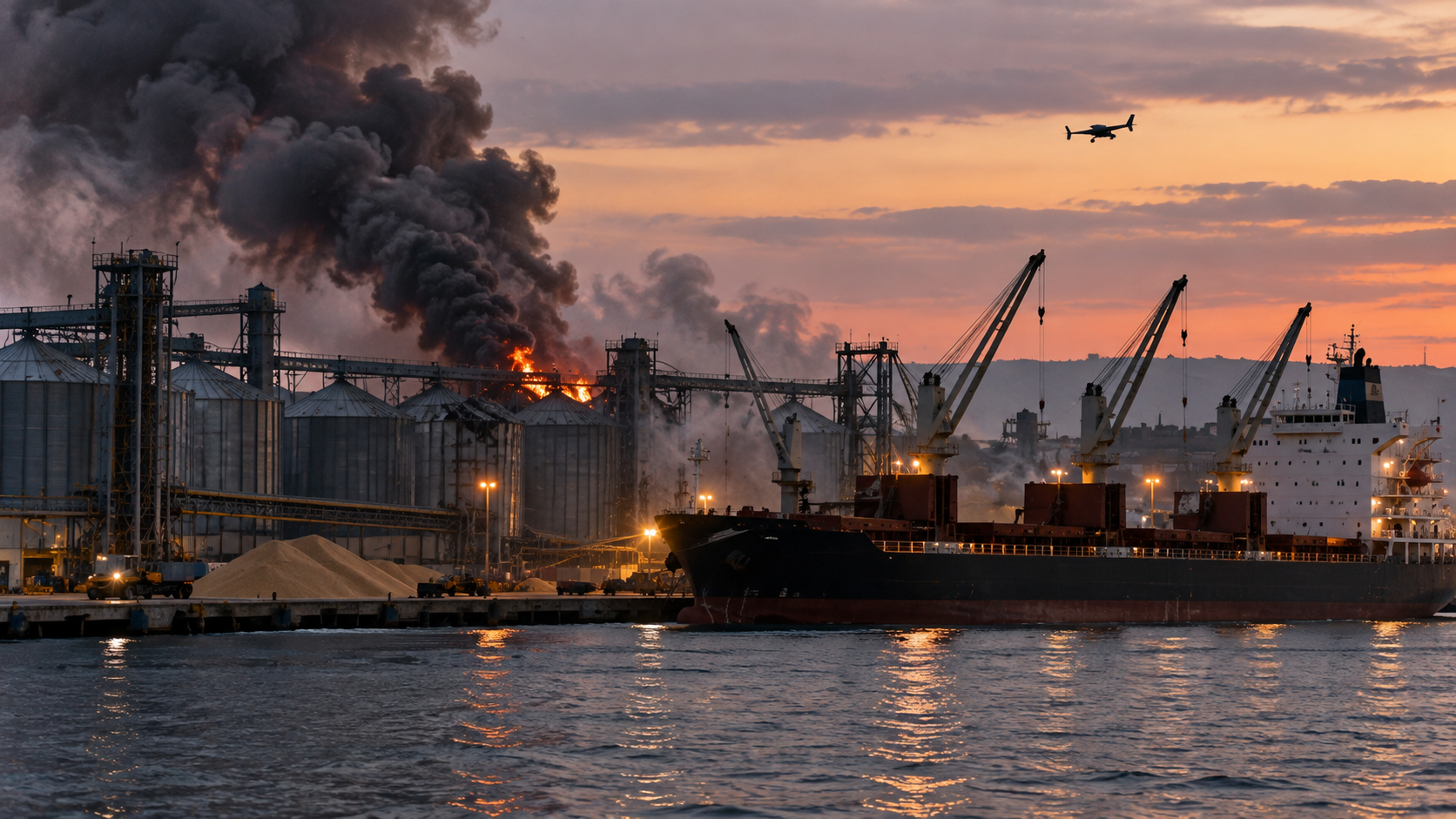
Drone attacks have created problems for farmers trying to move crops out of Russia’s Krasnodar region, where interruptions at ports have limited grain shipments. The regional government responded Wednesday by putting emergency measures in place, which can provide compensation for people and businesses dealing with losses connected to the disruptions.
Veniamin Kondratyev, the governor of Krasnodar, said attacks against transportation infrastructure have interfered with port activity and shipping. Farmers are feeling the effects because some have not been able to find a way to sell as much of their crops as they normally would.
There is also more grain available in Krasnodar this year. Farmers brought in 11.4 million metric tons of grain and pulses, compared with roughly 9.4 million tons a year earlier. With part of that supply unable to move normally through export channels, more agricultural products have remained on the Russian market.
One location affected by the situation is Novorossiysk, which plays a major role in moving Russian goods to customers outside the country. Grain passes through the city along with crude oil, petroleum products and other exports. The city has also repeatedly faced attacks involving Ukrainian drones.
Fighting has increasingly affected agricultural transportation in the surrounding waters as well. Russian and Ukrainian forces have both targeted grain vessels connected with the opposing country in recent months, while prices for grain around the world have risen.
The difficulties have left Russian officials looking at different options for getting agricultural products to buyers. Some grain is being moved through other routes rather than relying on the usual Black Sea connections.
Turkey has also put forward an idea aimed at allowing grain to travel safely through the Black Sea. The Kremlin said discussions involving that proposal have continued, although the information provided did not indicate that a new arrangement had been reached.
There is a previous agreement behind some of those discussions. Turkey and the United Nations worked together in July 2022 to establish the Black Sea Grain Initiative, which created a system for Ukrainian grain shipments to continue during the war.
Russia remained part of that arrangement until the following year. It then pulled out, saying problems affecting Russian food and fertiliser sales abroad had continued despite the agreement.
The circumstances in Krasnodar now involve Russia’s own ability to move agricultural products. A bigger harvest means farmers have more to sell, but interruptions affecting transportation have made reaching buyers harder.
That combination has contributed to excess grain remaining within the domestic market, according to Kondratyev. The emergency measures give affected producers an opportunity to receive financial compensation while the shipping problems continue.
For the moment, grain is still being redirected through other transportation routes. Talks connected with Turkey’s safe-passage proposal are continuing as well, while producers in Krasnodar deal with crops that have been more difficult to move from farms to buyers.
This image is the property of The New Dispatch LLC and is not licenseable for external use without explicit written permission.