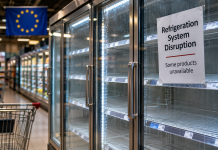
Food retailers in several European countries have recently found themselves dealing with a problem that wasn’t caused by a broken freezer or a power outage. Hackers were able to interfere with refrigeration controls, sending temperatures higher and leaving some stores with food they could no longer sell.
The incidents have raised concerns in the United States, where federal officials issued a warning Thursday(11/5/26) about the possibility of similar attacks. Businesses that use commercial cooling equipment are being asked to examine their systems, especially those that allow temperatures to be monitored or changed over the internet.
France has reported some of the largest losses. Attacks on commercial refrigeration equipment last month reportedly caused tens of millions of euros in damage. On Monday(11/2/26), another round of hacking affected more than 100 stores across Europe.
There have been problems in Belgium, Sweden and Luxembourg as well. Grocery retailers reported temperatures rising unexpectedly inside refrigerated storage units. Food spoiled as a result, creating losses for the affected businesses.
Some of the equipment involved came from Danish manufacturer Danfoss. Certain controllers were no longer receiving software security updates, which left businesses using older systems without new protections from the manufacturer.
The attacks have also reached facilities where the contents are more sensitive than groceries. In France, hackers attempted to increase temperatures inside refrigerators holding donated blood. The attempt was interrupted before the stored blood was damaged.
The situation isn’t entirely overseas. Six American military bases experienced unexplained refrigeration problems in August, and the Army’s criminal investigators are now examining those incidents. Authorities are looking into whether someone deliberately interfered with the equipment.
On Thursday(11/5/26), the FBI and four other federal agencies addressed the threat in a joint warning. The Cybersecurity and Infrastructure Security Agency participated, along with the departments of Agriculture, Transportation, and Health and Human Services.
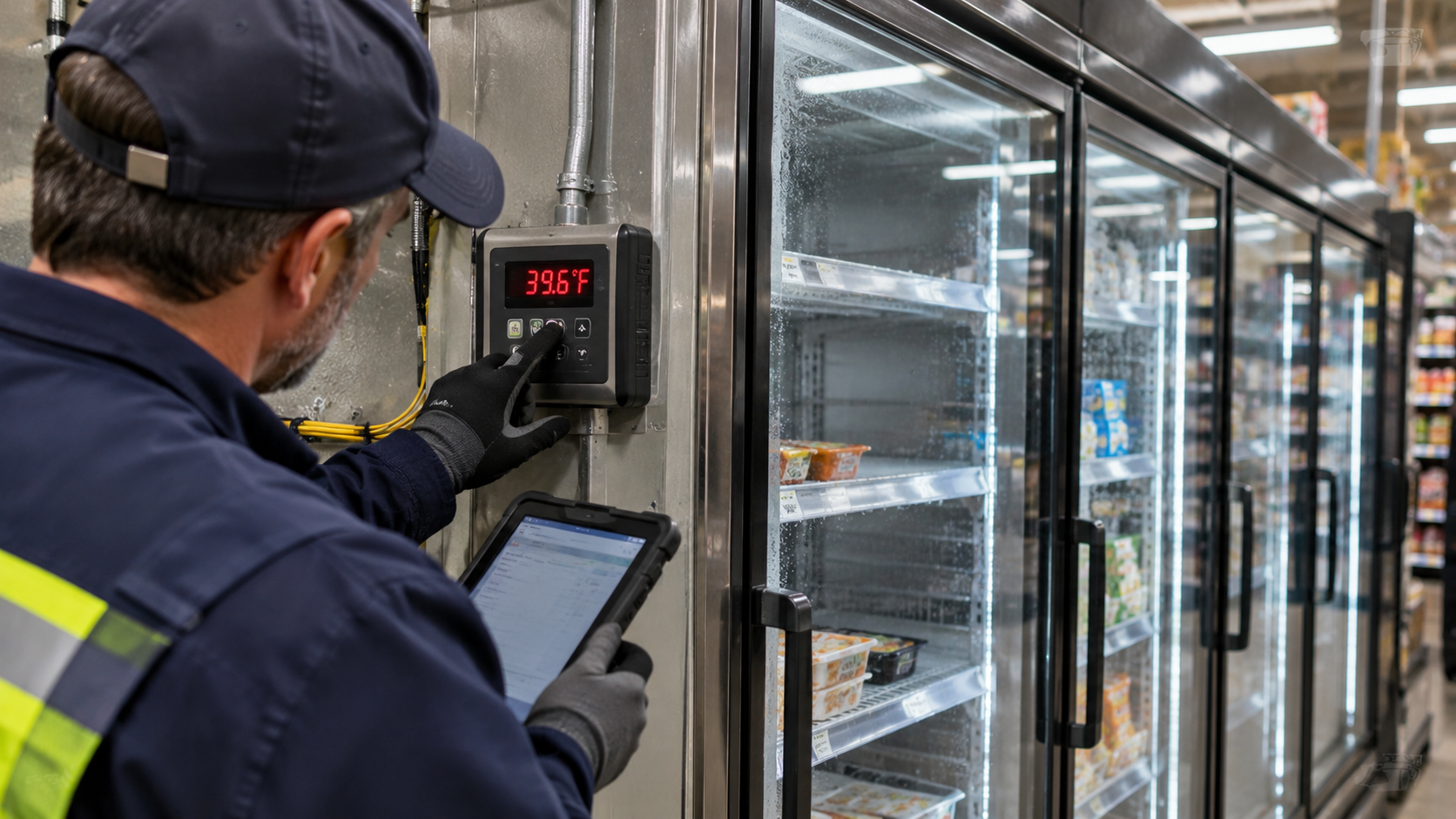
Their concern centers on electronic controllers used to manage cooling equipment. Some can be reached through an internet connection, making them vulnerable when passwords are weak, software is outdated or access isn’t properly restricted.
An attacker who gets into one of these systems may be able to change its temperature settings or interfere with the way it operates. Federal officials say repeated heating or defrost cycles could destroy stored products, damage machinery and potentially create fire hazards.
No group has been formally identified by the U.S. government as responsible for the attacks. Some security researchers have pointed toward Iran, and American officials reportedly have similar suspicions. Those suspicions have not resulted in a public attribution.
The government’s recommendations are aimed at reducing the number of ways someone could reach refrigeration equipment remotely. Businesses are being advised to remove unnecessary internet connections, install available software fixes and use stronger passwords.
Officials also want companies to separate refrigeration controls from the computer networks employees use for ordinary business activities. Equipment that no longer receives manufacturer security support may need replacing.
Chris Butera, a cybersecurity official at CISA, has warned that organizations shouldn’t assume their refrigeration equipment is beyond the reach of hackers simply because nothing unusual has happened yet.
This image is the property of The New Dispatch LLC and is not licenseable for external use without explicit written permission.