Nearly 3 million people in Paraguay have faced problems accessing their bank accounts since authorities took control of Ueno Bank on Tuesday(11/3/26). What started as a financial emergency has now reached the country’s highest political office, with former President Santiago Peña facing criminal charges and a possible prison sentence.
On Saturday(11/7/26), prosecutor Nancy Salomón announced two charges against Peña involving misuse of trust and the management of resources for personal benefit. He could receive up to 20 years behind bars if found guilty on both counts. Peña has rejected allegations that he broke the law.
Much of the investigation concerns the relationship between Ueno and government officials during Peña’s presidency. The bank had grown rapidly after receiving its banking license in 2023, attracting customers through discounts and other incentives. It eventually became a widely used financial service, particularly among people opening bank accounts for the first time.
Government institutions also placed considerable money with Ueno. Its public deposits reached approximately $800 million, representing about one-quarter of the bank’s total deposits. Investigators are examining decisions involving those funds and whether financial supervisors responded properly to concerns about the institution.
Problems with Ueno’s lending practices had been identified before its closure. Inspectors found that certain companies connected to the bank’s owners received loans that raised questions about legal limits and the amount of collateral available. Further examination uncovered financial records that gave an inaccurate picture of the bank’s resources.
The discovery left Ueno without enough capital to satisfy banking requirements. Authorities stepped in, and customers soon discovered that their usual banking services were unavailable. People who depended on the institution for purchases, transfers and cash withdrawals suddenly had to look for other ways to manage their money.
The political consequences developed over several days. Peña offered to resign Thursday(11/5/26), saying he wanted to avoid further problems for the country. Lawmakers declined to accept his departure on those terms and instead completed impeachment proceedings Friday(11/6/26), removing him through a Senate vote.
Pedro Alliana, who served as vice president, assumed the presidency. He began choosing Cabinet members Saturday(11/7/26), although some citizens have questioned whether his previous political ties to Peña should also receive scrutiny.
Peña was questioned by prosecutors Saturday(11/7/26) in Asunción. Judge Humberto Otazu ordered his continued detention at a military installation, and prosecutors requested that his property and financial holdings be frozen while the case proceeds.
The bank’s closure has brought financial worries for workers as well as depositors. Labor officials estimate around 7,000 jobs have been affected, including positions at businesses connected to Ueno.
Repayments are underway for some customers. By Saturday(11/7/26), the central bank reported that 1.2 million people had received either some or all of their money. Deposit insurance provides protection for qualifying savings up to approximately $37,000.
Public demonstrations have continued as residents seek answers about their accounts and the decisions made before the bank failed. Several gatherings have involved confrontations with police. A teachers’ union representing over 40,000 workers is also preparing a Monday walkout over concerns involving public retirement savings.
Criminal proceedings are moving forward against people associated with Ueno itself. Twenty-seven bank officials and associates have been charged, with several executives already detained as authorities examine the institution’s financial activities.
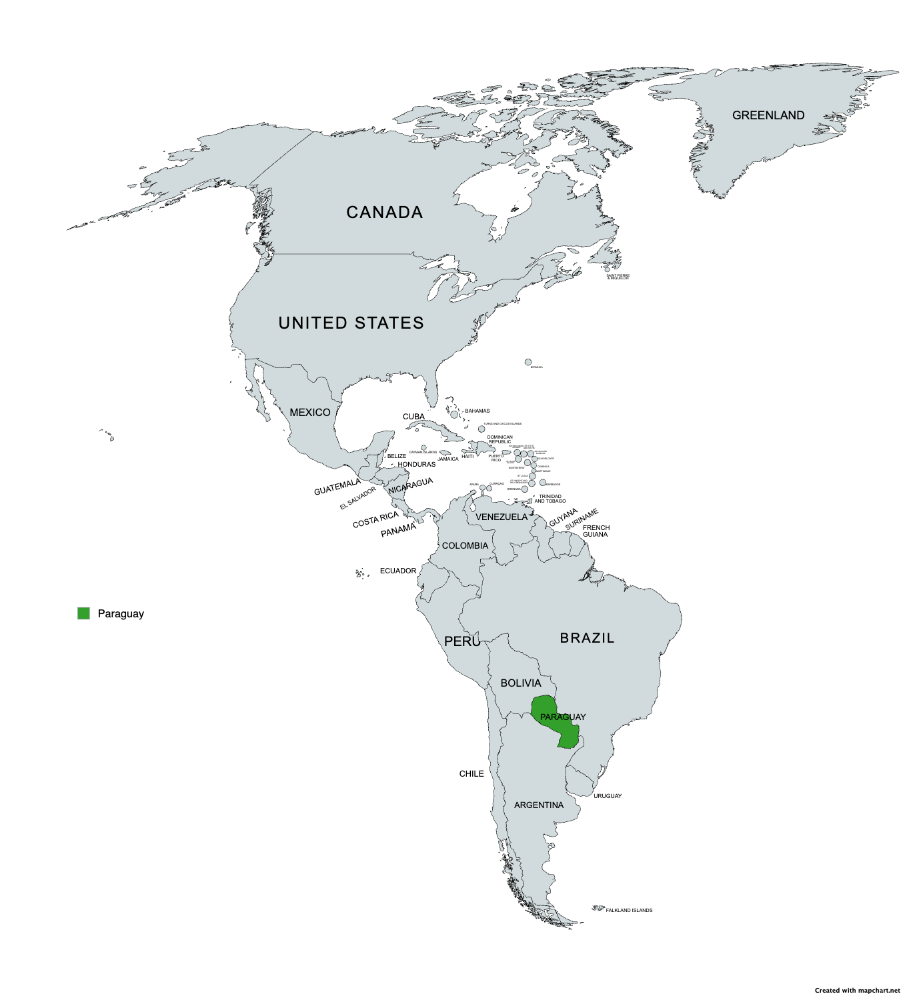
Paraguay = Green
Image is licensed under the Creative Commons Attribution-Share Alike 4.0 International license and was created using MapChart (https://mapchart.net).