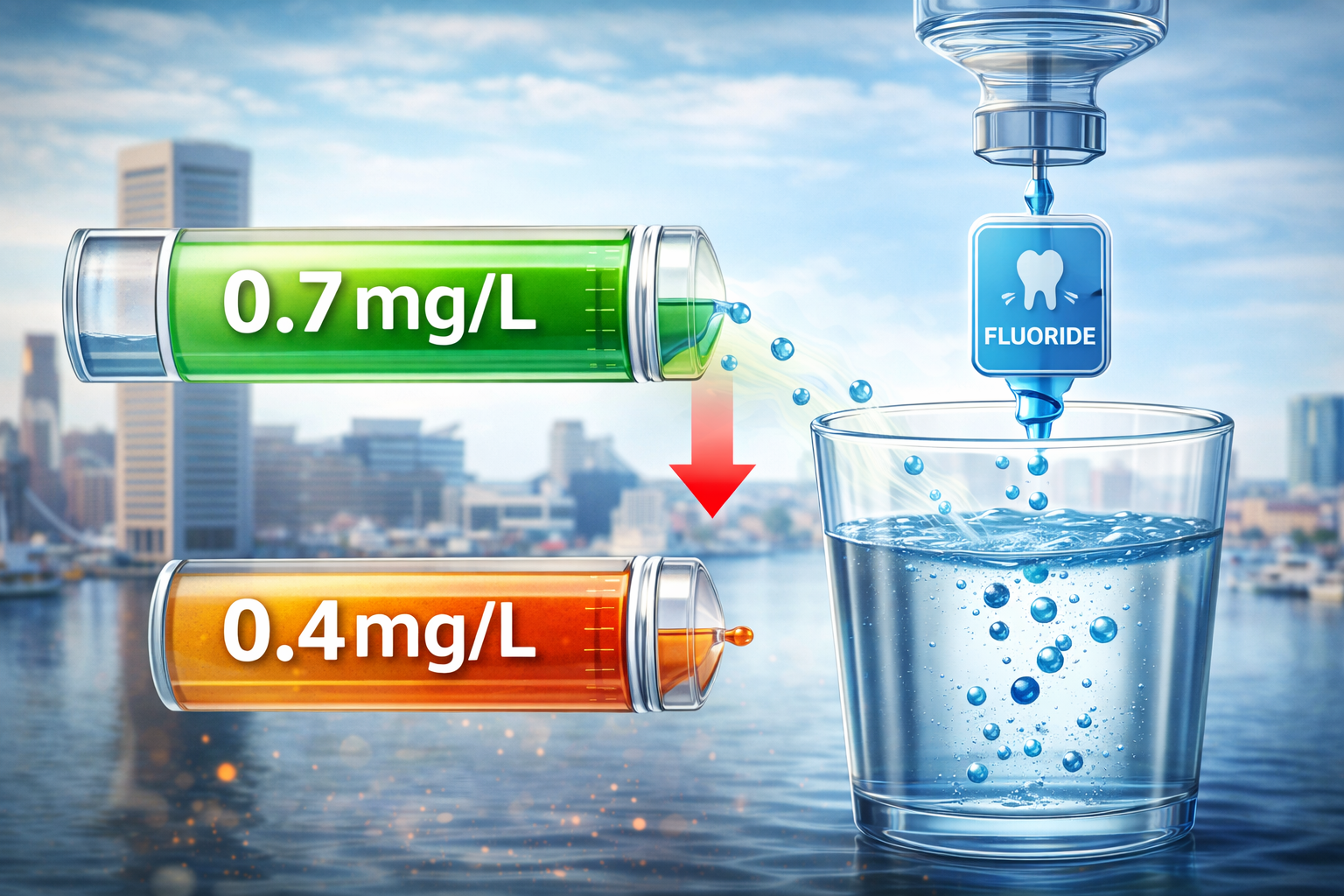
Fluoride levels in the drinking water in Baltimore were cut this month, dropping from 0.7 milligrams per liter to 0.4 mg/L. The change came after the city’s supplier warned that it would be sending fewer shipments of a key treatment chemical. Because of that, officials decided to lower the amount being used so the supply would last longer. For now, they say the change is temporary.
For decades, fluoride has been added to public water systems across the United States to help prevent tooth decay. The recommended level of 0.7 mg/L comes from the U.S. Public Health Service. Even with the drop, Baltimore’s water is still safe to drink. The main difference is that it may not protect teeth quite as much as it usually does.
The situation mostly comes down to a shortage of hydrofluorosilicic acid, the chemical used to add fluoride to water. Most of it is produced outside the U.S. and shipped in, so water systems rely on steady deliveries to keep levels consistent. When those deliveries slow down, there aren’t many quick fixes, and utilities have to adjust how they use what they have.
Part of the slowdown traces back to Israel, which is one of the main producers of the chemical. Officials say some workers at a major facility were called into military service, which affected production. With less being made, shipments to the U.S. have dropped, and that’s created challenges for systems that depend on those imports.
Baltimore isn’t the only place dealing with this. WSSC Water, which serves about 1.9 million people in the Maryland suburbs near Washington, D.C., has made the same change, lowering fluoride levels to 0.4 mg/L. A few smaller systems in Pennsylvania have also run into supply problems. In some cases, they even paused fluoridation for a short time before supplies picked back up.
Even so, officials say the water itself is still safe. Fluoride isn’t required by the Environmental Protection Agency, which sets standards for drinking water. It’s added mainly to support dental health, not to make water safe. People also get fluoride from other everyday sources like toothpaste, tea, and certain foods, so water isn’t the only source.
Experts say a short-term drop like this usually isn’t a big concern for most people. Over time, though, lower levels could mean less protection against cavities, especially for younger children whose teeth are still developing. Because of that, dentists still recommend brushing twice a day with fluoride toothpaste and keeping up with regular checkups. Those habits matter either way.
Water utilities say this kind of situation doesn’t happen often. In the past, delays during events like the COVID-19 pandemic slowed deliveries, but they didn’t lead to cutting back on chemical use. This time is a little different, since systems are actively trying to stretch what they have. Officials expect fluoride levels to return to normal once the supply chain improves, but right now, there isn’t a clear timeline for when that will happen.
This image is the property of The New Dispatch LLC and is not licenseable for external use without explicit written permission.