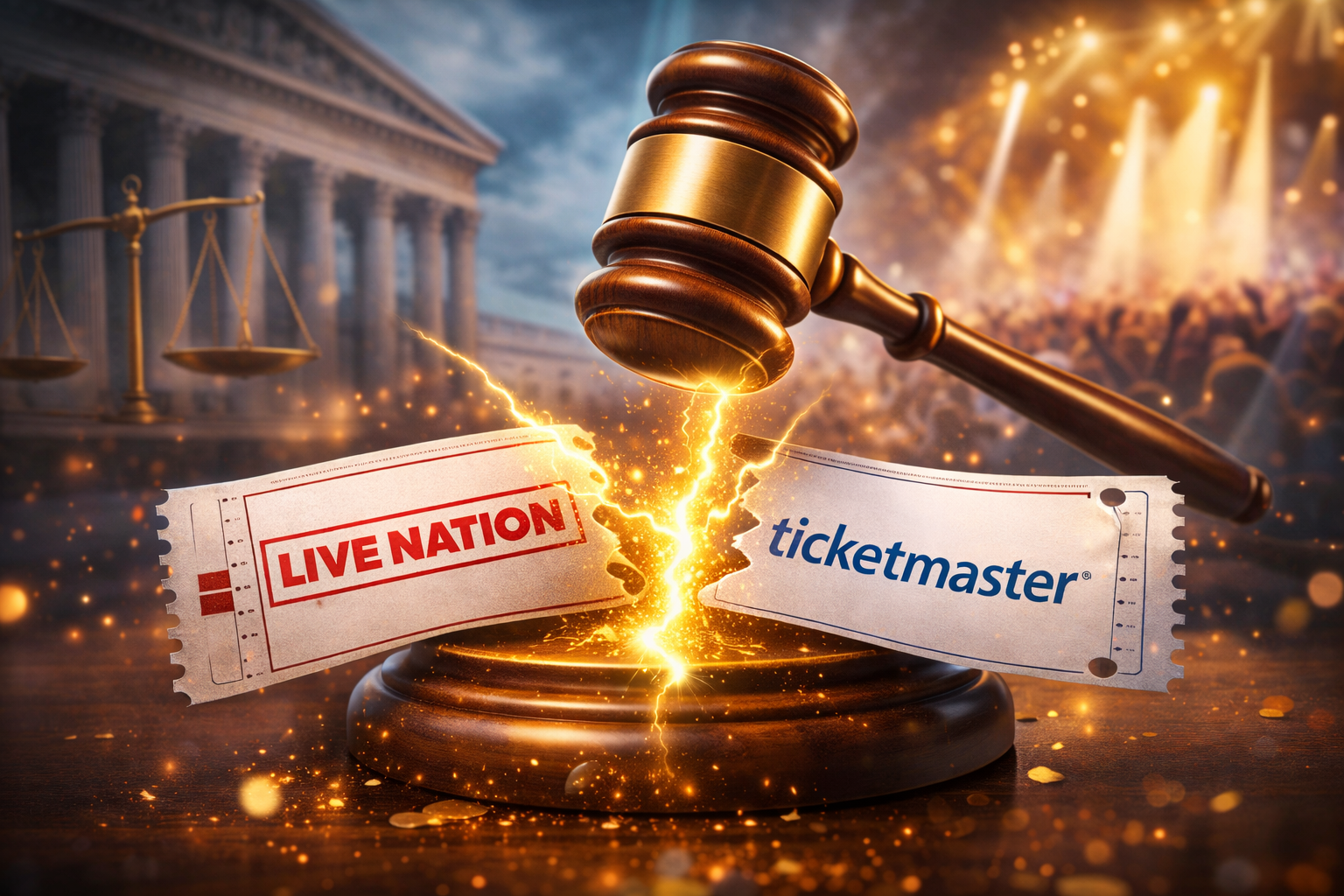
A jury in Manhattan decided on Wednesday that Live Nation and its ticketing division Ticketmaster broke antitrust laws by operating in a way that limited competition. The decision came after several days of deliberation and marks a major step in an ongoing legal fight over how concerts are organized and sold in the United States.
The case was brought by 33 states along with the District of Columbia. They argued that Live Nation built too much control across the live music business by combining concert promotion, venue ownership, artist management, and ticket sales. According to the lawsuit, this level of control made it difficult for competitors to enter the market and led to higher prices for fans.
State officials said the company’s practices reduced choices for venues and artists while increasing costs for people buying tickets. New York Attorney General Letitia James said the ruling supports long standing concerns that fans were being overcharged and that competition had been pushed aside.
Live Nation disagreed with the outcome and said the case is not finished. The company pointed to legal motions that are still under review and said it plans to challenge any rulings that go against it. In previous statements, Live Nation has argued that the entertainment market includes many competitors and that it does not dominate the industry in the way critics claim.
This lawsuit is connected to a broader effort by regulators to address the company’s influence. In 2024, the U.S. Department of Justice filed a separate case making similar accusations. That case ended earlier this year with a 280 million dollar settlement. As part of that deal, Live Nation agreed to place limits on certain fees and allow venues more freedom in choosing business partners.
Not all states accepted that agreement. Many decided to continue their own case, which eventually led to this jury verdict. Legal analysts say the new ruling could affect how the earlier settlement is handled, depending on what the court decides next.
During the trial, Live Nation CEO Michael Rapino testified and denied that the company used unfair tactics to block competition. Testimony also included input from others in the music industry, along with internal company messages that were reviewed as evidence.
The next step will be determined by U.S. District Judge Arun Subramanian, who will decide on penalties and possible changes to the company’s structure. One issue is financial damages. Jurors were told that fans may have been overcharged by about 1.72 dollars per ticket over several years. If applied broadly, that could lead to a very large total amount.
There is also the possibility of structural changes to the business. Some experts have suggested separating parts of Live Nation’s operations, such as its ticketing and concert divisions, although it is not clear if the court will require that.
Live Nation was formed in 2010 after merging with Ticketmaster and has since grown into a major force in live entertainment. Its concert division alone brought in nearly 21 billion dollars in 2025.
What happens next will depend on the judge’s decisions and any appeals that follow, which could shape how the live music industry operates going forward.
This image is the property of The New Dispatch LLC and is not licenseable for external use without explicit written permission.