President Donald Trump said a temporary ten-day ceasefire had been arranged between Israel and Lebanon to pause the latest round of fighting tied to Hezbollah. The pause was set to start at 5 p.m. Eastern time and was described as an opening move toward wider negotiations. Trump said he spoke with Lebanese President Joseph Aoun and Israeli Prime Minister Benjamin Netanyahu before sharing the announcement.
The United States said the agreement was reached after direct talks involving Israeli and Lebanese officials in Washington. Those discussions were reportedly the first face-to-face talks between the two sides in many years. American officials said the next goal is a broader agreement dealing with border security, sovereignty, and long-term stability.
Trump also said leaders from Israel and Lebanon could meet soon at the White House. He stated that Vice President JD Vance and Secretary of State Marco Rubio would help guide future negotiations. No date for a meeting was announced.
Questions remain about whether the ceasefire will fully take hold. Hezbollah has not formally accepted the deal. A senior official from the group said any decision would depend on Israel fully stopping military action. Because Hezbollah was not directly part of the talks, its response is seen as a key factor in whether the pause lasts.
Israeli Prime Minister Netanyahu confirmed that Israel agreed to a temporary halt in fighting, but he also said Israeli troops would remain in southern Lebanon. He said Israel would continue holding a security area near the border and would not agree to withdraw under the current terms. Netanyahu also repeated Israel’s demand that Hezbollah be disarmed and dismantled.
Under the reported terms, Lebanon is expected to prevent Hezbollah and other armed groups from carrying out attacks from Lebanese territory. The agreement also supports the idea that only Lebanon’s official military and security agencies should operate with weapons inside the country. Israel, meanwhile, said it would keep the right to act against immediate threats.
Even as the ceasefire was being announced, fighting had continued in parts of southern Lebanon. Reports described Israeli airstrikes hitting towns, roads, and bridges. Emergency workers were also among those killed. Damage to transportation routes has made movement more difficult for civilians and aid workers.
Lebanese authorities say more than 2,100 people have died since the conflict began, and over one million residents have been displaced. In Israel, 21 people have been reported killed, with deaths linked to attacks involving Hezbollah and Iran.
The current round of fighting began after U.S. and Israeli military action in Iran. Hezbollah then launched rockets into Israel, and Israel responded with airstrikes and ground operations in Lebanon’s south. Since then, the conflict has widened and drawn in regional powers.
Iran has said that any larger peace effort should also include Lebanon. At the same time, tension around the Strait of Hormuz has raised concerns about trade and fuel supplies. Reports said hundreds of ships were waiting in nearby waters because of security risks.
For now, the main question is whether both sides will hold fire long enough for talks to continue. If progress is made, the ten-day pause could be extended. If fighting resumes, the agreement may end as only a short break in a larger conflict.
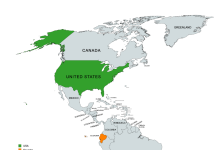
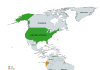
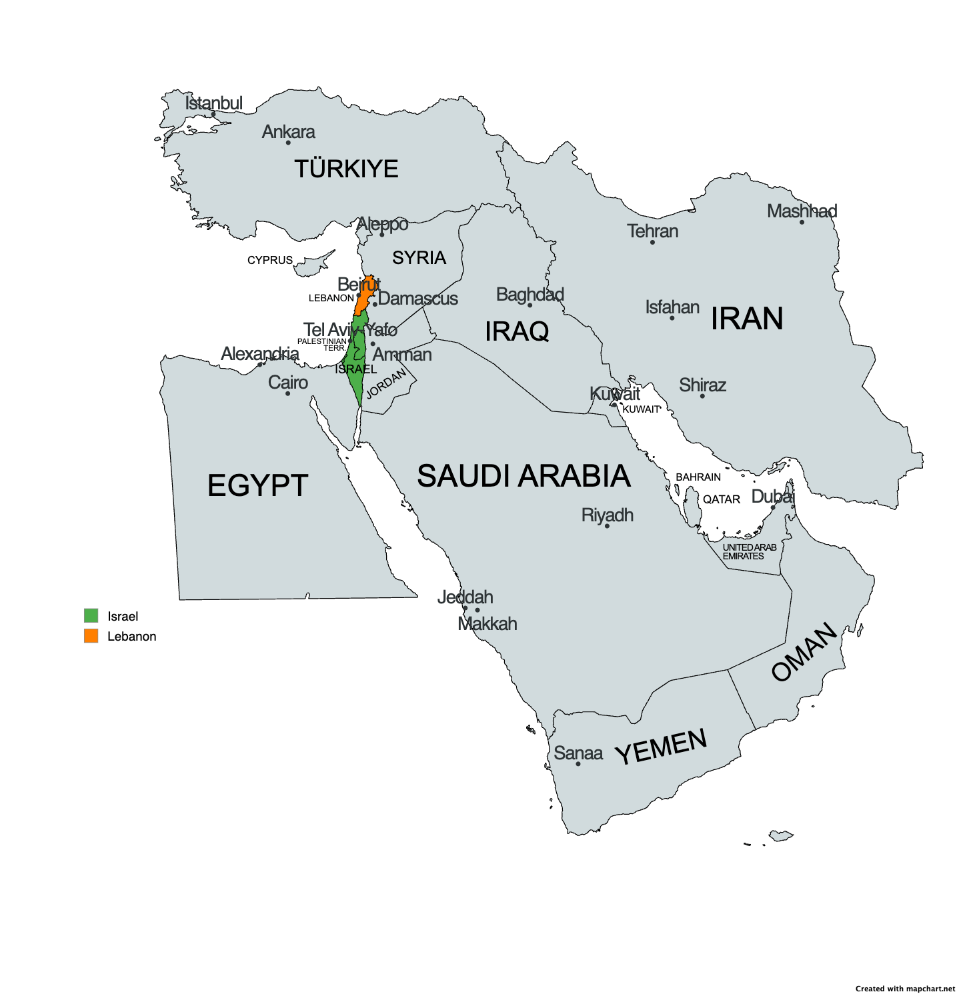
USA = Green
Lebanon = Orange
Image is licensed under the Creative Commons Attribution-Share Alike 4.0 International license and was created using MapChart (https://mapchart.net).