The Supreme Court ended its term Tuesday with a set of decisions that touched on immigration, elections and campaign finance, while also leaving several lower-court rulings in place and setting up new legal battles for next year.
The biggest setback for President Donald Trump came in a case involving birthright citizenship. In a 6-3 decision, the justices rejected his attempt to limit automatic citizenship for some children born in the United States. The executive order would have denied citizenship to babies born to parents who were in the country illegally or who held temporary visas.
The court said the 14th Amendment continues to guarantee citizenship to nearly everyone born on American soil, preserving an interpretation that has existed for more than a century. Trump criticized the decision and called on Congress to pursue legislation addressing the issue.
The court also handed victories to conservative states in cases involving transgender athletes.
In a decision that split the justices 6-3 on constitutional questions and was unanimous on Title IX issues, the court ruled that states may bar transgender girls and women from competing on girls’ and women’s school sports teams. The ruling upheld laws in Idaho and West Virginia and allows similar state laws to remain in effect or be adopted elsewhere.
A third major ruling centered on campaign finance. In another 6-3 decision, the court ruled that federal limits on coordinated spending between political parties and their candidates violate First Amendment protections.
The decision removes previous spending caps and allows political parties and candidates to work together on campaign spending without those federal limits.
Several other actions by the court received less attention but could still have lasting effects.
In a 5-4 decision, the justices upheld Mississippi’s law allowing absentee ballots that are postmarked by Election Day to be counted if they arrive within five business days after the election. The ruling reversed a lower-court decision that had found the law conflicted with federal election statutes.
The court also ruled 5-4 that Federal Reserve Governor Lisa Cook can remain on the Federal Reserve Board while legal challenges continue. The order came after earlier rulings this term that expanded presidential power over some independent agencies, though the court treated the Federal Reserve differently and did not decide whether a president can ultimately remove a Fed governor.
The justices also declined to hear challenges to restrictions on firearm purchases by people between the ages of 18 and 20, leaving different rules in place around the country.
At the same time, the court agreed to hear cases involving bans on AR-15-style rifles and other assault weapons during its next term. Those cases are expected to bring more questions about the scope of gun rights back before the justices.
The court also declined to intervene in the E. Jean Carroll case, leaving lower-court rulings in place.
The Supreme Court’s final day came as other political developments unfolded around the country.
Colorado voters headed to the polls for a series of primary elections. Former attorney Melat Kiros defeated longtime Democratic Rep. Diana DeGette in a Denver-area House primary, while Sen. John Hickenlooper won his Democratic primary as he seeks another term.
On Capitol Hill, House Republicans ended their work week early after a group of conservatives joined Democrats to block a procedural vote needed to advance several bills, including the annual defense authorization measure.
Trump also released financial disclosures showing more than $1.4 billion in income from cryptocurrency ventures, including money from World Liberty Financial and Trump meme coin sales.
Elsewhere, the Trump administration canceled about $67 million in teen pregnancy prevention grants. Gallup reported that only 7 percent of Ukrainians approve of U.S. leadership, and a separate survey found that artificial intelligence and deepfakes played a role in 12 percent of successful scams last year.
Where the Supreme Court cases stand
Birthright citizenship (6-3): The justices rejected President Trump’s effort to narrow automatic citizenship for children born in the United States, leaving the current interpretation of the 14th Amendment in place.
Transgender athlete bans (6-3 on constitutional issues; 9-0 on Title IX): The Court ruled that states may bar transgender girls and women from competing on girls’ and women’s school sports teams, upholding laws in Idaho and West Virginia and allowing similar state laws to remain in effect or be adopted elsewhere.
Campaign finance (6-3): Federal limits on coordinated spending between political parties and their candidates were struck down, allowing parties and candidates to coordinate campaign spending without the previous caps.
Mail-in ballots (5-4): The Supreme Court upheld Mississippi’s law allowing absentee ballots that are postmarked by Election Day to be counted if they arrive within five business days after the election, reversing a lower-court ruling that had struck down the law.
Independent federal agencies (6-3): Earlier rulings this term expanded presidential authority to remove leaders of many independent regulatory agencies, though the Court left open questions about some agencies, including the Federal Reserve.
Lisa Cook case (5-4): The Supreme Court blocked President Trump’s effort to remove Federal Reserve Governor Lisa Cook, allowing her to remain on the board while legal challenges continue.
Age-based gun restrictions (vote not announced): The Court declined to hear challenges to restrictions on firearm purchases by people between the ages of 18 and 20, leaving lower-court decisions in place.
AR-15 and assault-weapon bans (vote not announced): The justices agreed to hear cases involving bans on AR-15-style rifles and other assault weapons next term. No ruling has been issued.
E. Jean Carroll case (vote not announced): The Court declined to intervene, leaving lower-court rulings in place.
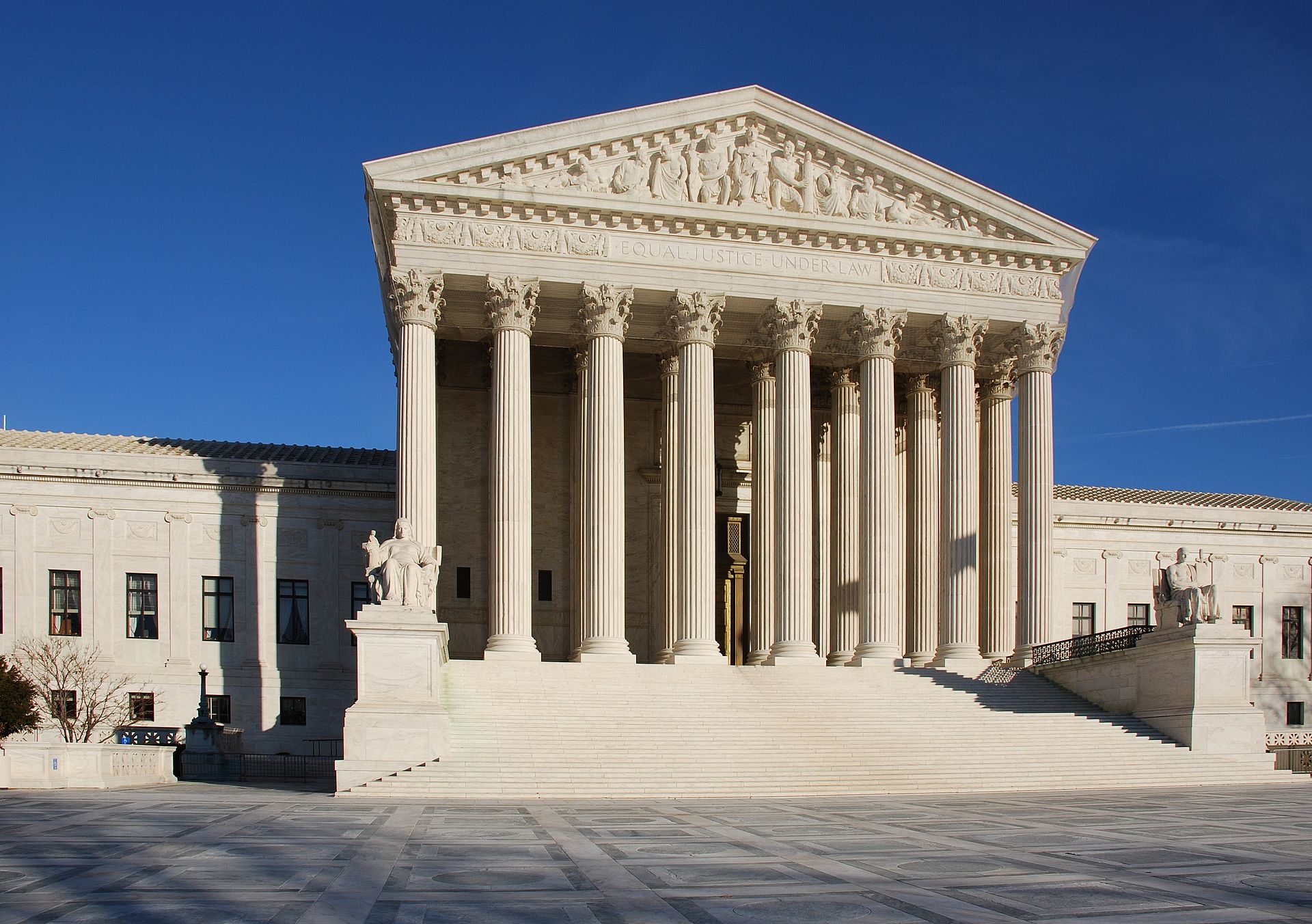
Image is licensed under the Creative Commons Attribution-Share Alike 3.0 Unported license and was created by Jarek Tuszyński.