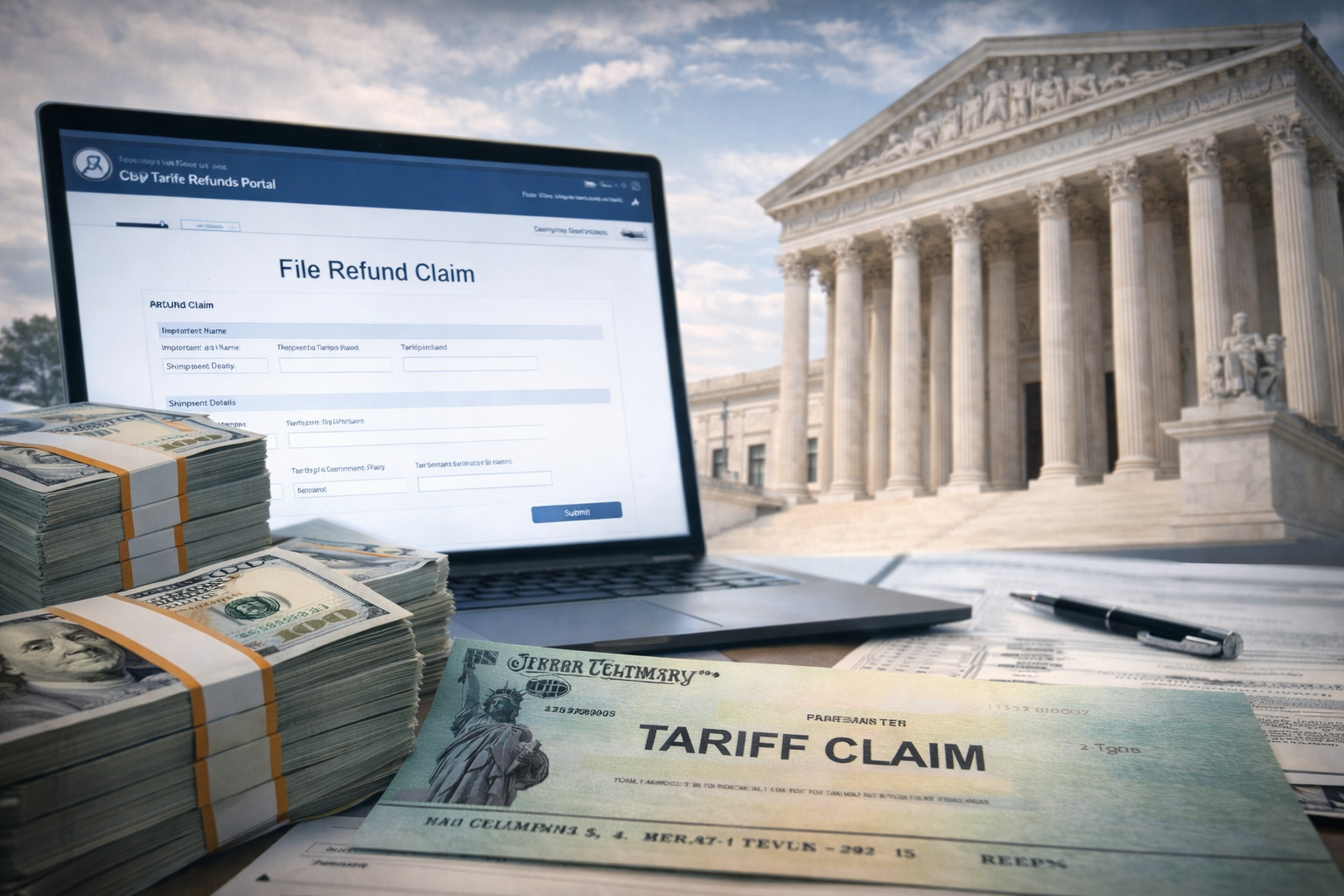
A new federal refund system launched April 20 for businesses that paid tariffs later ruled unlawful by the U.S. Supreme Court. Importers and customs brokers can now file claims through an online portal managed by U.S. Customs and Border Protection (CBP). The new system is the first step in returning money tied to tariffs imposed during President Donald Trump’s administration under emergency powers.
The Supreme Court ruled in February, by a 6-3 vote, that Trump did not have the constitutional authority to impose those tariffs using the International Emergency Economic Powers Act, a law passed in 1977. The court found that setting taxes and tariffs is a power given to Congress. Later, the U.S. Court of International Trade said companies that paid those tariffs should receive refunds.
CBP estimates that more than 330,000 importers paid around $166 billion in tariffs across 53 million shipments. So far, over 56,000 importers have registered for the electronic payment system needed to receive refunds. Those registered claims total about $127 billion, including interest.
The refund portal is called CAPE, short for Consolidated Administration and Processing of Entries. It was designed to simplify the process by combining refunds into one electronic payment instead of handling them one shipment at a time. CBP says approved claims should be paid within 60 to 90 days, though delays are possible.
The first phase of the program covers certain tariff payments. That includes tariffs that were estimated but not yet finalized, along with tariffs finalized within the past 80 days. Older claims are expected to be handled later in stages.
For many businesses, the process may still be complicated. Companies must submit accurate records showing which goods were taxed, the value of those goods, and related customs forms. Trade attorneys and consultants have warned that mistakes in formatting or incomplete data could lead to rejected claims.
Some importers were also worried the website could struggle under heavy demand when it opened. Others remain concerned about legal or procedural moves that could slow the system later. Customs officials still face deadlines tied to court appeals, and future rulings could affect the timeline.
Small and mid-sized businesses have been especially eager to apply. Many say they absorbed tariff costs instead of fully passing them on to customers. Some are hoping refunds will improve cash flow after a difficult year of higher import expenses.
Consumers, however, are not directly included in the refund program. Tariffs were paid by importers, not shoppers, even though some businesses raised prices to cover those costs. That means refunds go first to the companies that paid the duties.
Whether consumers see any money back depends on what businesses choose to do. Some firms may lower prices or offer reimbursements, but they are not required to. Separate lawsuits have been filed against companies accused of keeping tariff-related charges that were passed on to buyers.
Shipping companies may be one exception. Businesses such as FedEx and UPS sometimes collected tariff charges directly from consumers on imported goods. FedEx has said it plans to return refunds to customers after receiving payments from CBP.
Even as refunds begin, the broader trade debate continues. The administration has explored other legal paths for new tariffs, meaning trade policy and pricing issues may remain active in the months ahead.
This image is the property of The New Dispatch LLC and is not licenseable for external use without explicit written permission.