President Donald Trump said Friday that he wants the Strait of Hormuz to become American territory after the war with Iran ends. He made the statement while speaking at a police academy in Nassau County, New York, and said he believes Iran is losing the conflict. Trump did not explain what steps the United States could take to make his proposal happen.
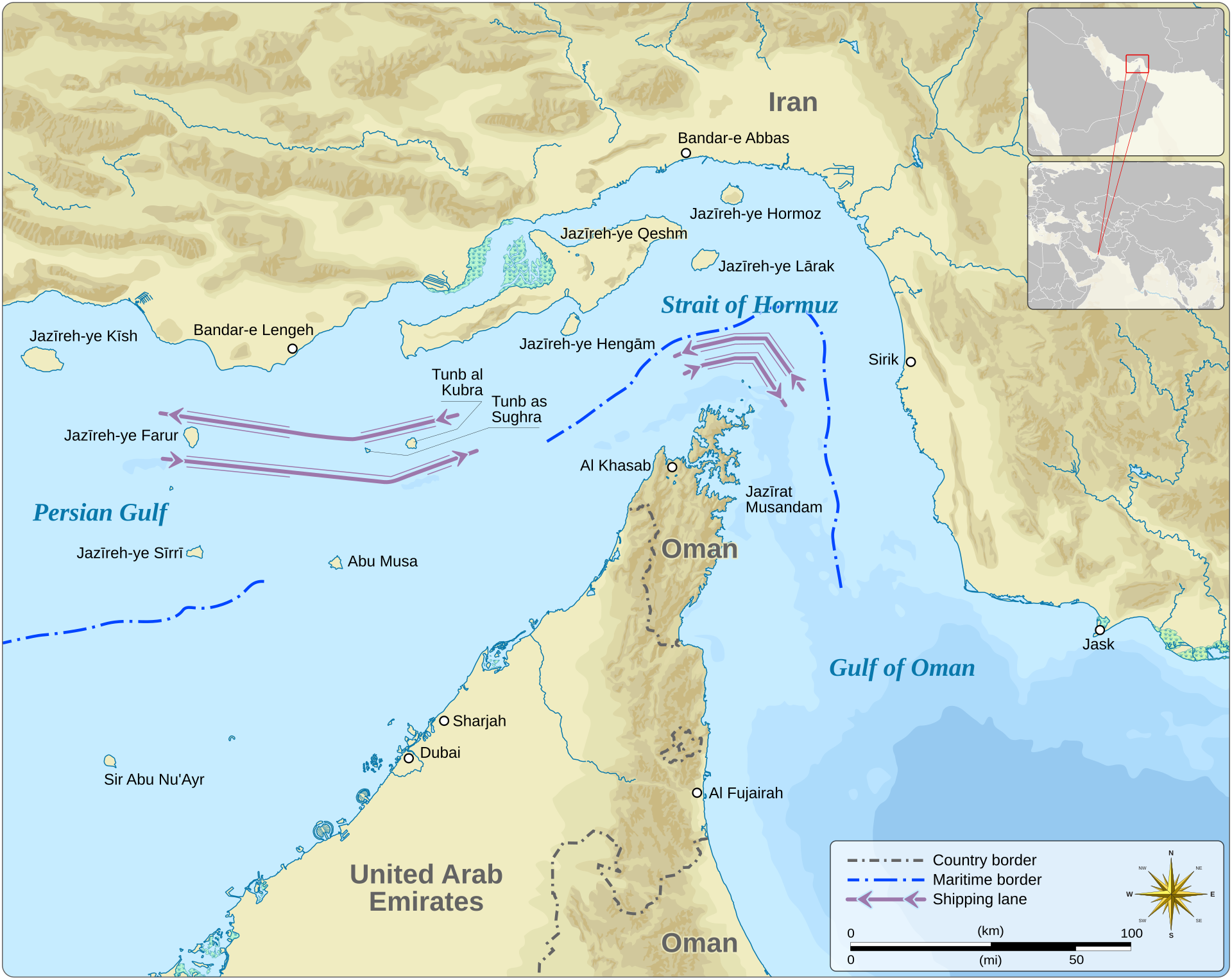
The strait is bordered by Iran on one side and Oman on the other. It provides ships with a narrow path between waters near the Persian Gulf and the open sea beyond Oman. In normal times, a large share of the oil and gas traded around the world moves through this route, making disruptions there capable of affecting energy markets far beyond the region.
Shipping has already fallen sharply since the fighting began. Around 130 to 140 vessels would normally use the passage during peacetime, but ship-tracking information showed only two making the trip Friday. There were no visible crude oil shipments among them. Some vessels may still be getting through without being easily tracked because ships have sometimes switched off their transponders before attempting the crossing.
The war began Feb. 28, and its effects have reached energy markets. Oil and gas prices jumped early in the conflict before becoming calmer, although they remain higher than they were before the fighting. Crude oil futures increased by about $1 per barrel Friday, and Brent futures were headed for a weekly gain of around 6 percent.
Trump said Americans may have to deal with higher prices at gas stations for the time being. He defended that cost by pointing to his administration’s goal of preventing Iran from developing a nuclear weapon. Tehran has repeatedly denied that it wants to build such a weapon.
Iran is also pushing back against Trump’s statements about American authority over the waterway. Iranian officials say their government controls whether the passage is opened or closed and have connected an end to the blockade with their demands in the conflict. That leaves commercial vessels facing uncertainty over whether they can safely make the trip.
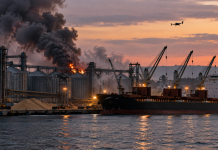
The risks were visible again Friday when a bulk carrier was struck in its hull by an unidentified projectile. A British maritime organization that monitors dangerous shipping areas said the people aboard the vessel were safe. At the time of the report, the extent of the damage was not known, and there was no clear information about possible environmental effects.
Diplomatic efforts have not produced an end to the fighting either. The United States and Iran established a 60-day period for reaching a deal after signing a memorandum of understanding in mid-June. That period is due to expire Monday, and little direct discussion between the two governments has taken place.
Iranian Foreign Minister Abbas Araghchi said Friday that the two countries were not currently negotiating with each other. Qatar and Pakistan have remained involved as intermediaries, carrying messages and staying in contact with Tehran. Araghchi said those exchanges did not amount to negotiations and that Iran had made no decision about returning to direct talks with Washington.
Vice President JD Vance has been given a leading role in the U.S. effort to bring the war to an end. He said Thursday that keeping oil and gas costs down for Americans was the first goal of the administration’s negotiating effort. Preventing Iran from obtaining a nuclear weapon was another goal he identified.
Trump has also complained about the response from NATO allies, saying they did not provide the assistance the United States wanted. U.S. naval forces have been used around the strait during the conflict, while Iran continues to dispute Washington’s claims of control. The negotiating period is now almost over, but ships are still moving through the area at only a fraction of their usual numbers.
Image is licensed under the Creative Commons Attribution-Share Alike 4.0 International license and was created by Goran_tek-en.