Labor Day arrives each September as a three-day weekend for many Americans, but the holiday grew out of a much different setting: the rise of organized labor during the late 19th century. Industrial growth had transformed the American workplace by the 1880s, and many employees faced lengthy workdays, low pay and difficult or dangerous conditions. Unions and other labor groups increasingly organized workers around demands for higher wages, reduced working hours and improvements on the job. The movement for a holiday recognizing workers developed against that backdrop.
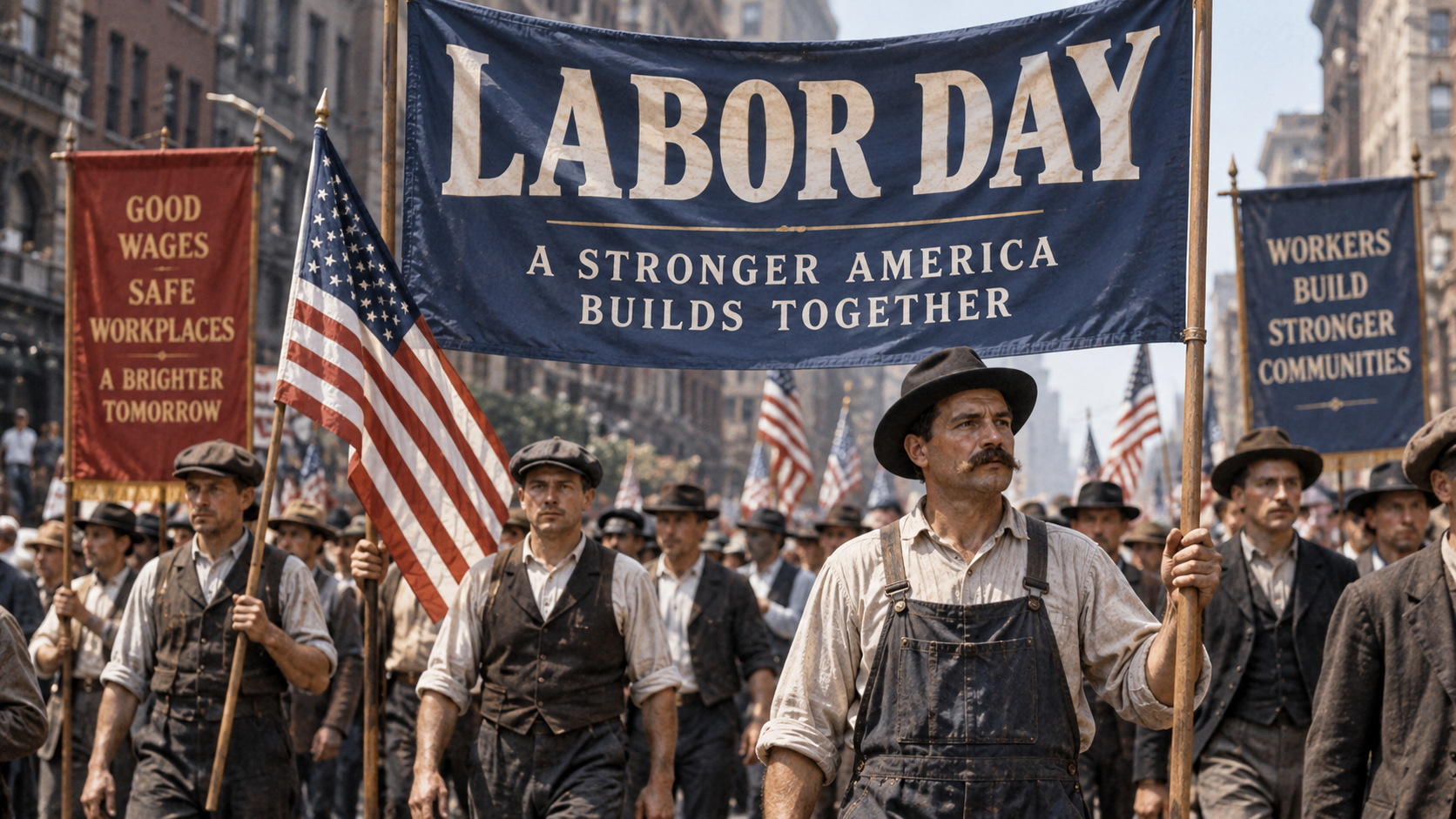
One of the earliest and most important Labor Day events occurred in New York City on Sept. 5, 1882, which fell on a Tuesday. The city’s Central Labor Union organized a procession in which thousands of workers marched through the streets. A festival followed, with participants gathering for speeches, food and entertainment. The event combined recreation with a visible display of the growing labor movement, giving workers an opportunity to celebrate together while organized labor demonstrated its presence to the wider public.
Who deserves credit for first proposing the holiday is less certain. For many years, Peter J. McGuire, a prominent official with the Brotherhood of Carpenters and Joiners, was widely identified as the person who suggested setting aside a day for workers. Another labor figure, machinist Matthew Maguire, also has a claim. Maguire was secretary of New York’s Central Labor Union around the time of the 1882 celebration. Historical evidence has been cited in support of both men, and the U.S. Department of Labor acknowledges that the identity of the person who originated the idea remains uncertain.
Whatever its precise origin, the concept soon moved beyond a single New York event. Organized labor promoted similar celebrations elsewhere, and state governments eventually began giving the holiday legal status. Oregon led the way, enacting a Labor Day measure on Feb. 21, 1887. New York had been the first state to introduce a Labor Day bill, but Oregon was the first to enact one. Before 1887 ended, Colorado, Massachusetts, New Jersey and New York had also enacted Labor Day laws.
Federal recognition followed several years later. In 1894, Congress approved legislation establishing the first Monday of September as Labor Day in the District of Columbia and federal territories. President Grover Cleveland signed the measure on June 28 of that year. By that point, Labor Day was already recognized by many states, so the federal legislation represented another stage in a movement that had been spreading for more than a decade.
The timing overlapped with one of the country’s major labor confrontations, the Pullman Strike. Workers at the Pullman Palace Car Company had walked off the job in May 1894, and the dispute subsequently expanded into a much larger railroad boycott. The chronology is important because some accounts can leave the impression that the federal holiday was created simply in response to the Pullman conflict. Labor Day legislation had been introduced in Congress before the strike, and Cleveland signed the measure while the dispute was still unfolding. Federal troops became involved in the conflict afterward, in July, followed by some of its best-known violent confrontations. The establishment of the federal holiday is therefore better understood as part of a longer movement for official recognition of workers rather than solely as an immediate response to the Pullman Strike.
The way Labor Day is observed has also changed considerably since its early years. The first celebrations placed substantial emphasis on organized labor, with marches allowing unions and workers to appear publicly in large numbers. Speeches often addressed workplace concerns and the accomplishments of working people, while festivals and other recreational activities were also part of the occasion.
Those traditions have not disappeared, but Labor Day now has a much broader place in American culture. Depending on the community, the weekend may include union gatherings, parades, festivals, cookouts, sporting events and travel. It is also widely regarded as the unofficial end of summer, particularly because it falls near the beginning of the school year and the transition into the fall season.
The holiday’s historical roots, however, remain in the labor movement of the late 1800s. A New York celebration organized by workers in 1882 helped establish a tradition that spread to other cities and eventually gained recognition from state and federal governments. Since the federal legislation of 1894, Labor Day has been observed federally on the first Monday in September, preserving a tradition that began during a period when American workers were becoming increasingly organized and vocal about their place in the nation’s economic life.
This image is the property of The New Dispatch LLC and is not licenseable for external use without explicit written permission.