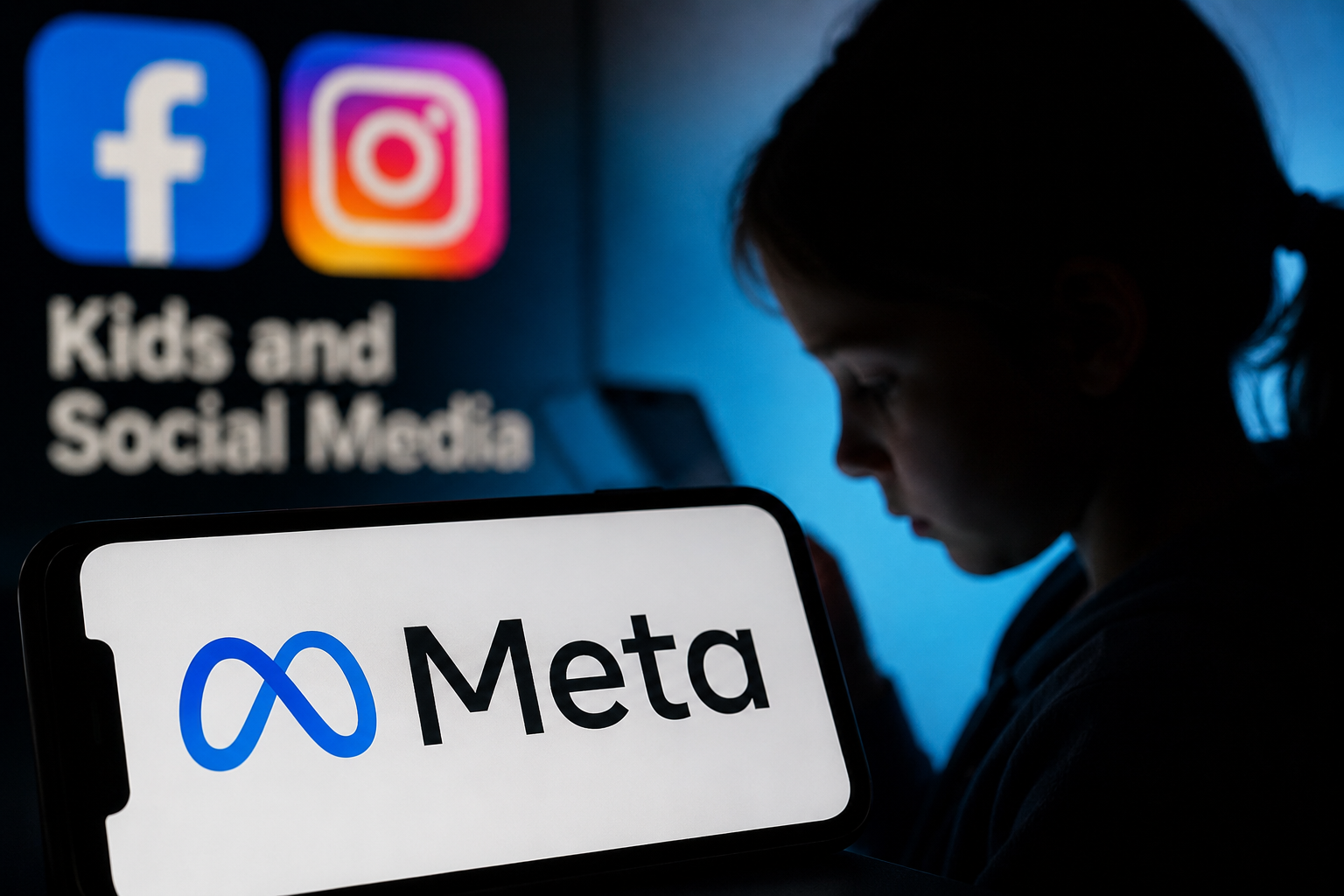
Meta has agreed to a multibillion-dollar settlement with states and U.S. territories that accused the company of failing to protect children using Facebook and Instagram.
The deal resolves claims brought by 51 states and jurisdictions in the federal case. Meta is expected to make payments over a decade, with accounts of the agreement placing its total value as high as $18 billion. Meta continues to deny the allegations against it. Federal Judge Yvonne Gonzalez Rogers approved the agreement shortly after it was submitted to the court.
State officials had accused Meta of building features that encouraged children to spend more time on Facebook and Instagram even though the company knew young users could face risks. They also claimed Meta improperly collected information from children younger than 13. Company rules require users to be at least 13, but children can get around that restriction by entering an incorrect age when creating an account.
California Attorney General Rob Bonta said the settlement would bring changes meant to reduce risks for children and families. Meta Chief Legal Officer C.J. Mahoney said parents would have an easier way to control their children’s access under the agreement. Meta also wants other large social media platforms to adopt similar rules.
A large part of the deal focuses on how much time teenagers can spend on Meta’s apps. Accounts belonging to minors will initially be set to a combined maximum of two hours of Facebook and Instagram use each day. A parent or guardian will have to approve removing that restriction.
There will be limits at certain times of day too. Teen accounts will automatically face an overnight restriction lasting from 12 a.m. until 6 a.m. Notifications will mostly be silenced while students are normally in school, between 8 a.m. and 3 p.m. Teens will also see reminders after spending 15 straight minutes on the apps, followed by alerts once their total use reaches 60 minutes and then 90 minutes.
Other parts of the agreement change what younger users see. Reaction and like totals will not appear by default for teens. Families can choose a feed that does not rely on Meta’s personalized recommendation system, and parents can require videos to stop playing automatically. Certain appearance-changing filters will no longer be available to minors.
The rules could become tighter if TikTok, YouTube and Snap agree to comparable protections. Under that situation, the initial two-hour restriction could be lowered to one hour. Meta could also be required to pay more money if other companies enter the framework.
The agreement includes outside monitoring of Meta’s compliance. An independent auditor will be able to examine company information and communicate with state attorneys general. Some settlement money is also expected to support services such as youth mental health programs, activities for children outside school and crisis assistance.
The settlement arrived while Meta was already defending itself in a federal trial in Oakland, California. The proceeding had entered only its second week.
Former Meta employees were among those who testified. Whistleblower Arturo Béjar told the court that company research found young users encountered harmful experiences more often than Meta had publicly indicated. Instagram leader Adam Mosseri was questioned about safety tools meant to reduce excessive use, including the “Take a Break” feature.
The trial had originally been scheduled to continue into early October. Instead, the court proceedings stopped after the settlement was submitted and approved.
This image is the property of The New Dispatch LLC and is not licenseable for external use without explicit written permission.