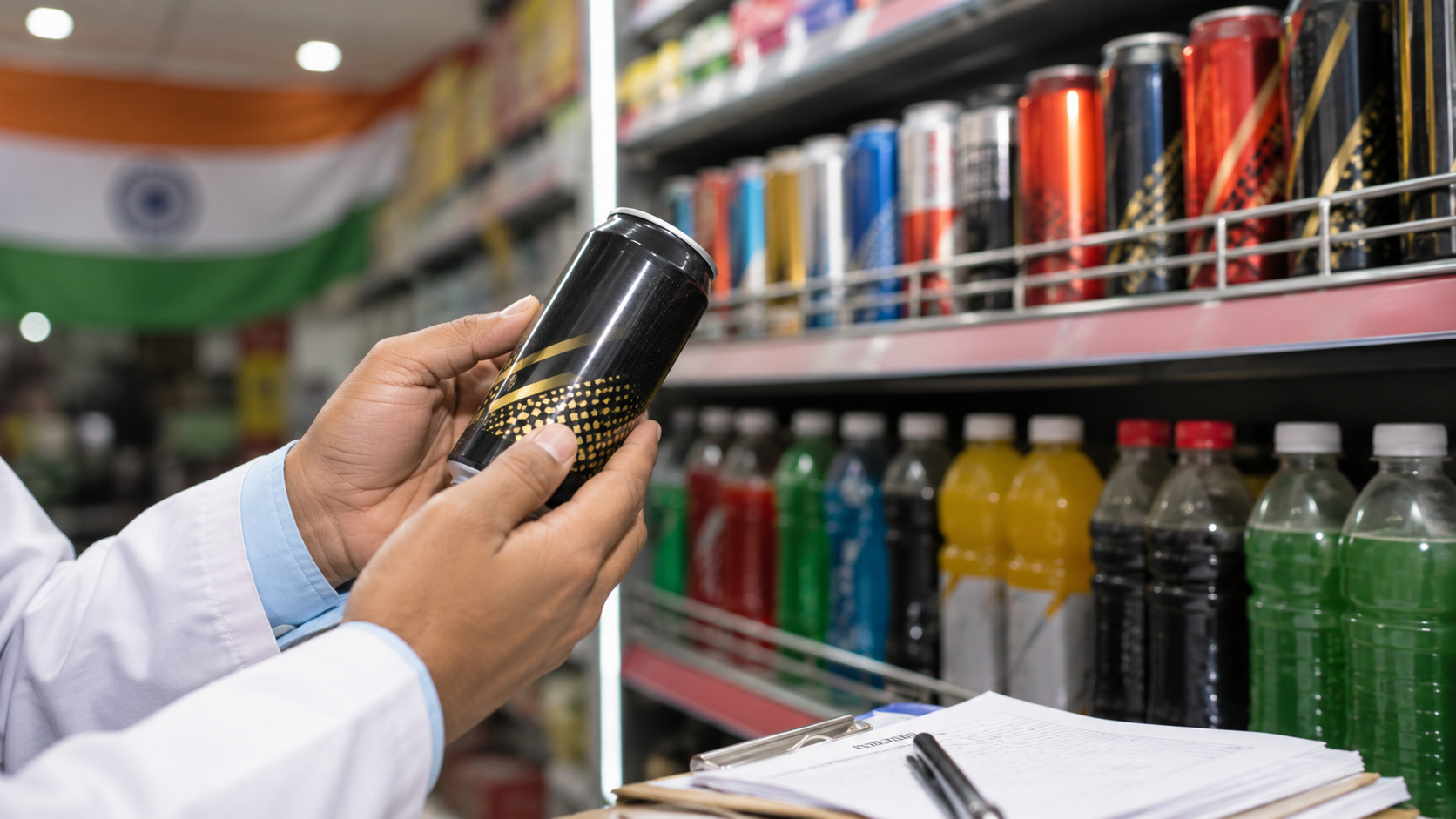
A growing section of India’s beverage market is facing a labeling change after food regulators rejected the use of the name “energy drink” for high-caffeine products. Manufacturers have been given 90 days to adjust.
FSSAI, the agency responsible for food safety standards in India, says the country’s rules do not recognize energy drinks as their own product category. It has also questioned advertising that presents the beverages as something that can improve the body or mind or help people dealing with weakness.
Several large beverage businesses are affected. Pepsi sells Sting in India, while Reliance has Campa Energy. Red Bull and Monster Beverage are also part of the market, along with Hell Energy. The companies now have to remove the disputed category wording and similar descriptions from their products.
This comes at a time when demand is rising fast. Retail sales are projected to hit $1.6 billion by 2028, according to Euromonitor. The expected yearly growth rate is 12.6%, and between 2018 and 2023, the amount sold increased by close to 100% each year.
Sting has played a large role in that expansion. Pepsi brought the drink to India in 2017 and offered it in plastic bottles priced at 20 rupees. The product found a strong customer base among teenagers between 15 and 19, as well as people living in rural areas. It eventually became one of the market leaders.
For beverage companies, the new requirement affects a name closely tied to how the products are promoted. Advertising often focuses on the idea that a customer will quickly feel more energized after drinking one. Companies worry that changing familiar wording could make their products harder to market and could interfere with sales.
Industry representatives brought those concerns to regulators during a private meeting on Friday. FSSAI Chief Executive Rajit Punhani did not agree that possible business consequences were a reason to delay the change. Company representatives were told they had the option of taking the matter to court. A government source later said the industry would follow the order.
There had already been disagreement before the meeting. The Indian Beverage Association wrote to FSSAI on July 6 about the regulator’s approach. The group was concerned that releasing early notices publicly could create confusion, affect business operations and harm reputations. It called for closer discussions between regulators and the beverage industry when rules are interpreted differently.
Enforcement is already happening in Rajasthan. During a drive this month, state officials took thousands of high-caffeine beverages off the market. The products included Pepsi’s Sting, Reliance’s Campa Energy and Red Bull. Online retailers were also instructed to stop presenting covered products under the energy-drink category.
For Sunny Rajvansi, a 24-year-old bike mechanic in Uttar Pradesh, the beverages have become a regular purchase. He drinks Sting and Campa Energy, sometimes buying one when he is hungry or taking a break to smoke. Rajvansi said the drinks make him feel stronger while working. He also said he feels addicted to them.
This image is the property of The New Dispatch LLC and is not licenseable for external use without explicit written permission.