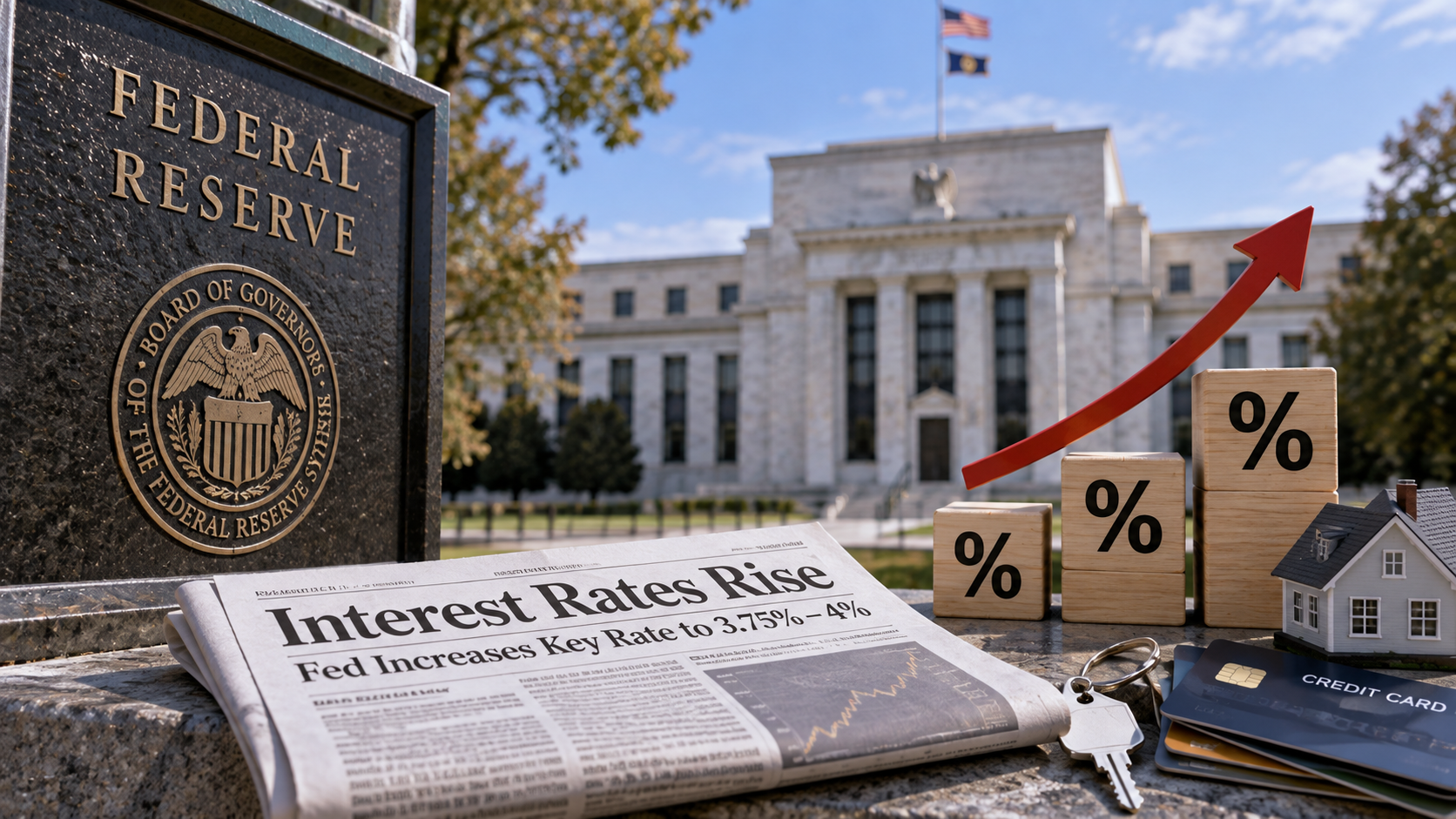
Americans taking out loans may soon face somewhat higher borrowing costs after the Federal Reserve voted Wednesday to increase its main interest rate. The new range is 3.75% to 4%, up from 3.5% to 3.75%.
All of the Fed policymakers voting on the decision supported the increase. It also ends a long stretch without an upward move in rates. The previous increase came in July 2023, while the Fed most recently changed rates by lowering them in December 2025.
Inflation remains the main concern behind the latest decision. Prices in August were 3.4% higher than they were during the same month last year, and inflation has stayed above the central bank’s 2% goal for more than five years.
Fed Chair Kevin Warsh said Wednesday that policymakers still need to get inflation under control. He also said the central bank has limited ability to change the price of something specific, such as groceries or oil, but can use monetary policy to try to prevent rising prices from becoming widespread throughout the economy.
The basic idea behind raising rates is to cool spending. Loans become more expensive, consumers and businesses may borrow less, and more people may decide to save their money instead. That can reduce pressure on prices. It also carries a cost because businesses may put off investments and consumers can end up paying more when they need to borrow.
Credit cards are one area where consumers may notice a difference. JP Morgan, KeyCorp and BNY moved their prime lending rates from 6.75% to 7% Wednesday. Changes in the prime rate can work their way into interest charged on credit cards and personal loans.
The effect on housing is less direct. Mortgage rates don’t simply move up or down whenever the Fed changes its rate, but borrowing for a home is already expensive compared with recent years. The average 30-year fixed mortgage stands at 6.76%, and the 15-year average is 6.09%.
For people who already have fixed-rate mortgages, their monthly interest rate will stay where it is. Someone buying a house or refinancing could face different costs depending on where mortgage rates go from here.
There is another side to higher rates. People keeping money in savings accounts or certificates of deposit may receive higher returns. One-year CDs averaged 1.71% last month.
The decision also came despite President Donald Trump calling for lower interest rates. Trump said after the announcement that he was still relying on Warsh, while criticizing other members of the Fed board and saying current rates were too high. Senate Democratic leader Chuck Schumer criticized the increase as well, arguing that higher borrowing costs would put additional pressure on consumers.
Wednesday’s increase may not be the last one this year. Sixteen of 18 Fed policymakers indicated that another quarter-point increase remains possible, and four indicated that rates could go up twice more.
Fed projections also show the economy growing 2.3% this year and 2.4% in 2027. Inflation is forecast at 3.7% for 2026, with the projections showing it moving down over the following years and reaching 2% in 2029.
This image is the property of The New Dispatch LLC and is not licenseable for external use without explicit written permission.