American military personnel are taking a more active role in Ecuador’s efforts to stop drug trafficking, joining local authorities in raids and other operations against criminal organizations. The cooperation has grown under President Donald Trump, whose administration has increased its focus on drug cartels operating throughout Latin America.
One recent operation resulted in the arrest of more than 30 people suspected of working with a criminal organization connected to Mexico’s Jalisco New Generation Cartel, known as CJNG. Ecuadorian Interior Minister John Reimberg said the suspects were part of a network moving cocaine out of Colombia and through Ecuador’s ports for shipment overseas.
The arrests came during coordinated raids in several Ecuadorian cities. Around 320 local police officers participated, supported by 50 members of U.S. Southern Command and personnel from the Drug Enforcement Administration. Reimberg later posted images of the operation on social media.
Ecuador has faced growing problems with organized crime as trafficking groups compete for access to its ports and transportation routes. Cocaine produced in Colombia and Peru frequently moves through the country, bringing violence and increased pressure on local law enforcement.
President Daniel Noboa has responded by using the military against criminal organizations. His government has also sought additional assistance from Washington, including equipment, intelligence and direct cooperation during security operations.
Ecuadorian Foreign Minister Roberto Kury said the partnership has helped authorities locate illegal drug shipments. American personnel and Ecuadorian forces share information and participate in operations together, although Kury stressed that Ecuador remains responsible for decisions involving its territory.
The United States is expanding its activities beyond raids on land. American forces have attacked vessels suspected of carrying drugs in the Caribbean and Pacific, and they have also intercepted boats believed to provide fuel to trafficking operations near Ecuador.
Pentagon officials say the military has carried out at least 71 strikes against suspected trafficking vessels since September 2025. Those attacks have killed 239 people whom American authorities identified as being involved with drug trafficking organizations.
The Pentagon is also moving surveillance equipment into the region. MQ-9 Reaper drones previously assigned to operations in Africa are being transferred to Latin America, where they can help monitor areas that are difficult to reach by ground transportation.
Not everyone agrees with the growing military involvement. Human rights organizations have accused Ecuadorian security forces of abuses during operations against criminal groups, including excessive force and disappearances. Questions have also been raised about whether American attacks on suspected trafficking boats are lawful.
Benjamin Gedan, a Latin America specialist at the Stimson Center, has criticized the Pentagon’s approach. He argues that military action alone cannot address the corruption and institutional problems that allow criminal organizations to operate.
Noboa has defended his government’s security policies, saying public discussion often gives too much attention to criticism of enforcement operations while overlooking people harmed by organized crime.
U.S. officials expect cooperation with Ecuador to continue, and other Latin American governments have expressed interest in similar arrangements. Guatemala and Honduras have already requested joint operations, according to a senior Pentagon official.
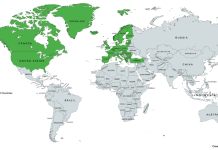
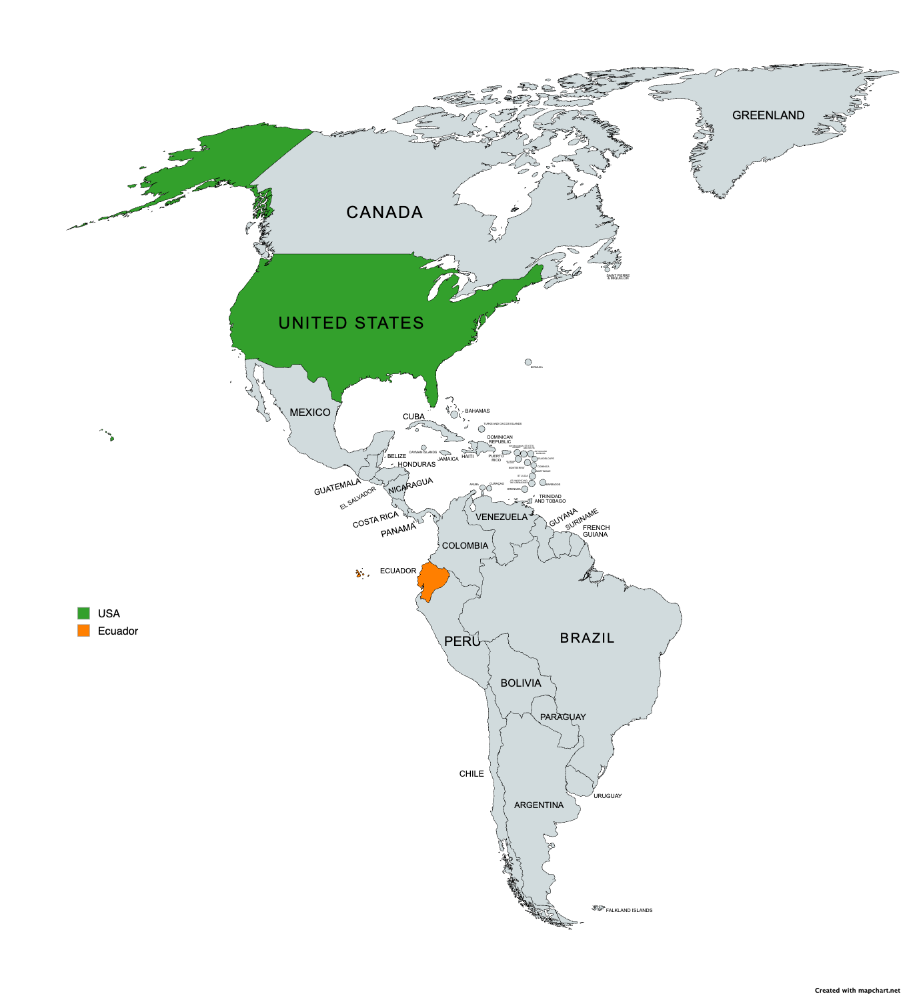
USA = Green
Ecuador = Orange
Image is licensed under the Creative Commons Attribution-Share Alike 4.0 International license and was created using MapChart (https://mapchart.net).