Europe’s car market could see a major change in the number of vehicles arriving from China. After months of negotiations, officials from both sides have worked out a preliminary arrangement that would substantially limit shipments of Chinese hybrid cars over the next four years.
The development was announced Friday, October 9, following meetings in Beijing. European Trade Commissioner Maros Sefcovic met with China’s Commerce Minister Wang Wentao as part of an effort to address disagreements that have been building between the two economies. The proposed limits could mean millions fewer Chinese vehicles entering Europe, with shipments potentially falling by more than half.
For European carmakers, the rapid growth of Chinese imports has become a difficult issue. Plug-in hybrids have been arriving in much greater numbers, and buyers are seeing lower prices. Imports increased 86% during the 12 months ending in September, while average prices declined 20%.
China now supplies a majority of the plug-in hybrids brought into the European Union from outside the bloc. European manufacturers have faced pressure from these imports at the same time they are dealing with trade barriers in the United States. Automotive shares in Europe generally moved higher after news of the talks emerged.
The vehicle issue is only one part of the relationship between Beijing and Brussels. European businesses sell considerably less to China than Chinese companies sell to Europe, and the difference has continued to grow.
Last year, Chinese merchandise entering the EU was valued at $560 billion. That was $43 billion higher than in 2024. Meanwhile, China’s purchases from European suppliers edged down to $268.3 billion, leaving European officials concerned about the direction of trade.
European Commission President Ursula von der Leyen addressed the widening gap in September, warning that the current situation could require a stronger response. The EU’s daily trade imbalance with China now exceeds €1 billion.
There have already been disagreements over how certain products are priced and sold. European authorities introduced additional charges on Chinese electric cars in 2024 after examining financial assistance provided to manufacturers. Beijing has also taken action affecting European food and agricultural exports.
Those earlier disputes have not been settled. Officials are still considering whether negotiated vehicle prices could replace some of the existing tariffs, and further discussions are expected.
The Beijing meetings included other industries as well. Chinese duties on certain European products could be reduced, potentially affecting about €4 billion in goods sold by European businesses. Automobile components, olive oil and footwear were among the products considered.
Manufacturers also received an indication that China would maintain a quicker process for approving shipments of rare earth materials and permanent magnets. These resources are used in a range of industrial products, including vehicles.
European medical equipment suppliers were another topic during the meetings. Officials agreed to keep discussing the conditions those companies face when entering the Chinese market.
The results will be reviewed by European leaders at their upcoming meeting in Brussels. Representatives from both governments are expected to resume discussions remotely in January 2027 before meeting again in March.
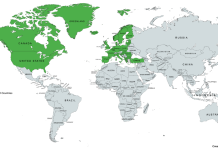
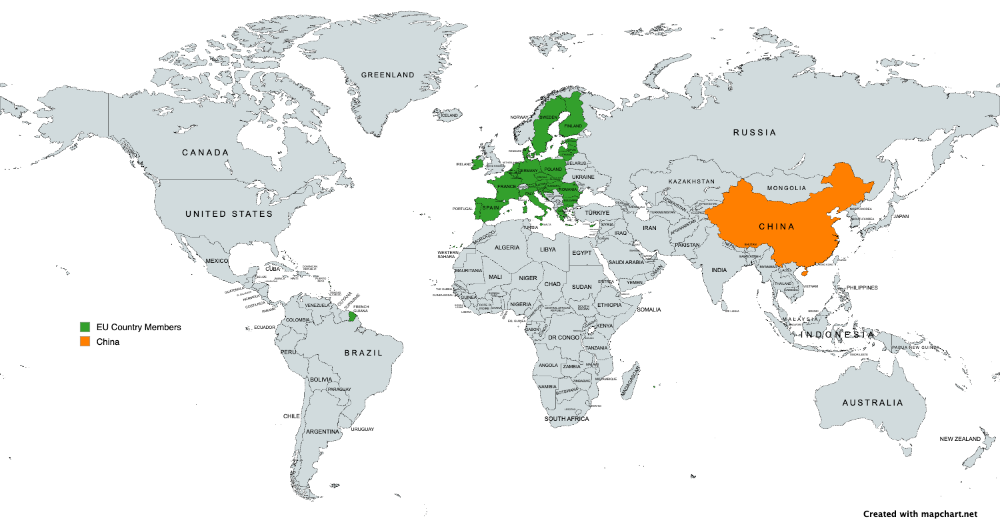
EU Member Countries = Green
China = Orange
Image is licensed under the Creative Commons Attribution-Share Alike 4.0 International license and was created using MapChart (https://mapchart.net).