Questions continue to surround the death of a young employee at a disease research facility in Siberia, with Russian authorities saying they have not found evidence that plague was responsible. The exact cause of her illness has still not been publicly identified.
Darya Shipilova, 28, worked at a research institute in the Irkutsk region that studies dangerous infectious diseases. She developed pneumonia and later died. Tests performed after her death did not show that something she handled as part of her job had made her sick, according to Russian officials.
Health authorities began monitoring people who had been around Shipilova. By Tuesday, roughly 60% of those identified had been tested. Two people had COVID-19 and two others had rhinovirus, while the remaining results did not reveal another infectious disease.
The World Health Organization has also requested information about the case. Based on what Russia has reported to the organization, investigators have not discovered plague or another dangerous infection in Shipilova’s close contacts. The WHO is still waiting to learn what caused the pneumonia.
The lack of an answer has attracted attention because of the type of research conducted in Irkutsk and its history during the Soviet era. Former U.S. arms control official Marshall Billingslea said information given to him decades ago by Soviet defector Ken Alibek included claims about biological weapons research connected to Irkutsk.
According to Billingslea’s account, Soviet scientists experimented with plague in ways intended to make treatment with antibiotics more difficult. Alibek also described work involving combinations of pathogens. Billingslea believes that history gives reason to consider whether something more unusual could be involved in the current case.
There is no evidence presented in the available information showing that Shipilova encountered an altered pathogen. There is also no established connection between her death and biological weapons research, either from the Soviet period or today. Some of Alibek’s accounts have been questioned over the years, although the larger Soviet biological weapons operation is well established.
Kevin Esvelt, an MIT professor who studies biological security and pandemic risks, has raised another issue. If the information coming from Russia is accurate, he believes plague does not appear to explain what happened. He has questioned why the illness that killed a 28-year-old has not been identified, while also cautioning that the more troubling theories remain unproven.
The case is now receiving attention from the White House. President Donald Trump said Tuesday that a conversation with Russian President Vladimir Putin was coming soon. He also indicated that discussions were underway within the U.S. government and that additional details might be available the following day.
There is a separate dispute between Washington and Moscow over biological weapons. The State Department accuses Russia of continuing an offensive program prohibited under an international convention, an accusation Russia rejects. American officials have not said that this dispute explains what happened to Shipilova.
Russia’s health agency says its inquiry has not uncovered a mishap involving the biological materials handled at the research center. Officials have also sought to reassure the public that they are not seeing signs of a wider health emergency in the area. For Shipilova herself, the central question has not changed: investigators have yet to say what caused the pneumonia that killed her.
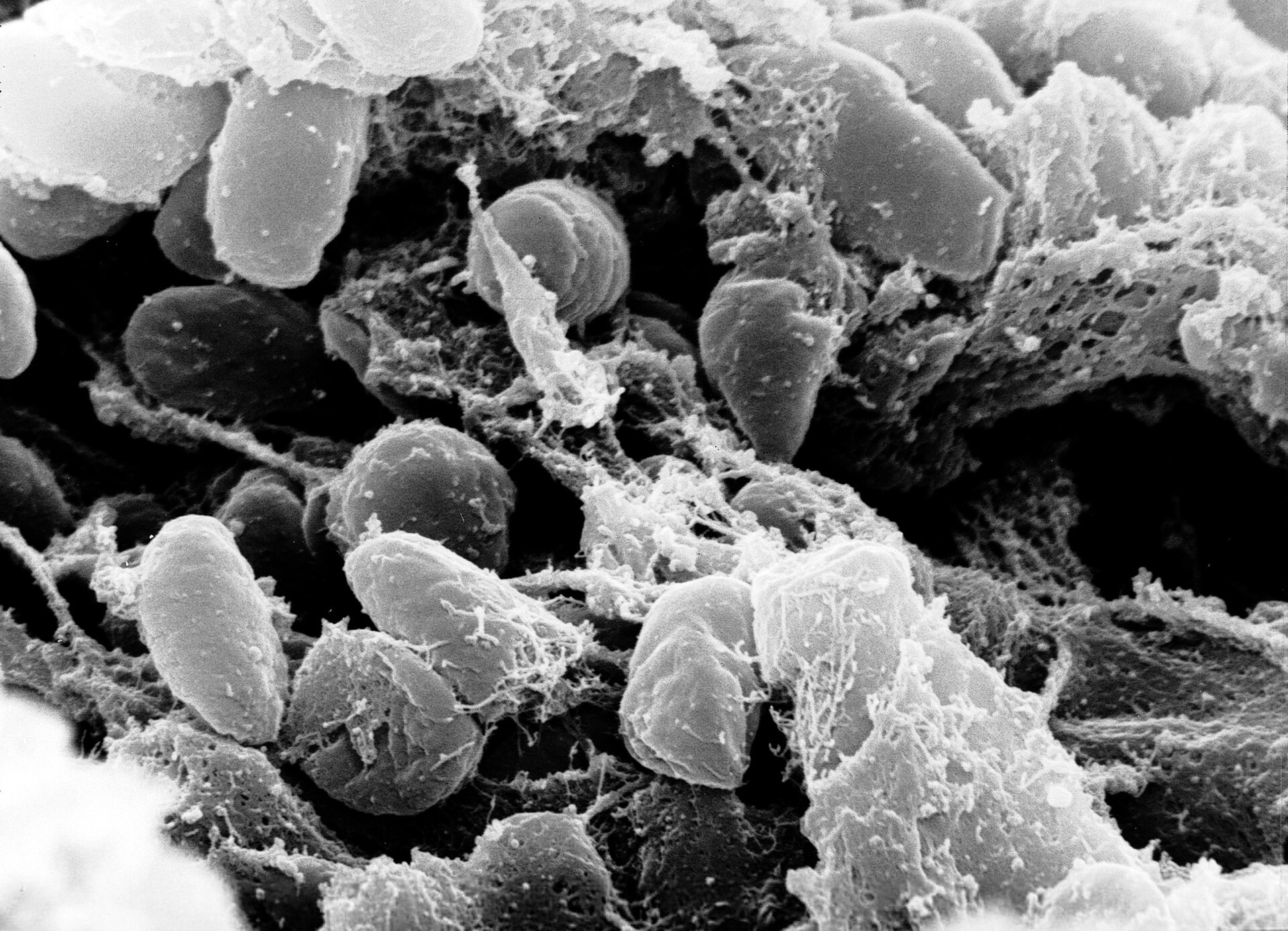
Image is in the public domain and was uploaded by Ras67.