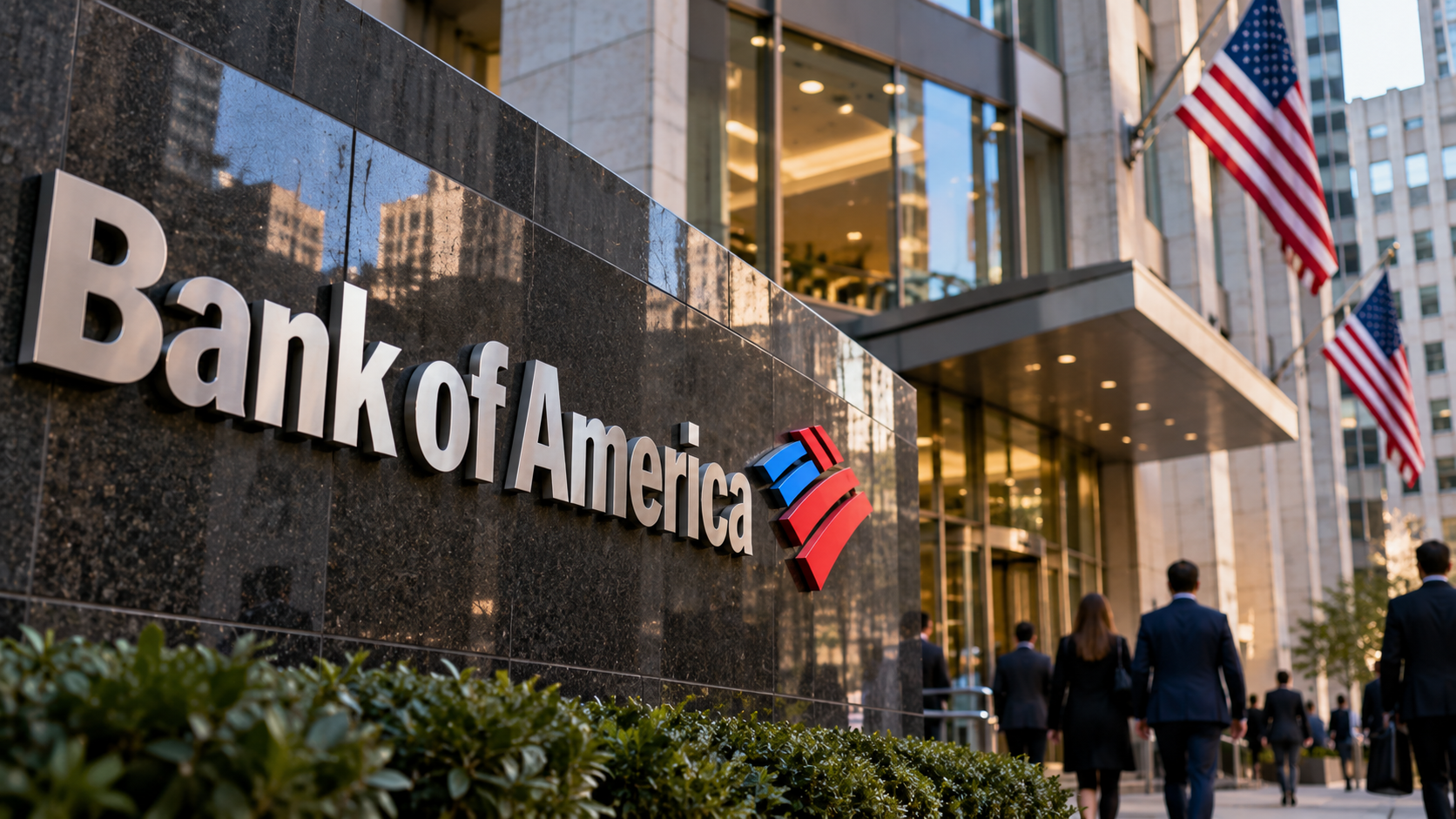
Bank of America is facing approximately $1.21 billion in federal penalties after investigators determined that problems with the bank’s financial oversight operations had gone unresolved for years. The Treasury Department announced the enforcement measures Tuesday, October 13, citing failures involving transaction reviews, federal reporting requirements and restrictions on certain financial dealings.
The investigation focused partly on what happened when money moved through the bank’s accounts. Financial institutions are expected to recognize activity that may require investigation and notify federal authorities when appropriate. At Bank of America, regulators found that the process repeatedly fell short of those requirements.
More than $5 billion worth of transactions were not flagged to federal officials within the required reporting periods. That figure represents activity considered suspicious, not a determination that all of the money came from illegal sources.
Among the transactions were more than $1 billion in activity raising concerns about possible threats to national security. Investigators pointed to patterns associated with Chinese financial crime networks, possible fraud and international trading activity with connections to the U.S. southwest border.
Questions about the bank’s procedures had surfaced well before Tuesday’s announcement. Examiners raised concerns in 2023, followed by a formal directive in December 2024 ordering the company to address shortcomings in its financial crime prevention operations.
Regulators later determined that the changes had not gone far enough. The bank was still having difficulty identifying activity that warranted investigation, despite processing enormous volumes of financial transactions.
Part of the problem was how information reached the employees responsible for reviewing accounts. Rather than consistently discovering questionable transactions internally, the bank often learned about them from outside institutions or government investigators.
Federal authorities also identified shortcomings in the examination of accounts held for overseas banking institutions. Bank of America acknowledged that its handling of these responsibilities did not satisfy federal law and admitted to willful violations of the Bank Secrecy Act.
The financial settlement involves several parts. FinCEN, the Treasury agency responsible for enforcing financial crime reporting rules, set the main penalty at $1.2 billion. Within that amount is a $750 million assessment from another federal regulator, the OCC. The two amounts are not added together.
The OCC assessment exceeds any previous penalty issued by that agency. Treasury described the FinCEN action as its third-largest enforcement penalty.
A separate $11.6 million agreement addresses 475 apparent breaches of American sanctions restrictions. The cases involved financial dealings covered by programs concerning Iran, Russia, Belarus, Burma, Somalia and measures aimed at terrorism and drug trafficking.
Bank of America said it has directed billions of dollars toward new technology and devoted thousands of employees to preventing financial crime. The company said the work requested by regulators is progressing and that it remains committed to completing it.
The main penalty will be recorded in the bank’s third-quarter financial results as an expense that does not qualify for a tax deduction. The company expects the charge to lower earnings by approximately 17 cents per share.
The announcement arrived ahead of Wednesday’s scheduled quarterly earnings release.
Bank of America must also submit to further examination of its compliance operations. Independent reviewers will revisit potentially suspicious activity overlooked in earlier monitoring and evaluate the systems now being used. Additional employee training, testing and auditing are included in the sanctions agreement.
This image is the property of The New Dispatch LLC and is not licenseable for external use without explicit written permission.