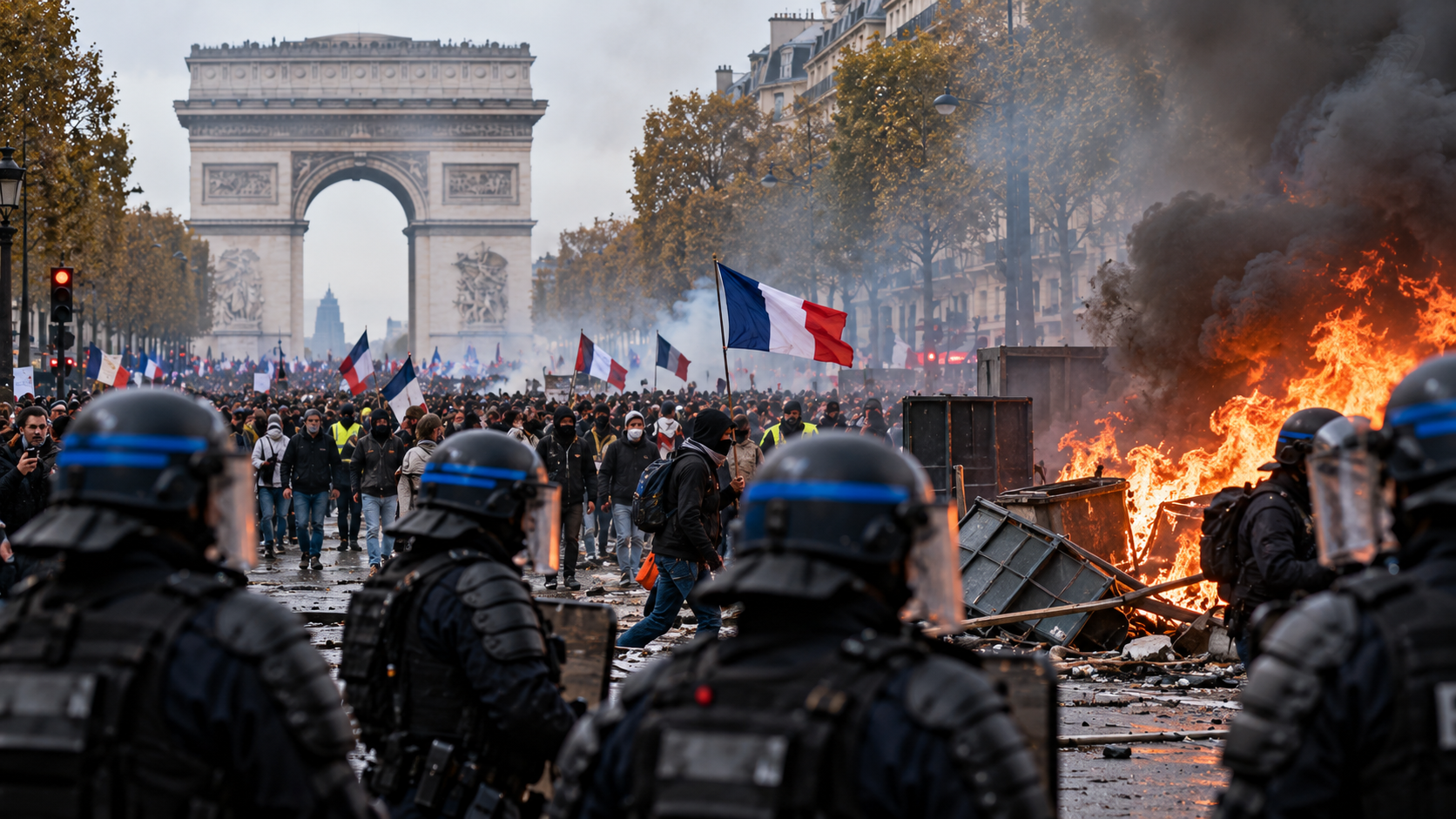
Protests over rising living costs and struggling public services have spread across several European countries, with France experiencing some of the largest and most violent demonstrations over the weekend. More than 500,000 people marched across France on Saturday, demanding better living conditions, improved schools and government action on rising expenses.
While many demonstrations remained peaceful, others turned violent as protesters damaged businesses, set fires and clashed with police. French authorities reported that around 2,500 people were in custody awaiting questioning, while 149 were detained awaiting trial. More than 3,000 shops were damaged during the unrest.
The protests originally began last month among high school students frustrated with teacher shortages and deteriorating school buildings. What started as complaints about education soon grew into a much larger movement involving people struggling with everyday expenses.
France’s economic situation has added to the frustration. Consumer prices increased 3.1% in September compared with the previous year, while energy prices rose 21.3%. Unemployment reached 8.3% during the second quarter of 2026, with younger workers facing even higher rates.
The government is now trying to prevent further violence. Partial curfews have been introduced in areas of Paris, Lyon, Marseille and several other cities. Officials also plan to increase police presence after deploying 60,000 officers over the weekend.
Prime Minister Sébastien Lecornu said local authorities could introduce additional curfews when necessary. The government has also promised financial assistance to damaged businesses and plans to bring around 3,000 qualified teachers into schools to address staffing shortages.
Similar demonstrations have taken place elsewhere in Europe, although the reasons differ between countries. In Spain, anger over housing costs grew after an 87-year-old woman was evicted following a 230% rent increase. She died two weeks later. Thousands also demonstrated in Portugal, where housing prices increased 16.5% during the second quarter compared with a year earlier.
Protesters in Albania criticized expensive university tuition, poor education conditions and government leadership. Demonstrations in Milan, Italy, also became violent when protesters threw stones at police and burned barricades.
Higher fuel prices have added pressure across Europe, partly because of the wars in Iran and Ukraine. Economists say slow economic growth and government debt are making it difficult for leaders to respond to public demands.
France faces particular challenges because its government is trying to reduce its budget deficit from 5.4% of economic output this year to 5.0% in 2027. Proposed spending restrictions have created more tension, especially as households are already dealing with higher prices.
The unrest also comes ahead of France’s presidential election next year. President Emmanuel Macron cannot seek another term, while Marine Le Pen currently leads opinion polls. Political parties are facing growing pressure as demonstrations continue.
French cities were calmer at the beginning of the week, but organizers have called for another round of demonstrations on Saturday. Trade unions are also planning strikes for November 5 over government spending cuts and wages. Student organizations are considering further protests despite schools being closed for a two-week break.
This image is the property of The New Dispatch LLC and is not licenseable for external use without explicit written permission.