The United States launched military strikes against Iranian sites Tuesday after an American Apache helicopter was brought down near the Strait of Hormuz, according to U.S. Central Command. U.S. officials said the action was taken after the helicopter crashed during a patrol mission in the area. President Donald Trump blamed Iran for the incident and said the United States needed to respond.
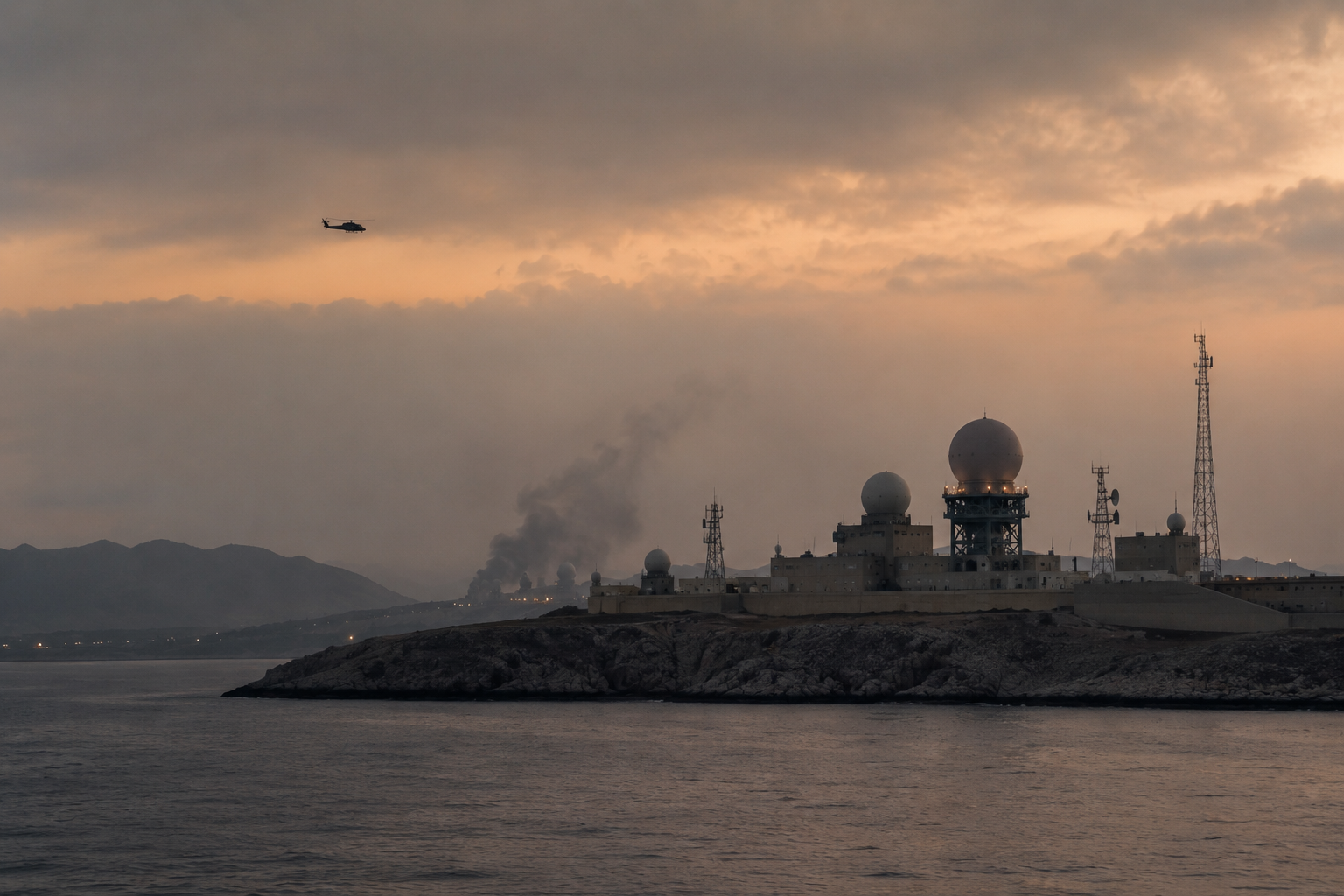
American forces targeted radar systems, air defense equipment and military control facilities near the Strait of Hormuz, CENTCOM said. U.S. officials described the operation as a limited military response connected to the helicopter incident. One official told CBS News that close to 20 locations were struck.
The two people aboard the Apache survived the crash and were later recovered by an unmanned U.S. sea vessel. American officials said the helicopter had been hit by an Iranian drone, although one official said investigators had not determined whether the aircraft was intentionally targeted. Iran has not accepted responsibility for the crash. The semi-official Mehr News Agency reported that Tehran had not claimed involvement.
Not long after the U.S. operation, Iran announced attacks on American military positions in the region. The Islamic Revolutionary Guard Corps said it carried out strikes against 21 targets connected to U.S. bases, including locations in Bahrain and Jordan. Iranian media also reported drone attacks aimed at American facilities in Kuwait and Bahrain.
Jordan said its military intercepted five missiles fired from Iran and reported no injuries. Kuwait’s armed forces also said their air defense systems were responding to incoming aerial threats. At the time of the announcements, U.S. officials had not confirmed whether any American bases had been damaged.
Iran said the U.S. strikes caused damage to a telecommunications tower and two water tanks. Iranian officials also said the cities of Jask and Sirik, along with Qeshm Island, were among the places hit during the operation. The IRGC described the American attacks as “vicious.”
Trump had earlier said the helicopter was flying over the Strait of Hormuz when it went down. The waterway remains an important shipping route and has been effectively closed since fighting involving the United States, Israel and Iran escalated in late February.
House Speaker Mike Johnson said he was with Trump when the decision to authorize the strikes was made. Johnson said the operation was defensive and limited in scope. He also said military action had become necessary after the helicopter incident.
Iranian Foreign Minister Abbas Araghchi responded with a warning on social media, saying Iran would answer any future attack or threat. He also urged foreign military forces to leave the region, arguing that their presence increased the risk of further conflict. A day earlier, Araghchi had said those forces faced the possibility of accidents, human error or being caught in crossfire if they remained near Iran.
Mohammad Baqer Qalibaf, Iran’s lead negotiator in talks with Washington, also posted a warning online shortly before Trump’s comments about the helicopter. He wrote that Iran preferred diplomacy but would respond if commitments were broken.
The latest military exchange has added more uncertainty to negotiations between Washington and Tehran. Trump had said earlier that discussions over a possible agreement were nearing the end and could be completed within a few days. Iran’s Foreign Ministry spokesman Esmaeil Baqai later said recent U.S. military actions had made diplomatic efforts more difficult and that Tehran needed to review the situation before deciding what comes next.
The renewed fighting also followed Israeli strikes across southern Lebanon. Iran had warned that any new Israeli attacks there could trigger another round of retaliation. Trump later urged both Israel and Iran to stop exchanging fire, saying continued fighting could interfere with efforts to reach a broader agreement.
This image is the property of The New Dispatch LLC and is not licenseable for external use without explicit written permission.