The United Arab Emirates has stopped trade and financial dealings with Iran after Emirati officials accused the country of launching two ballistic missiles in its direction Tuesday. Iran has denied being responsible for the launches.
UAE military officials said both missiles ended up in the Persian Gulf. One came down beyond the country’s territorial boundary at sea, while the second fell in waters controlled by the UAE. Officials said their review of the incident suggested vessels in the area may have been the intended targets. There were no reported injuries from the two missiles.
The incident led to shelter warnings across the UAE on Tuesday night. Residents had gone weeks without hearing that type of nationwide warning after attacks became less frequent during the summer.
The economic response followed soon after. Afra Al Hameli, who leads strategic communications for the UAE Foreign Ministry, announced that business activity and financial dealings between the two countries would be suspended with no set date for restarting them. The ministry connected the decision to growing instability in the region.
Iran rejected the UAE’s account. Foreign Ministry spokesperson Esmail Baghaei said his country had not launched missiles at the Emirates and disputed the accusations being made against Tehran. He also said the claims could interfere with attempts to improve trust between governments in the region.
Relations between the UAE and Iran had already been badly affected by the war. The Emirates faced repeated Iranian missile and drone attacks earlier in the fighting, causing business between the neighboring countries to largely stop. Conditions became calmer by late June, and some shipping and commercial activity started again.
That trade has been an important part of Iran’s economy. Figures from the World Trade Organization for 2024 show that roughly $21 billion in Iranian imports came through the UAE, representing more than 30% of the country’s total imports. Iran also sent around $7 billion in exports to the Emirates that year, or close to 13% of its exports.
The latest dispute is also tied to growing tension around the Strait of Hormuz. The narrow waterway plays a major role in international energy shipping, but traffic has dropped during the war. MarineTraffic recorded only 10 vessels traveling through the strait Tuesday. Before the fighting, daily traffic was more than 10 times that amount.
Emirati officials have accused Iran of attacking ships there as well. Four tankers belonging to Abu Dhabi’s state-owned ADNOC were struck over the previous two weeks. Nobody was hurt in those incidents. Across the conflict as a whole, almost 20 ADNOC vessels have faced missile or drone attacks. One person has been killed and 20 have been wounded.
The new confrontation comes while talks involving Iran and the United States have struggled. Washington has continued its blockade of Iranian ports and is preparing further economic measures against Tehran.
Iran has accused the UAE and other American partners in the Gulf of assisting U.S. military operations. Gen. Ali Abdollahi, Iran’s chief of staff, warned Gulf countries that providing help to American forces could be viewed by Tehran as taking part in U.S. military actions.
UAE officials said their military remains ready to respond if the country’s security is threatened again. The Foreign Ministry also said the suspension of economic activity does not change the UAE’s stated support for regional dialogue and cooperation.UAE Cuts Trade With Iran After Missile Accusations
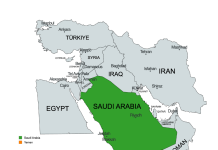
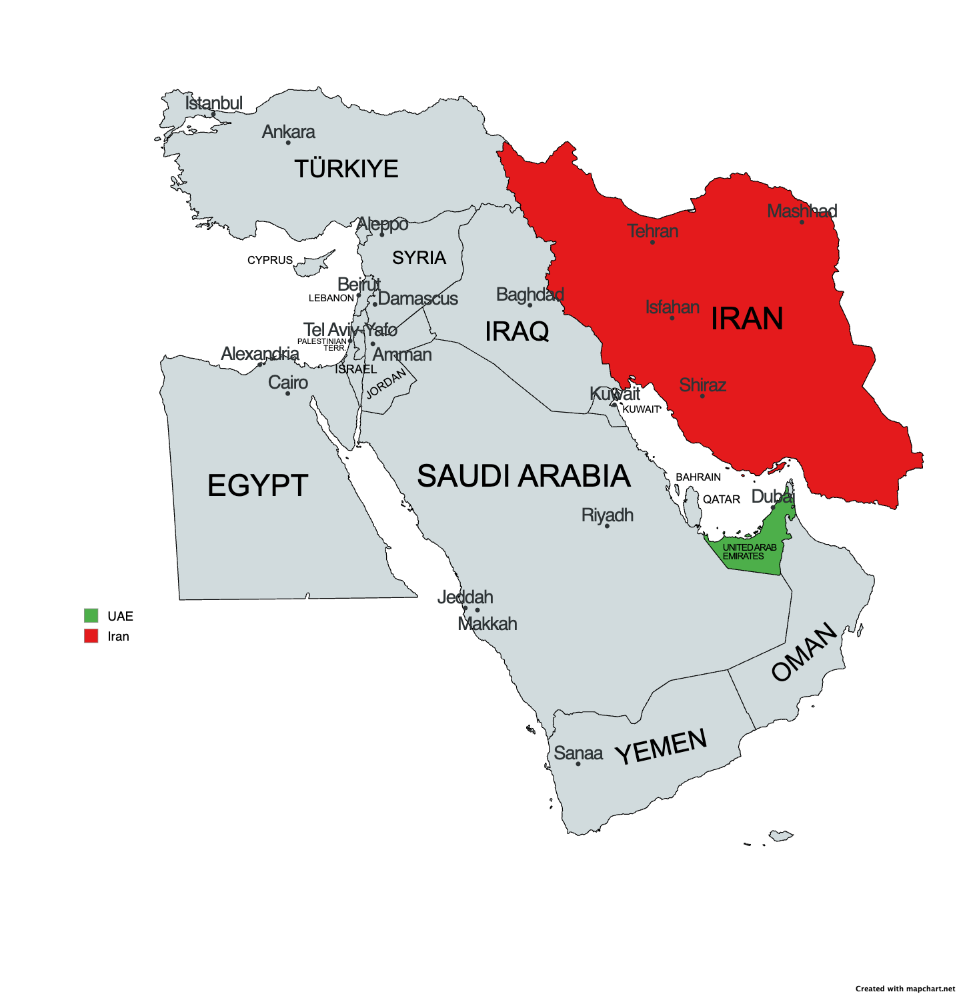
UAE = Green
Iran = Red
Image is licensed under the Creative Commons Attribution-Share Alike 4.0 International license and was created using MapChart (https://mapchart.net).