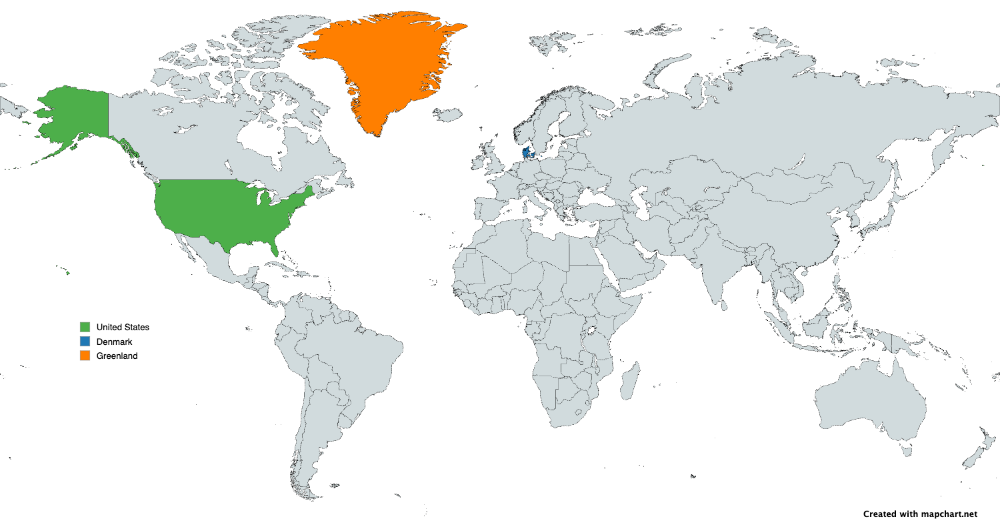
A security agreement involving Greenland is moving ahead after months of strained relations between Washington and Copenhagen. The plan would allow the United States to increase its military activity there, but leaders in Denmark and Greenland say the island is not being transferred to American control.
Much about the arrangement is still unknown. The document itself has not been made public, and statements released so far leave room for different interpretations of how the deal will work.
President Donald Trump announced the agreement Friday. He portrayed it as giving Washington what it needs to handle security concerns involving Greenland for the long term, including the ability to keep potentially hostile governments from gaining a foothold on the island.
Officials representing Denmark and Greenland have stressed different points. Mette Frederiksen, who leads Denmark’s government, and Greenlandic leader Jens-Frederik Nielsen said the deal does not change who controls the territory. Greenlanders would also continue deciding questions involving their political future.
The next step is expected in New York, where representatives of the three governments plan to put their names to the agreement during next week’s UN gathering. Denmark and Greenland would then have to complete their own required approval processes.
More details have come from a U.S. official who was not publicly identified. According to that account, American forces could add military facilities and would have continuing access to the island and the airspace above it.
The arrangement also places limits on countries that are not members of NATO. They would be kept from opening military installations on Greenland, while some overseas investments could be stopped when security concerns are involved.
The United States already operates from Greenland, so an American military role there is not beginning with this deal. Pituffik Space Base, located in the northwestern part of the island, has more than 100 U.S. personnel and is used for work involving missiles and monitoring space.
Military cooperation between Washington and Copenhagen also predates the current dispute by decades. An arrangement reached in 1951 already provides the United States with considerable room to station and operate forces there. Until the new agreement is released, comparing the two arrangements will be difficult.
The latest negotiations followed repeated statements from Trump that the United States needed greater control involving Greenland for security reasons. He had also left open the possibility of using force. Denmark and Greenland rejected the idea that the island could simply be purchased or taken.
The dispute caused friction within NATO before negotiations moved toward a security arrangement instead. The alliance has welcomed the development and says greater cooperation in the Arctic and North Atlantic would benefit regional security.
There is still caution among some Greenlandic political figures. Lawmaker Naaja Nathanielsen has responded positively to progress on an agreement while continuing to stress Greenland’s ability to make its own choices. Former politician Aaja Chemnitz is waiting for the completed version before making up her mind about it.
Two Copenhagen residents interviewed about the development also gave different reactions. One suggested the same security arrangement might have been possible without the earlier dispute, while another opposed an increased American presence in the Danish Kingdom.
The unanswered questions now mostly come down to the agreement itself. Until its wording is released, the extent of Washington’s new military authority and how it differs from existing arrangements remain unclear.