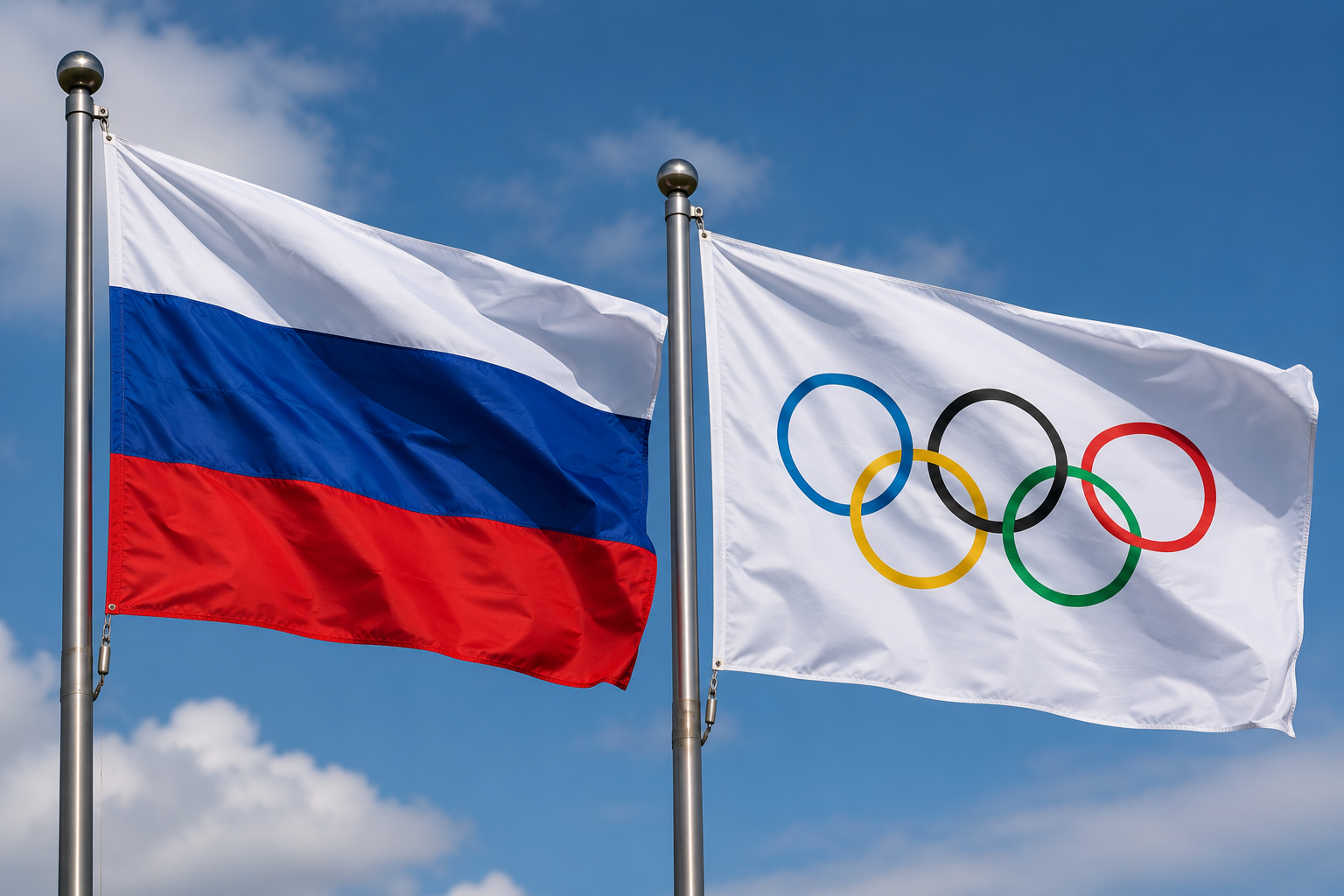
Russian athletes moved a step closer to returning to the Olympic movement after the International Olympic Committee provisionally removed the suspension of the Russian Olympic Committee, which had been in place since October 2023.
The IOC said its decision followed a legal review that found the Russian Olympic Committee no longer includes regional sports organizations from Ukrainian territories claimed by Russia. Russian officials also confirmed they would not carry out Olympic Committee activities in those areas. Even with the suspension lifted, the IOC said it will continue monitoring developments and could take further action if necessary.
The change does not mean Russia has fully returned to international sport. Individual international federations will decide whether Russian athletes and teams can compete in their events, so rules may differ from one sport to another. The IOC also has not announced whether Russia’s national flag, anthem, or colors will be allowed at future Olympic Games.
Russian competitors have already appeared at recent Olympics under neutral status rather than representing their country. At the Paris Olympics in 2024, only 32 athletes from Russia and Belarus received approval to compete as neutrals, winning five medals between them. The Russian delegation had been much larger at the Tokyo Olympics in 2021, where more than 300 athletes competed and collected 71 medals.
Moscow welcomed the IOC’s announcement. Kremlin spokesman Dmitry Peskov described the move as progress toward restoring the rights of Russian athletes. Sports Minister Mikhail Degtyarev also reacted positively, saying Russia intends to take part in qualification events for the 2028 Los Angeles Olympics. He added that sport should not be influenced by political disputes.
The IOC said its position on the war in Ukraine has not changed. It continues to condemn the invasion and said it stands with Ukrainian athletes. Russian government and state officials remain excluded from IOC events, and Russia is still not eligible to host competitions organized by the IOC.
Ukraine criticized the decision soon after it was announced. The Ukrainian Foreign Ministry argued that restrictions should stay in place while the war continues. Skeleton racer Vladyslav Heraskevych also opposed the decision, saying he believed it ignored the reality of the conflict and the impact it has had on Ukrainian athletes.
Anti-doping measures remain another condition for Russia’s return. The IOC said Russian athletes must meet all required testing standards before being cleared to compete. The testing process will include repeated checks and oversight through the International Testing Agency as part of a broader anti-doping program.
Past doping controversies continue to shape the discussion. Investigations into state-sponsored doping following the 2014 Sochi Winter Olympics resulted in years of sanctions, while the case involving figure skater Kamila Valieva during the Beijing Winter Games renewed concerns about Russia’s anti-doping system. Travis Tygart of the United States Anti-Doping Agency warned that athletes and sporting bodies will want stronger evidence that similar problems will not happen again before accepting Russia’s full return.
The IOC left future decisions largely in the hands of international sports federations. FIFA said it will review the Olympic body’s announcement before deciding whether to change its own restrictions on Russian football teams, while World Athletics has already chosen to keep its existing policy regarding Belarusian athletes competing under their national flag.
This image is the property of The New Dispatch LLC and is not licenseable for external use without explicit written permission.