President Donald Trump announced Tuesday(5/13/25) that the United States will lift all sanctions on Syria, a move aimed at opening a new chapter in U.S.-Syria relations and encouraging international engagement with the country’s transitional government.
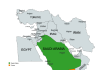
Speaking at the U.S.-Saudi Investment Forum in Riyadh, Trump said the decision was made after consultations with Saudi Crown Prince Mohammed bin Salman and Turkish President Recep Tayyip Erdogan. The announcement comes ahead of a planned meeting with Syria’s President Ahmed al-Sharaa, a former militant leader who now heads the post-Assad administration.
“We’re taking them all off,” Trump said of the sanctions. “Good luck, Syria—show us something very special.” The administration framed the move as a gesture of goodwill and opportunity for Syria to rebuild and reintegrate into the global economy after years of conflict.
Sanctions on Syria, which date back to its 1979 designation as a state sponsor of terrorism, were expanded in the 2000s and again after the outbreak of the Syrian civil war in 2011. They included restrictions on financial transactions, exports, foreign aid, and petroleum imports. The U.S. Treasury’s actions also discouraged other countries and organizations from conducting business with Damascus, making U.S. sanctions among the most far-reaching imposed on the country.
By removing these restrictions, the administration aims to allow humanitarian groups broader access, enable foreign investment, and restore international financial connections. Secretary of State Marco Rubio is expected to meet his Syrian counterpart later this week to discuss the next steps toward normalization.
Syrian Foreign Minister Asaad al-Shibani welcomed the announcement, calling it “a new opportunity to build a relationship based on mutual respect and shared interests.” He added that the move may pave the way for further diplomacy with the United States.
While Trump’s decision received praise from allies such as Lebanon’s President Joseph Aoun and drew cautious support from members of Congress, it has also raised concerns. Some Israeli officials expressed unease over the shift in U.S. policy, citing President Sharaa’s past ties to extremist groups, though he formally broke with al-Qaeda nearly a decade ago.
Analysts view the sanctions relief as a response to pressure from U.S. allies in the Gulf region and growing calls to bring Syria out of isolation. The United Nations and numerous aid organizations had long argued that sanctions hampered recovery efforts and limited access to humanitarian assistance.
The policy change is expected to unlock new investment from Arab and Turkish entities, though U.S. businesses are likely to move more cautiously. Economists say the end of sanctions will help Syria address long-standing issues like high unemployment, infrastructure collapse, and currency instability.
Trump emphasized that the U.S. was not seeking a general disengagement from the region, but rather a rethinking of how to stabilize and influence it through strategic engagement.
“This newly formed government in Syria may be a good investment,” said Senator Lindsey Graham, who expressed conditional support for the policy shift. “However, there is a lot that must be learned before making that determination.”
The White House said the president’s decision aligns with broader U.S. interests in curbing influence from Iran and Russia, both of which had backed the Assad regime for years. Trump’s envoy Steve Witkoff, who has played a role in regional diplomacy, is expected to continue discussions with Gulf and Syrian officials in the coming days.
As Syria marks this change in U.S. policy, celebrations have been reported in parts of Damascus, where residents expressed hope that economic recovery and international recognition might now be within reach.
The administration maintains that further steps—such as support for reconstruction and formal diplomatic recognition—will depend on the Syrian government’s cooperation and actions in the months ahead.
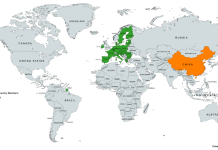
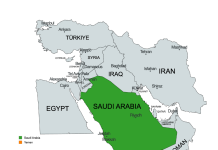
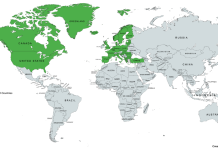
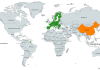
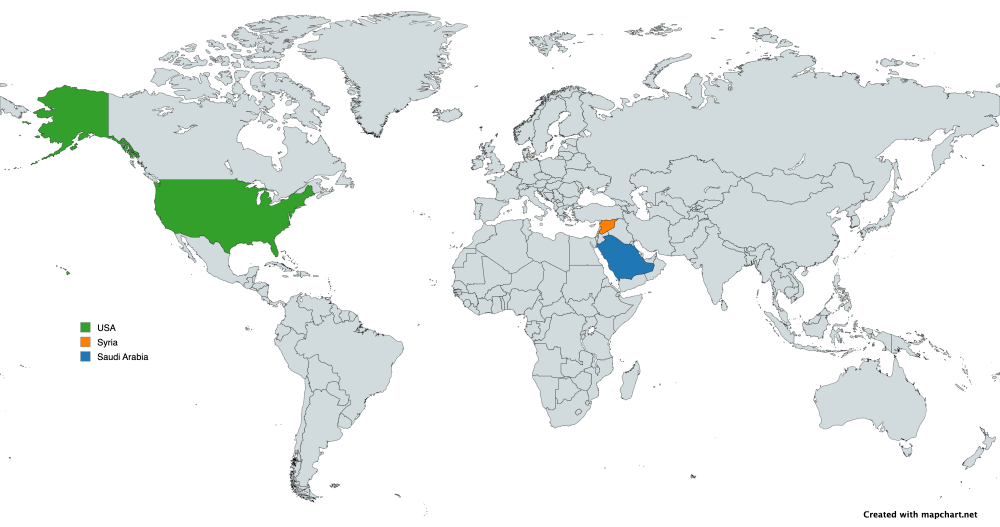
USA = Green
Syria = Orange
Saudi Arabia = Blue
Image is licensed under the Creative Commons Attribution-Share Alike 4.0 International license and was created using MapChart (https://mapchart.net).