The United States will designate Brazil’s two largest criminal organizations as foreign terrorist organizations beginning June 5, according to an announcement made Thursday(5/28/26) by U.S. Secretary of State Marco Rubio. The move has already sparked political tension in Brazil, where President Luiz Inácio Lula da Silva and members of his government have criticized the decision and raised concerns about foreign interference.
Rubio said the First Command of the Capital (PCC) and the Red Command (CV) will first be classified as specially designated global terrorists. That designation restricts their ability to conduct financial transactions and identifies them as threats to U.S. citizens. The foreign terrorist organization designation will take effect next month.
The announcement came just one day after Brazilian Senator Flávio Bolsonaro visited Washington and met with Rubio. Bolsonaro, the son of former President Jair Bolsonaro, has publicly supported labeling the groups as terrorist organizations. He is expected to challenge Lula in Brazil’s presidential election later this year, making the timing of the decision especially sensitive.
In a statement, Rubio described the PCC and CV as two of Brazil’s most violent criminal groups. He said they have carried out attacks against police officers, public officials, and civilians while building criminal networks that stretch beyond Brazil’s borders. According to experts, the two organizations likely have more than 50,000 members combined. The PCC is centered in São Paulo, while the CV is based mainly in Rio de Janeiro, though both groups operate across South America.
The designation is part of a broader strategy used by President Donald Trump’s administration against criminal organizations in Latin America. The administration has increasingly treated drug-trafficking groups as terrorist threats and has used sanctions and military operations as tools in that effort.
Flávio Bolsonaro praised the move and said his trip to Washington had produced more results for Brazil’s public security than Lula’s years in office. He also accused the president of trying to prevent the designation from happening.
Lula had previously warned that labeling the PCC and CV as terrorist organizations could amount to interference in Brazil’s domestic politics. A Brazilian government official told The Associated Press that the administration received no advance notice from Washington before the announcement was made.
The disagreement grew further on Friday when Lula publicly criticized the decision. In a statement posted to social media, he argued that criminal organizations focused on profit should not be treated the same way as groups driven by political, ideological, or religious goals.
“The terror inflicted by these organisations upon communities seeks to generate profit through crime,” Lula wrote. He said activities such as drug and arms trafficking, despite their violence, should not be confused with international terrorism.
Lula also expressed concern that the designation could be used as justification for actions that undermine Brazil’s sovereignty. He said international cooperation against organized crime is welcome, particularly in areas like money laundering and arms trafficking, but warned against unilateral measures imposed from abroad.
Brazilian officials and experts have raised concerns about the possible effects of the terrorist label. Such designations can freeze assets linked to targeted groups and may expose people or institutions accused of providing support to legal penalties. Some analysts have warned that financial institutions or even victims of extortion could face complications if they become connected to investigations involving the designated groups.
The issue is expected to play a major role in Brazil’s election campaign. Public security remains one of the country’s most debated topics, and both Lula and the Bolsonaro family have tried to position themselves as tougher on organized crime.
Earlier Thursday, Brazilian prosecutors launched a large operation targeting fraud, money laundering, and tax evasion connected to criminal organizations. Authorities have also scored recent victories against the PCC. Last year, federal police dismantled part of a money-laundering network that investigators said had moved at least 6 billion reals, or about $1.1 billion, through businesses including gas stations, perfume shops, and a financial services company.
Political analyst Thomas Traumann argued that the U.S. decision could have electoral consequences in Brazil. He said the move appeared to follow requests made by Flávio Bolsonaro during his visit to Washington and predicted that Lula would once again frame the issue around national sovereignty as the election approaches.
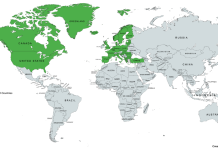
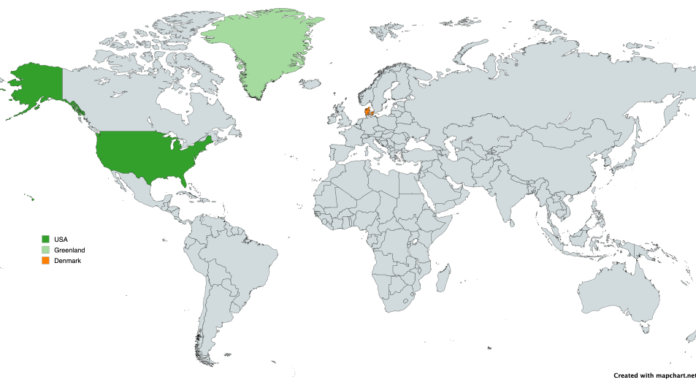
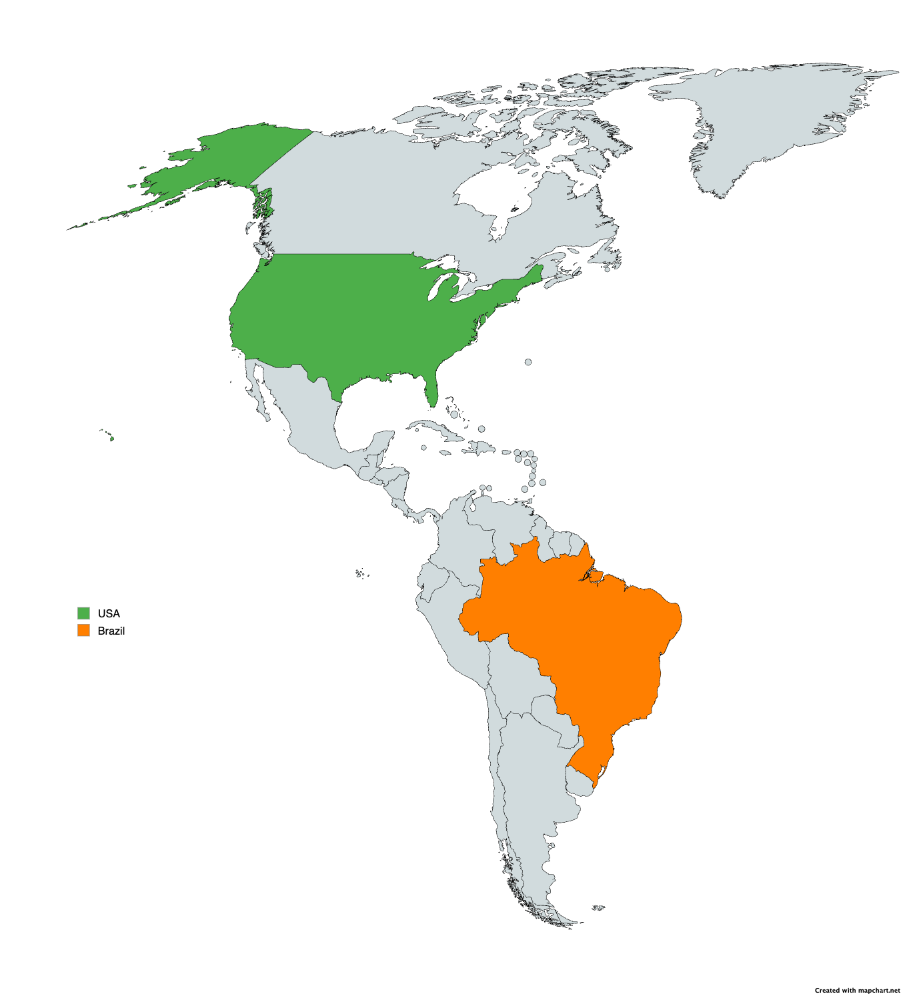
USA = Green
Brazil = Orange
Image is licensed under the Creative Commons Attribution-Share Alike 4.0 International license and was created using MapChart (https://mapchart.net).