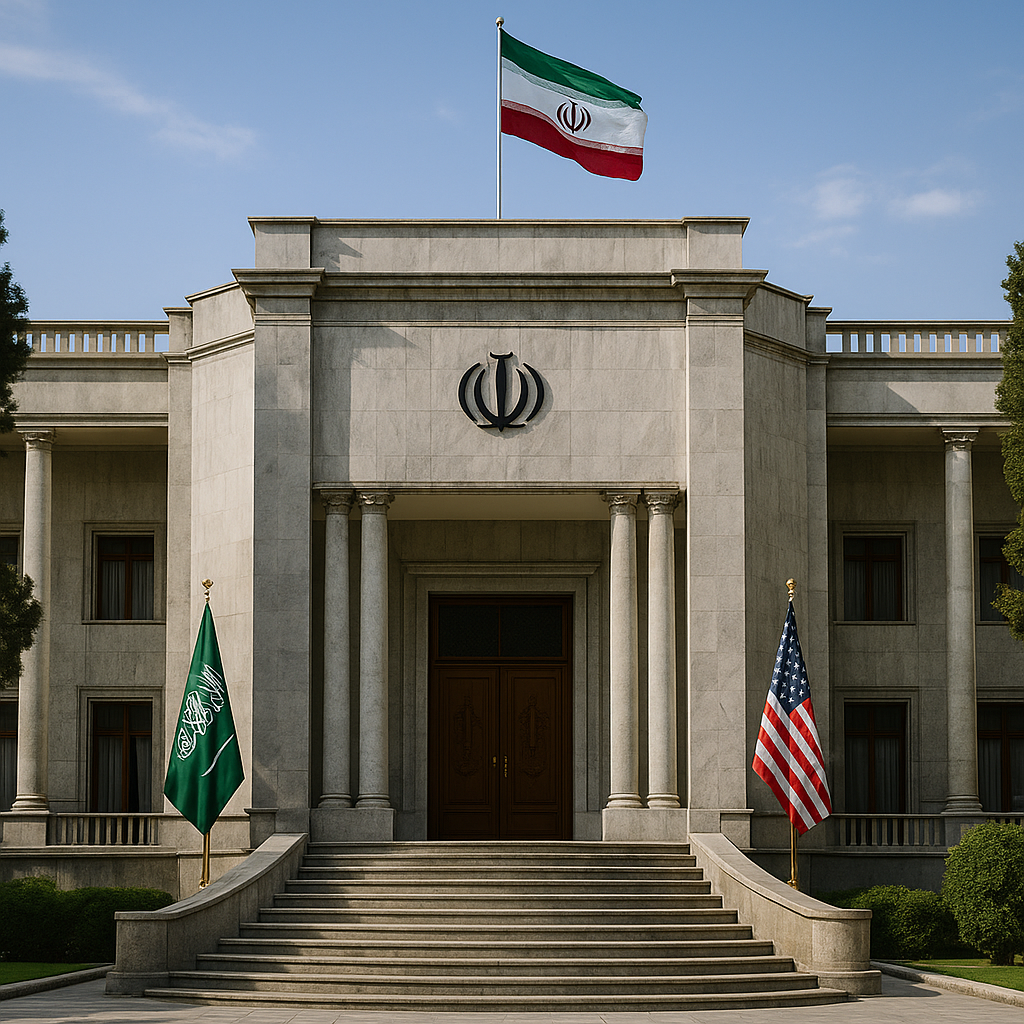
Saudi Arabia’s Defense Minister, Prince Khalid bin Salman, delivered a direct message to Tehran last month: take U.S. President Donald Trump’s invitation to negotiate a nuclear agreement seriously, or risk confrontation with Israel. The meeting, which took place behind closed doors in Iran’s presidential compound on April 17, was aimed at averting a broader regional crisis.
According to four sources familiar with the discussions—two from Gulf government circles and two Iranian officials—the prince urged Iran to seize the diplomatic opportunity. Present at the meeting were Iranian President Masoud Pezeshkian, military Chief of Staff Mohammad Bagheri, and Foreign Minister Abbas Araqchi.
The prince’s visit came shortly after Trump publicly acknowledged talks between Washington and Tehran, in a surprise joint appearance with Israeli Prime Minister Benjamin Netanyahu. Trump announced that discussions were underway to limit Iran’s nuclear program in exchange for lifting sanctions. Netanyahu had reportedly hoped to gain support for a more aggressive response toward Iran.
Sources say Prince Khalid warned Iranian leaders that Trump’s team would push for a deal on a tight timeline. According to one Gulf source, the Saudi minister cautioned that waiting too long could lead to military action by Israel, especially if negotiations fell apart. He emphasized the urgency, noting that the region’s recent instability—from Gaza to Lebanon—left little room for further conflict.
Though media reports noted the visit, the content of the message Prince Khalid carried from King Salman had not previously been disclosed.
The minister also reminded his hosts of the events of 2019, when Saudi oil facilities were targeted in drone attacks attributed to Iran and its allies, though Tehran denied involvement. According to sources, Khalid stopped short of blaming Iran directly but warned against any similar escalation.
One senior diplomat familiar with the meeting said Riyadh had made its stance clear: diplomacy was preferred, but inaction could invite consequences beyond Iran’s control.
During the talks, Iranian President Pezeshkian responded that Iran was open to negotiations. He said Tehran was eager to ease economic pressure caused by Western sanctions, but Iranian officials remained wary of Washington’s shifting approach. According to Iranian sources, the concern was that Trump might abruptly change his terms or abandon talks altogether.
The Iranian delegation made clear they were not willing to dismantle their uranium enrichment program entirely, which remains a major sticking point. Five rounds of negotiations have already taken place, but the issue of enrichment continues to delay progress.
In a separate development reported by Reuters, Iranian officials suggested they might temporarily halt enrichment activities if Washington released frozen Iranian funds and accepted Iran’s right to refine uranium for civilian use. That proposal has not been confirmed by either side, and Iran’s foreign ministry has denied any agreement to pause enrichment.
U.S. officials have remained tight-lipped on the Saudi intervention. The White House press secretary issued a brief statement reiterating President Trump’s stance: Iran could either reach a deal or face consequences. Trump later told reporters that he had advised Netanyahu not to interfere with the ongoing talks, saying both sides were nearing a resolution.
Meanwhile, tensions remain high in the region. Iranian-backed groups in Lebanon, Gaza, and Iraq have suffered setbacks in recent months, weakening Tehran’s influence across several fronts. In Syria, the fall of the Assad regime—once one of Iran’s closest allies—further reduced the country’s standing.
Saudi Arabia’s leadership sees this moment as an opening to exert diplomatic influence. Analysts say the kingdom, pursuing long-term economic goals, is trying to avoid any conflict that could derail its development plans. One regional expert told Reuters that Riyadh has no interest in seeing another war erupt so close to home.
Though the 2023 détente brokered by China reopened lines of communication between Tehran and Riyadh, trust remains limited. Gulf leaders continue to view Iran as unpredictable, especially regarding its proxy networks and military posture.
During Trump’s recent trip to the Gulf, leaders from Saudi Arabia, Qatar, and the United Arab Emirates reportedly told the U.S. president they opposed military strikes on Iran’s nuclear infrastructure. Instead, they advocated for continued diplomacy and urged Washington to secure a deal that would avoid open conflict.
Still, American officials have begun drafting a framework for a possible agreement. According to reports, this includes a ban on uranium enrichment and a mechanism to verify compliance. Negotiators remain cautious, aware that Tehran has previously concealed parts of its program and restricted access to international inspectors.
As of late May, no final deal has been reached. Trump’s team insists progress is being made, but multiple sources confirm that disagreements over enrichment and enforcement remain unresolved. Whether the message delivered by Prince Khalid prompts movement inside Tehran remains uncertain.
But one thing is clear: with regional tensions simmering and diplomacy on the clock, both sides are running out of time to find common ground.
This image is the property of The New Dispatch LLC and is not licenseable for external use without explicit written permission.