When the first Earth Day happened in 1970, pollution was already a visible part of life in many parts of the United States. Rivers were dirty. Factory smoke hung over cities. Trash collected along roads and empty lots. People had been noticing it for years, and by the 1960s more of them were talking about health risks and damage to the environment.
One reason the issue got wider attention was Silent Spring. In that book, Rachel Carson wrote about pesticides and the effects they could have on wildlife and ecosystems. The book reached a large audience. It also helped push environmental concerns into public debate.
The idea for Earth Day is usually linked to Gaylord Nelson, a senator from Wisconsin. He wanted a national event focused on environmental problems. At the time, anti-war teach-ins on college campuses were drawing attention, and he saw a similar model that could work for this issue too. He brought in Denis Hayes, who was in his twenties then, to help organize events around the country.
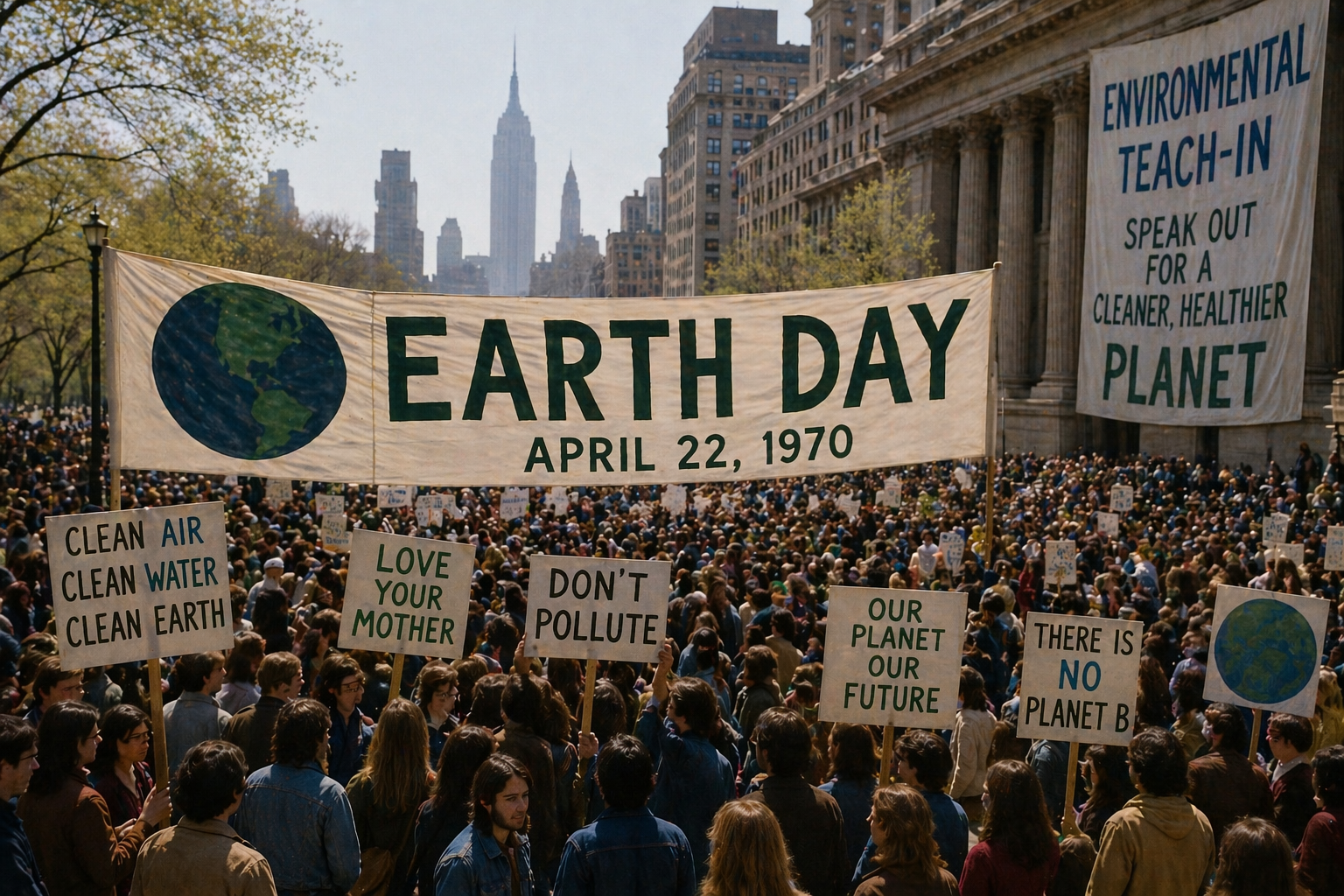
April 22, 1970 became the date. Part of the thinking was practical. Many colleges were still in session, so students could take part before the school year ended. Students did a lot of the organizing. Flyers, rallies, local meetings, speaker events. Some of it was planned carefully, some of it probably less so.
There was no single main event. Earth Day happened in many places at once. Some cities had marches. Other towns held cleanups or public talks. Schools ran teach-ins. Community groups joined in. Churches did too in some areas.
An estimated 20 million Americans participated. That was around one out of every ten people in the country at the time. In New York City, parts of Fifth Avenue were closed for events. Crowds gathered in parks, on campuses, in streets, inside auditoriums. Different groups showed up together even if they did not usually work side by side.
Later that same year, the United States created the Environmental Protection Agency. Congress also passed the Clean Air Act of 1970, and the Clean Water Act of 1972 followed not long after. Earth Day did not cause all of that by itself, but it showed that environmental issues had broad public support.
Earth Day kept going after 1970. In the 1980s, topics like toxic waste and acid rain drew attention. By 1990, organizers said around 200 million people in 141 countries took part. Recycling drives became common around that time. So did local volunteer events.
By 2000, the internet was part of Earth Day organizing. Schools, nonprofits, and local groups could coordinate online more easily than before. Climate change and clean energy were getting more attention too.
Today, Earth Day is held each year on April 22 in nearly 200 countries. Activities depend on where you are. Some places plant trees or clean parks. Schools may run lessons or campus events. Governments and businesses sometimes announce new environmental goals. Plenty of people just use the day to think a little more about waste, water use, or energy at home.
This image is the property of The New Dispatch LLC and is not licenseable for external use without explicit written permission.