Russian forces lost more territory in Ukraine in April than they gained, according to new battlefield estimates from the Institute for the Study of War, or ISW. Analysts said it was the first time Russia posted a monthly net territorial loss since Ukraine’s surprise move into Russia’s Kursk region in 2024.
The ISW estimated Russia lost around 116 square kilometers during April after Ukrainian counterattacks in several areas of the front. AFP, using the same data set, calculated the loss at about 120 square kilometers.
The change was small in overall terms. Russia still controls close to one-fifth of Ukraine, including Crimea and parts of eastern Ukraine already held by Russian-backed separatists before the full-scale invasion in 2022. Still, the numbers stood out because Russian forces had been steadily advancing for much of the past two years.
According to the ISW, Russian advances have slowed sharply since late 2025. The group said Russian troops captured far less territory over the last six months than they did during the same stretch a year earlier.
Analysts pointed to several reasons for the slowdown. Wet spring weather and muddy ground made it harder for armored vehicles to move across the battlefield. Ukrainian counterattacks also forced Russian units to give up some positions in the southeast.
The ISW also said internal military problems have affected Russian operations. Researchers mentioned disruptions to communications systems, limits on Russia’s use of Starlink terminals in occupied areas, and tighter restrictions on Telegram inside Russia.
Fighting remained intense despite the slower movement along the front. Drone strikes, artillery fire, and long-range attacks have continued across large parts of Ukraine and western Russia. U.S.-led diplomatic talks aimed at ending the war have also stalled in recent months.
Ukraine regained territory in parts of Zaporizhzhia, Kharkiv, and Donetsk during April, the ISW said. The gains were estimated at roughly 40 square kilometers in each region. Russian troops still remained active in many nearby contested zones, though. Some places changed hands more than once.
The ISW’s calculations did not include infiltration operations. Those are missions where small Russian groups move through contested areas without fully controlling them. Analysts said those operations often happen in “gray zones” where neither side has complete control.
When those infiltration areas are counted, Russia may still have gained a small amount of territory overall in April. The ISW estimated that figure at around 28 square kilometers.
The think tank argued that infiltration tactics can sometimes create the appearance of broader Russian advances than actually exist on the ground. Some infiltrating units end up isolated or pushed back later. It gets messy fast in those areas.
Russian forces continued concentrating attacks near Kramatorsk and other fortified cities in Donetsk. Ukrainian commander Oleksandr Syrskii said assaults there increased during April. ISW analysts said Russian troops managed limited advances east of Kramatorsk but had not taken large sections of the area.
Ukraine has also expanded strikes deep inside Russian territory in recent weeks. Ukrainian officials said attacks on military sites, oil facilities, and supply infrastructure increased during April. President Volodymyr Zelenskyy said Ukraine planned to continue targeting supply routes and military production sites far from the front line.
The ISW works together with the Critical Threats Project at the American Enterprise Institute, another U.S.-based research organization.
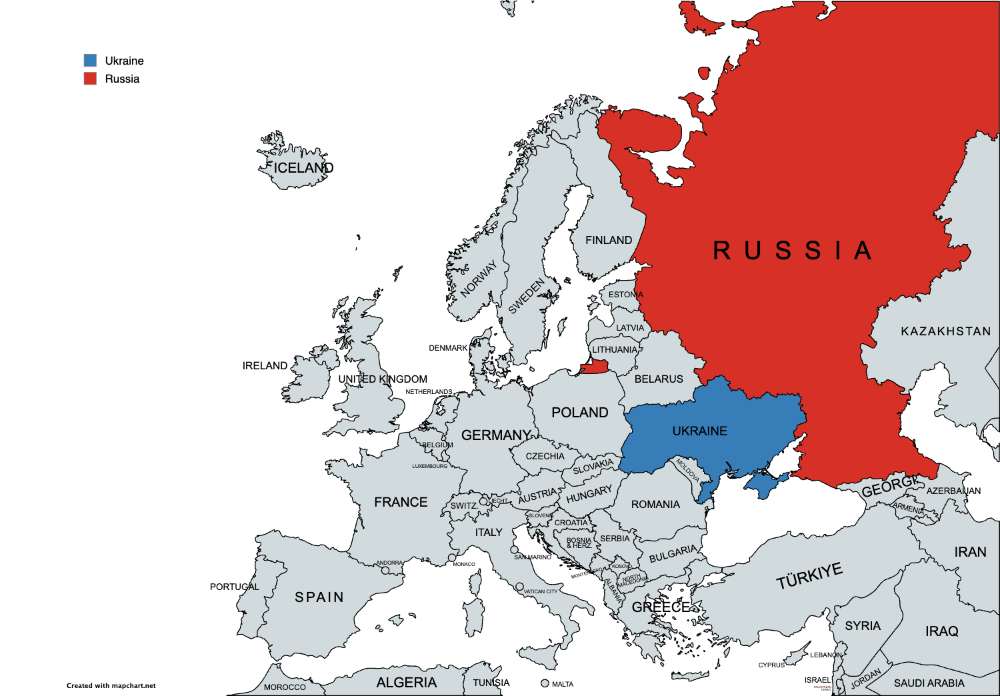
Ukraine = Blue
Russia = Red
Image is licensed under the Creative Commons Attribution-Share Alike 4.0 International license and was created using MapChart (https://mapchart.net).