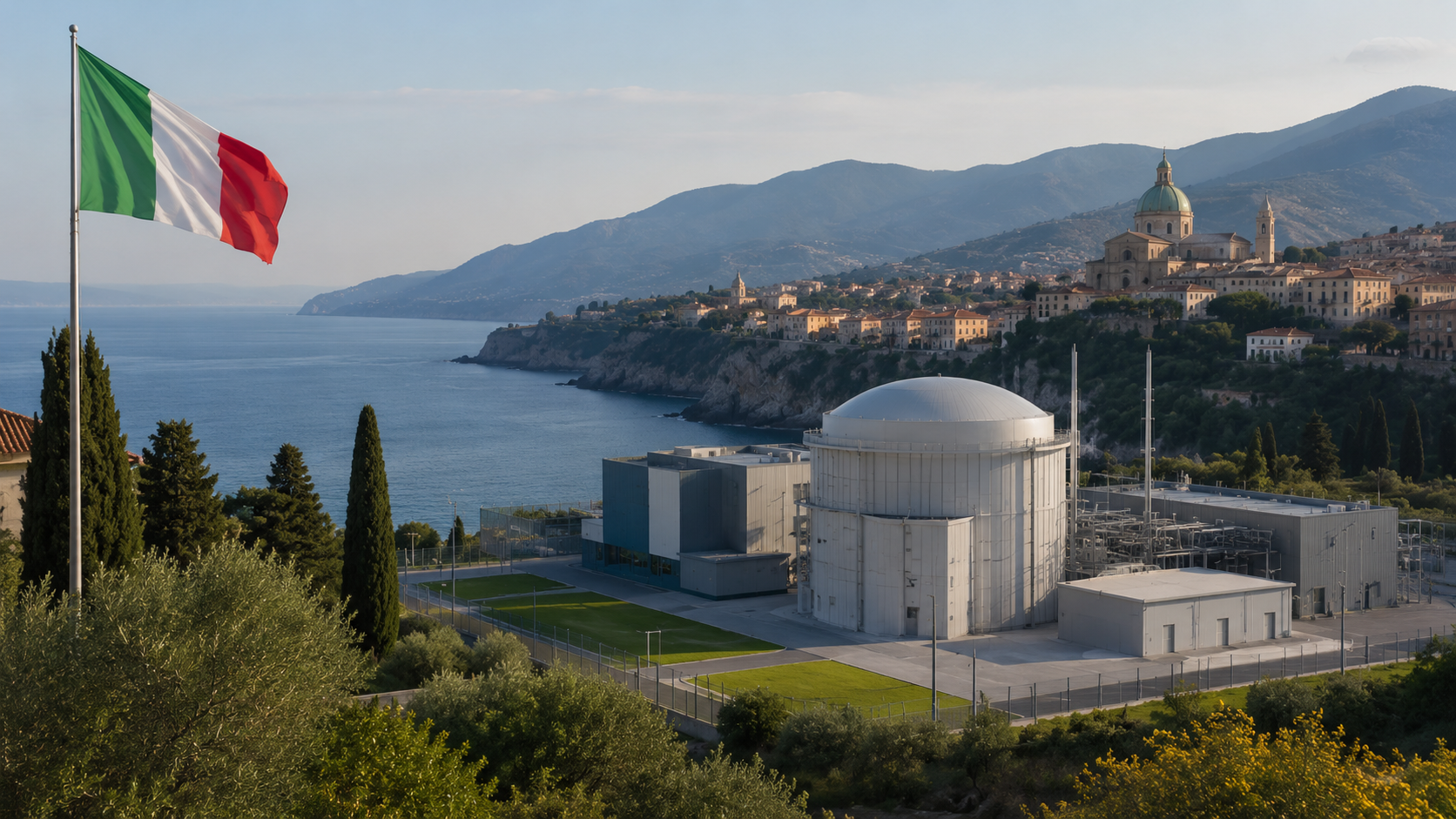
Italy’s long rejection of nuclear energy may be entering a new phase. The government of Prime Minister Giorgia Meloni is preparing rules that could eventually allow reactors to operate in the country again, driven by concerns about future electricity supplies, climate targets and energy security.
The first step is legislation expected to move through Parliament. It would create the legal foundation for newer forms of nuclear technology, while more detailed regulations would follow over the next year, including requirements for safety, licensing, nuclear waste and choosing locations for facilities.
For Italy, the proposal reopens an issue voters have settled against nuclear power more than once. The country previously had four operating reactors, but the program came to an end after a 1987 vote held in the shadow of the Chernobyl disaster. Nuclear energy returned to the political debate years later, only to be rejected again in 2011 after the Fukushima accident in Japan, with roughly 94% voting against plans for new plants.
Meloni’s government believes the country’s energy situation now gives the issue new urgency. Environment and Energy Security Minister Gilberto Pichetto Fratin expects electricity use to grow by at least 30% over roughly the next decade, and officials do not expect renewable sources by themselves to cover all of Italy’s future needs.
Any new nuclear program would look different from the one Italy shut down decades ago. The government is interested in small modular reactors, commonly called SMRs, as well as other newer reactor designs. These smaller systems are being presented by supporters as more adaptable and potentially quicker to construct than older plants.
Even under the government’s plans, nuclear electricity would still be years away. Pichetto Fratin has placed the possible arrival of Italy’s first new reactors sometime around 2033 to 2035.
Attitudes toward nuclear energy also appear different from those seen during Italy’s previous votes. Research firm Only Numbers reported in June 2026 that around 55% of Italians favored next-generation plants, with younger people showing more openness to nuclear technology.
Age has become one part of the debate. Viviana Cruciani, who oversees decommissioning work at the Latina nuclear site, described younger Italians as more enthusiastic about nuclear energy, while people shaped by Chernobyl are more likely to associate it with the dangers of nuclear accidents.
There are still major questions about whether a comeback would work financially. Estimates for a 300-megawatt SMR range from €3 billion to €6 billion before adding the expenses of grid connections and other infrastructure. The government wants private money to finance much of the development, but energy adviser Michele Governatori has raised doubts about both the cost of nuclear projects and whether SMRs can deliver cheaper power before the technology is proven commercially on a wider scale.
Finding acceptable locations could create another problem. Italy has not established a permanent national destination for the radioactive waste it already has, leaving material at temporary sites around the country.
Public support also becomes weaker when the question moves from nuclear power in general to a reactor close to home. Polling cited by experts suggests around 60% of Italians would oppose one in their province, and proposed reactor or waste sites could open the way for renewed political opposition and another referendum.
This image is the property of The New Dispatch LLC and is not licenseable for external use without explicit written permission.