Cuba is facing one of the most severe energy and economic emergencies in its modern era as tightening American enforcement actions choke off the oil supplies that have long sustained the island’s fragile economy. With fuel reserves dwindling, tourism faltering and basic services under strain, governments and analysts around the world are debating whether humanitarian assistance or political negotiation can prevent deeper hardship for ordinary Cubans.
The United States has intensified pressure on Havana by targeting tankers suspected of transporting oil to the island, effectively cutting off shipments that once flowed from Venezuela. Naval patrols and inspections have discouraged suppliers from attempting deliveries, leaving Cuba scrambling to secure fuel through alternative routes with little success. Economists estimate the country may have only weeks of usable reserves remaining, forcing authorities to ration diesel and prioritize hospitals, transportation networks and food distribution.
Energy shortages are already rippling across daily life. Rolling blackouts have become more frequent, and experts warn that extended power outages could disrupt water pumping systems, transportation and nearly all commercial activity. Domestic oil production covers only a portion of national demand, and the heavier crude extracted locally requires blending with imported fuel to be usable at scale.
Tourism, once a primary source of foreign currency, has begun to unravel as airlines suspend flights due to jet fuel shortages. Canadian carriers — traditionally responsible for bringing the largest share of visitors — have halted service, prompting thousands of cancellations during peak winter travel season. Russian airlines have also begun evacuating tourists. Hotels are closing or consolidating guests, while workers dependent on visitors face sudden unemployment. Industry observers warn that a prolonged shutdown could further weaken an economy already struggling with inflation and a shrinking workforce driven by emigration.
The humanitarian outlook has drawn international attention. Canada says it is weighing options to assist vulnerable Cubans while encouraging its citizens still on the island to depart while commercial flights remain available. Political leaders in Ottawa face pressure from opposition figures urging immediate aid shipments of food and medicine. Such assistance would not violate American sanctions, which exempt humanitarian goods, though sending oil would risk diplomatic confrontation with Washington.
Mexico recently delivered hundreds of tonnes of relief supplies without protest from the United States, though it avoided sending fuel after new tariff threats targeted countries providing petroleum to Cuba. Russia has also discussed possible support following talks between Cuban officials and President Vladimir Putin, yet Moscow’s ability to deliver large-scale assistance remains uncertain given its own economic and military commitments elsewhere.
Washington insists its strategy aims to pressure Cuba’s leadership rather than punish civilians, even as it distributes limited humanitarian aid through church networks. Critics argue that energy deprivation inevitably affects the population first, accelerating shortages of food, medicine and transportation.
Whether the crisis leads to political reform, negotiated compromise or prolonged hardship remains unclear. Cuba’s government has survived earlier economic shocks, but analysts say the current combination of energy scarcity, declining tourism revenue and demographic strain presents challenges unlike any it has confronted in decades. For many residents, the immediate concern is simpler: keeping lights on, food moving and daily life functioning as uncertainty grows.
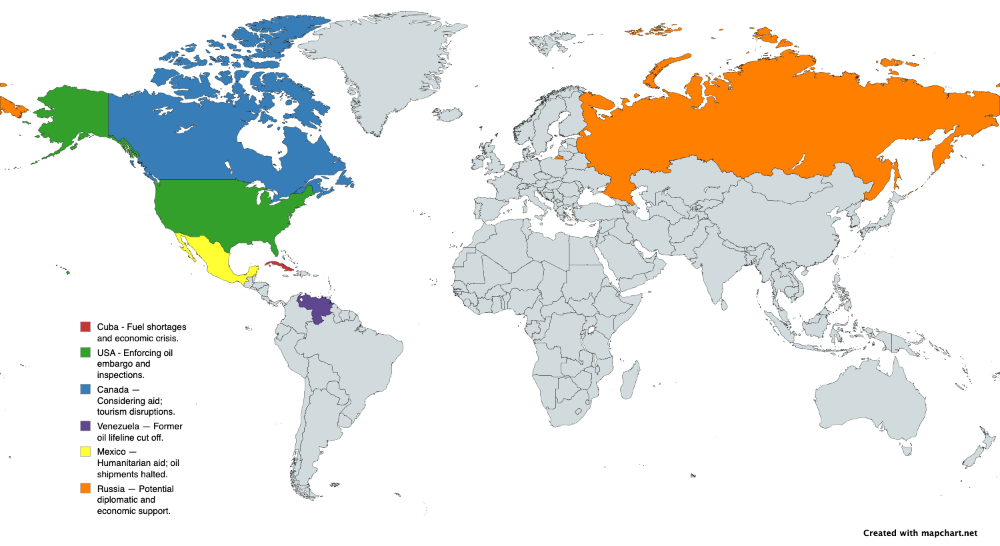
United States = Green
Canada = Blue
Cuba = Red
Venezuela = Purple
Mexico = Yellow
Russia = Orange
Image is licensed under the Creative Commons Attribution-Share Alike 4.0 International license and was created using MapChart (https://mapchart.net).