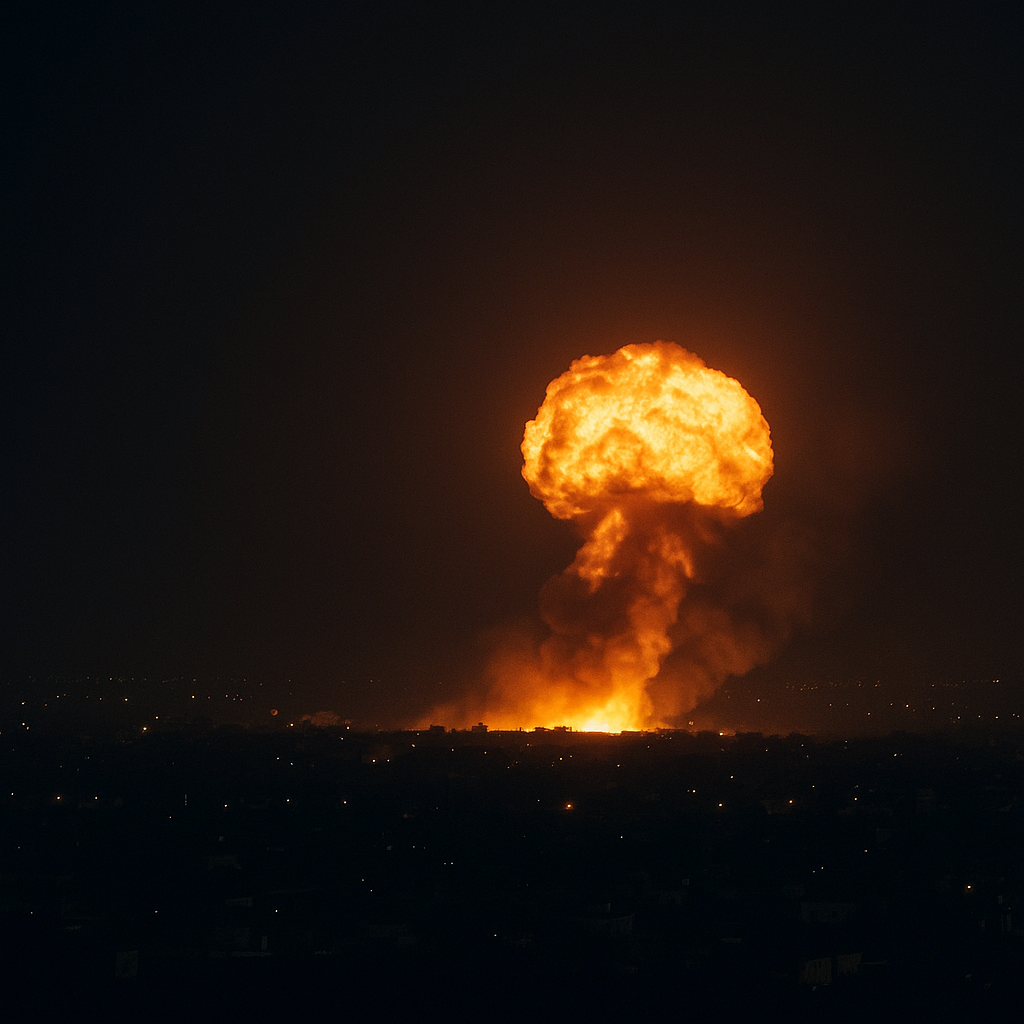
Last week, Israel launched airstrikes on multiple targets inside Iran, following months of escalating tensions and military confrontations across the region. The attacks, which Israel has not officially confirmed, are reported to have struck high-level military sites in Tehran and other strategic areas. Iranian officials initially downplayed the impact, claiming that the explosions resulted from air defense systems intercepting incoming drones. However, international intelligence sources and regional media suggest the strikes caused substantial disruption.
The operation appears to have been carefully calibrated, hitting command centers associated with the Islamic Revolutionary Guard Corps (IRGC) and facilities involved in missile development. Though Israel has long maintained a policy of ambiguity regarding its military actions abroad, the precision and timing of these strikes indicate a deliberate effort to weaken Iran’s military leadership and infrastructure without triggering a full-scale war.
The strikes followed a drone and missile barrage launched from Iranian territory toward Israel earlier this month. That attack, unprecedented in scope, was intercepted almost entirely by Israeli and allied defense systems. Despite limited damage, the move marked a sharp escalation, prompting expectations of a direct Israeli response.
Analysts believe the latest strikes were aimed at reasserting deterrence while avoiding broader confrontation. “This was not about optics; it was a calculated move to degrade specific capabilities,” said a Western intelligence official speaking anonymously. The targets reportedly included underground facilities used for ballistic missile storage and locations tied to command operations by the IRGC.
Iranian authorities have remained largely silent on casualties or material losses, with official outlets broadcasting footage of calm streets and military personnel inspecting debris. Still, unconfirmed reports suggest damage to air defense batteries and potential fatalities among senior ranks.
International reactions have been measured. The United States reiterated its commitment to Israel’s security but emphasized the need for restraint. European leaders expressed concern about further destabilization in the region. In contrast, Iranian allies such as Hezbollah and armed groups in Iraq and Syria condemned the strikes and vowed retaliation.
Israel’s decision to carry out the attack without immediately taking credit fits a broader strategic pattern. By neither confirming nor denying involvement, the Israeli government maintains a layer of plausible deniability while still sending a clear message to adversaries. This tactic also limits the diplomatic fallout that might follow an overt admission.
The attack also comes at a time of increasing scrutiny of Iran’s expanding role in the Middle East. Tehran continues to support militant groups in Lebanon, Syria, Yemen, and Iraq, often through the IRGC’s Quds Force. The recent strikes may have targeted the operational nodes responsible for coordinating this network.
As the situation unfolds, attention has shifted to whether Iran will choose to respond directly or continue to rely on proxy forces. Analysts caution that retaliation could occur outside Iran’s borders, potentially involving allied militias rather than direct military confrontation. The coming weeks will be closely watched for signs of either escalation or a return to shadow conflict.
Reported Casualties
Sources in Israel have suggested that several senior Iranian military figures were killed during the recent airstrikes. While Iran has not publicly confirmed these deaths, the individuals named in various reports include:
- Mohammad Bagheri – Alleged to be the top-ranking officer overseeing Iran’s armed forces
- Hossein Salami – Believed to be the commander of the Islamic Revolutionary Guard Corps (IRGC)
- Esmail Qaani – Reportedly in charge of the Quds Force, which manages Iran’s overseas military operations
- Ali Reza Tangsiri – Said to lead the IRGC’s naval operations
- Amir Ali Hajizadeh – Attributed leadership of Iran’s aerospace and missile forces
If confirmed, the deaths of these individuals would represent a profound shift in Iran’s military leadership structure. Each has played a central role in shaping Iran’s defense strategies, regional posture, and missile development initiatives.
This image is the property of The New Dispatch LLC and is not licenseable for external use without explicit written permission.