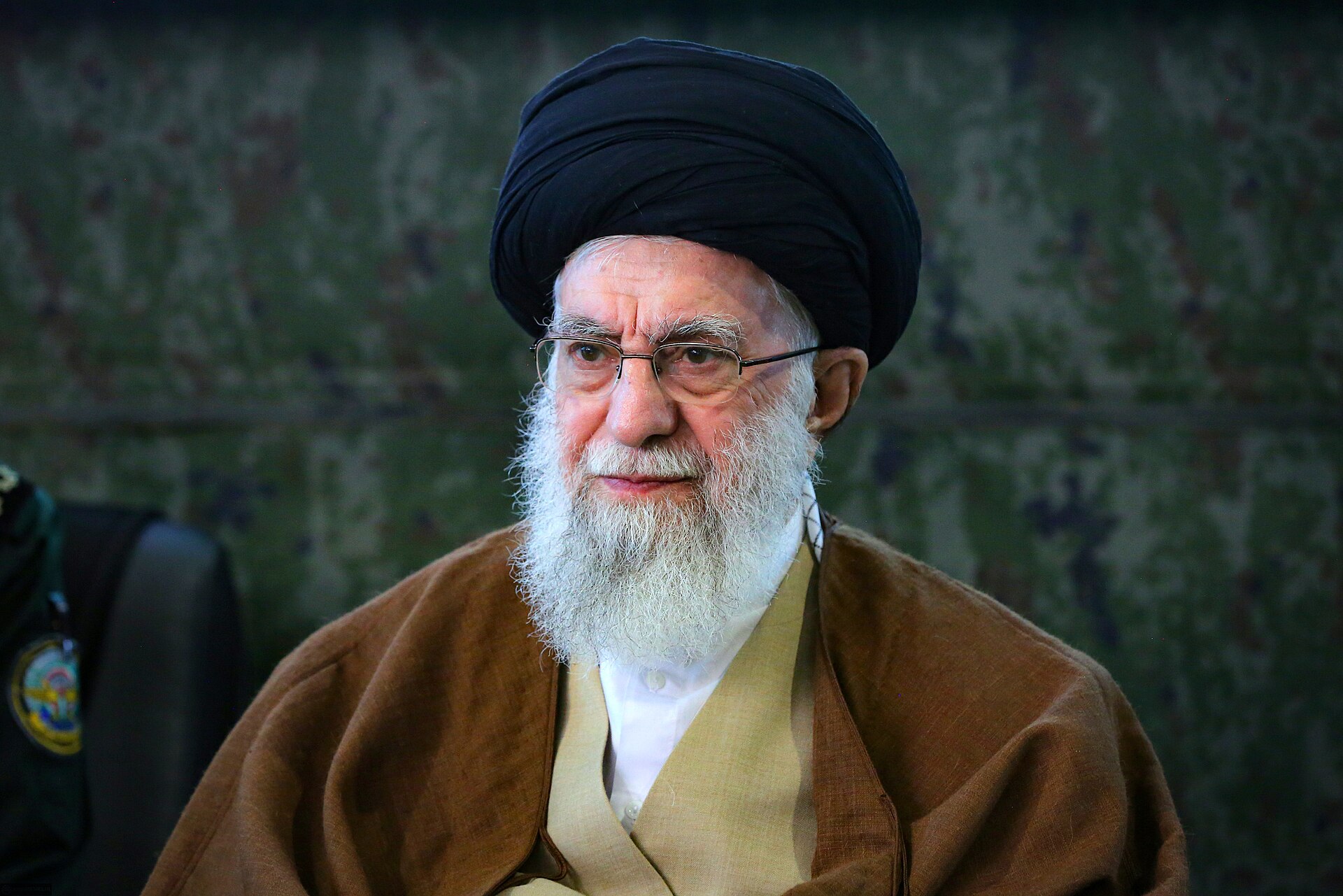
Iran’s longtime supreme leader, Ayatollah Ali Khamenei, has died at age 86 after a large-scale military operation conducted by the United States and Israel, according to announcements from both governments and confirmation by Iranian state media. The strikes, which targeted senior leadership figures along with nuclear and missile facilities, mark a dramatic turn for the Islamic Republic and leave its political future uncertain.
President Donald Trump said the joint assault aimed to dismantle Iran’s nuclear and ballistic missile capabilities while also striking members of its ruling establishment. Iranian officials acknowledged Khamenei’s death shortly afterward and declared a 40-day mourning period. Reports from inside Iran said members of his family were also killed. Tehran responded by firing missiles and drones toward Israel and at U.S. positions in several Middle Eastern countries, raising fears of a wider confrontation.
Khamenei had ruled Iran since 1989, when he succeeded Ayatollah Ruhollah Khomeini, the architect of the 1979 Islamic Revolution. Though not widely viewed at the time as a leading religious authority, Khamenei gradually tightened his grip on power. Over 36 years, he constructed a governing system in which ultimate authority flowed through his office, supported by loyal clerics and security forces.
Central to his rule was the Islamic Revolutionary Guard Corps. Originally formed to defend the revolution, the Guard evolved into the country’s dominant military force and a powerful economic player with interests spanning construction, energy and telecommunications. It also oversaw Iran’s missile arsenal and managed overseas operations through its Quds Force, cultivating armed groups across the region.
Through alliances with Hezbollah in Lebanon, militias in Iraq, Hamas in Gaza and Houthi forces in Yemen, Tehran sought to project strength while avoiding direct full-scale war. That strategy came under severe strain after Hamas attacked Israel on Oct. 7, 2023. Israel’s subsequent campaigns weakened several Iranian-backed factions and led to direct exchanges between Israel and Iran in 2024 and 2025. Israeli and U.S. strikes on Iranian nuclear sites intensified the confrontation in the months before Khamenei’s death.
The nuclear issue defined much of his foreign policy. While he publicly declared nuclear weapons incompatible with Islamic teachings, Iran steadily expanded its enrichment capabilities. A 2015 agreement with world powers curbed the program in return for sanctions relief, but the United States withdrew from the deal in 2018. In the years that followed, Iran increased uranium enrichment to levels close to weapons-grade, drawing repeated warnings and military threats.
Inside Iran, Khamenei faced mounting public anger. Economic decline, corruption allegations and social restrictions fueled waves of protest. Demonstrations erupted after the disputed 2009 presidential election and again in 2019 over fuel price hikes. In 2022, nationwide unrest followed the death of Mahsa Amini while in custody for allegedly violating dress codes. Security forces responded with force, and rights groups reported heavy casualties. New protests in late 2025 drew hundreds of thousands demanding sweeping political change.
Khamenei’s death leaves the Islamic Republic at a crossroads. The Assembly of Experts is tasked with selecting a new supreme leader, but no obvious successor commands universal backing. Much will depend on whether the Revolutionary Guard consolidates control or whether internal divisions reshape Iran’s leadership during a moment of profound uncertainty.
Image is licensed under the Creative Commons Attribution 4.0 International license and was created by khamenei.ir.







.jpg)