Costa Rica has announced its cooperation with the United States to facilitate the repatriation of 200 undocumented migrants to their countries of origin. This decision aligns the nation with Panama and Guatemala, both of which have recently implemented similar agreements in response to changing U.S. immigration policies. The migrants, primarily from Central Asia and India, are being deported from the U.S. as part of an expanded regional approach to handling migration.
The first group of deportees is scheduled to land at Juan Santamaría International Airport on Wednesday, where they will be temporarily housed at the Center for Temporary Attention of Migrants (CATEM) in the Corredores region near Costa Rica’s southern border. The Costa Rican government has made it clear that the repatriation process is fully funded by the U.S. government, with the International Organization for Migration (IOM) overseeing the operations. Authorities emphasized that Costa Rica is not covering any costs related to these flights or the migrants’ temporary stay in the country.
This collaboration comes as the U.S. enforces stricter immigration laws and accelerates deportations. U.S. Secretary of State Marco Rubio highlighted the importance of regional partnerships during his recent visit to Latin America, noting that Guatemala and Panama had previously agreed to similar measures. Panama has already received its first repatriation flight, which carried 119 migrants from countries such as China, Pakistan, and Afghanistan. Meanwhile, Guatemala has yet to receive its first group of deportees.
Costa Rica’s government has reaffirmed its dedication to upholding human rights while working alongside international partners to manage migration challenges. Officials framed the agreement as part of a broader effort to ensure the orderly and humane treatment of migrants passing through the region. While the country has long been recognized for its humanitarian approach to migration, this new initiative reflects its evolving role in regional immigration policy.
The initiative follows the approach of the Trump administration, which has taken a firm stance on deportations. Since taking office in January, President Trump has vowed to remove large numbers of undocumented migrants from the U.S., a move that has drawn both domestic and international scrutiny. Recent deportation efforts have included returning more than 300 Indian nationals on military flights, an event that sparked controversy in India. Despite this, Indian Prime Minister Narendra Modi has expressed support for repatriation measures and has agreed to take back thousands of undocumented Indian migrants.
Costa Rica’s decision to participate in this initiative suggests a strengthening of its diplomatic ties with the U.S. while balancing its own policies on migration management. By acting as a transit hub, the country is positioning itself as a facilitator in the broader repatriation effort without directly altering its internal immigration laws.
As migration continues to be a complex issue across the Americas, Costa Rica’s involvement in this repatriation program reflects the growing cooperation between the U.S. and its regional allies. The program’s long-term effects remain to be seen, but it marks an adjustment in how countries in the region approach the movement of undocumented migrants.
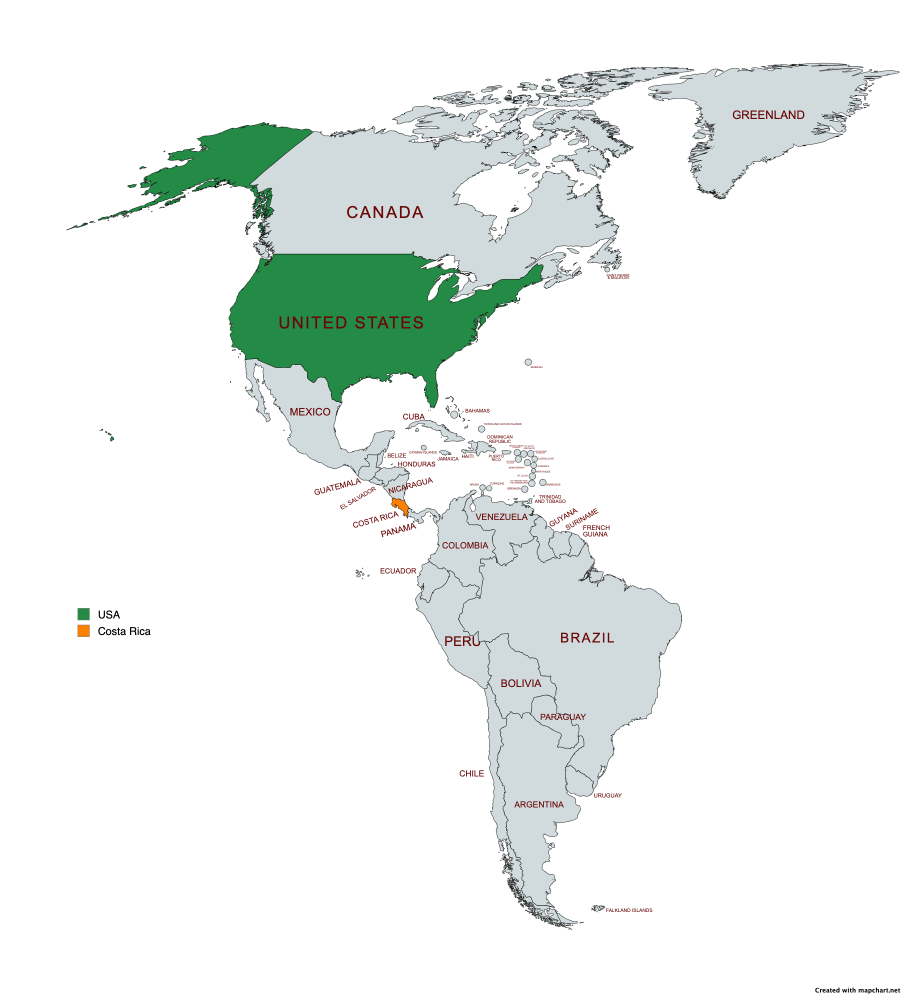
Green = USA
Orange = Costa Rica
Image is licensed under the Creative Commons Attribution-Share Alike 4.0 International license and was created using MapChart(https://mapchart.net).