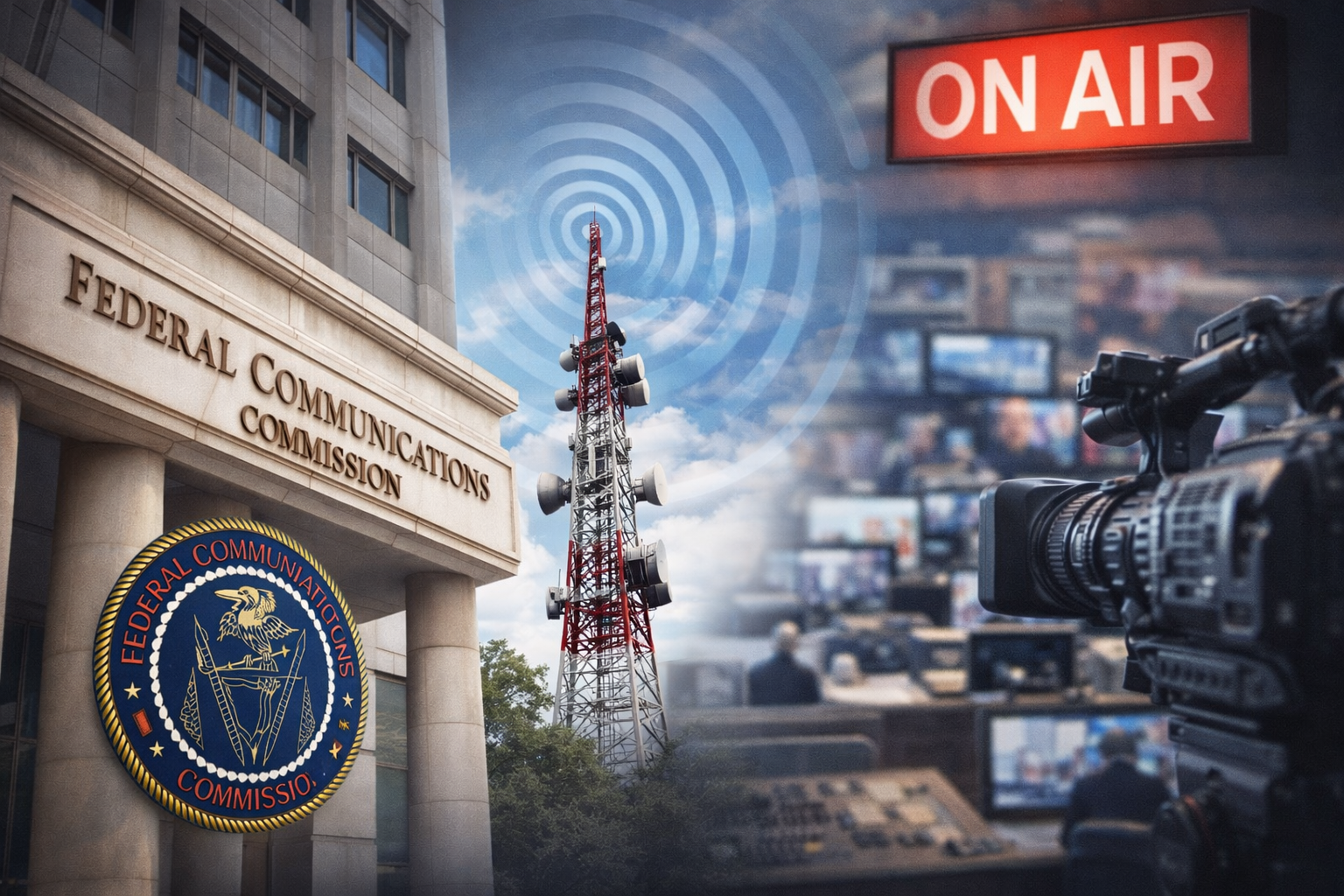
Federal Communications Commission Chairman Brendan Carr issued a warning to broadcast stations over the weekend, saying their reporting could affect whether they are allowed to keep operating on public airwaves. His comments came during a growing dispute between the Trump administration and several news organizations about coverage of the ongoing conflict involving the United States, Israel, and Iran.
Carr posted on social media that broadcasters should review their reporting practices before their licenses come up for renewal. Television and radio stations must obtain permission from the FCC to transmit on public frequencies, and those permissions are renewed periodically. Carr argued that stations using public airwaves have a duty to serve viewers and listeners responsibly.
The FCC chairman said that outlets spreading inaccurate or misleading information should change direction. He suggested that failure to meet legal obligations tied to broadcast licenses could bring consequences during the renewal process.
His remarks followed statements from President Donald Trump criticizing news coverage of events connected to the war. The president disputed reports about damage to U.S. military aircraft stationed in Saudi Arabia. Some reports had suggested that Iranian strikes severely affected several refueling planes at a military facility.
Trump said those reports exaggerated the situation. According to his account, most of the aircraft were quickly returned to operation, while another required repairs before flying again. He argued that the headlines created the wrong impression about the condition of the planes and the effectiveness of U.S. operations.
In addition to disputing the reports themselves, Trump also criticized media organizations that published the stories. He has frequently argued that parts of the press portray his administration unfairly, particularly during military operations or political controversies.
Carr’s comments did not mention individual television stations or specific reports. However, he used the moment to repeat his broader argument that broadcast license holders must meet obligations connected to the use of public spectrum. He has said in previous interviews and speeches that regulators have been too reluctant in past decades to enforce those responsibilities.
Under current law, the FCC oversees licensing for local television and radio stations. The agency does not license newspapers, websites, or national television networks themselves. Instead, it regulates individual stations that operate on assigned frequencies. These rules mean that print publications and online news outlets fall outside the commission’s authority.
The FCC’s own policies state that its ability to control broadcast content is limited. Constitutional protections for freedom of speech and freedom of the press restrict how much influence the government can exert over journalism.
Carr’s warning quickly sparked criticism from free expression advocates and political leaders who believe the statements could pressure news outlets. Critics argue that government officials should not threaten regulatory action because of disagreements with coverage.
Aaron Terr of the Foundation for Individual Rights and Expression said the First Amendment protects reporting about government activity, including military operations. He argued that officials should not attempt to influence coverage by raising the possibility of penalties for broadcasters.
California Governor Gavin Newsom also condemned the comments, saying they could intimidate journalists and media companies.
The dispute reflects a broader debate about the relationship between government regulators and news organizations. As conflicts overseas and political tensions at home continue to dominate headlines, disagreements about media coverage and press freedom remain a major point of discussion in American public life.
This image is the property of The New Dispatch LLC and is not licenseable for external use without explicit written permission.